Inlay Core Pins
Modular design with replaceable tip insert. Swap only the worn tip — reduce maintenance cost by 60-80%.
Products
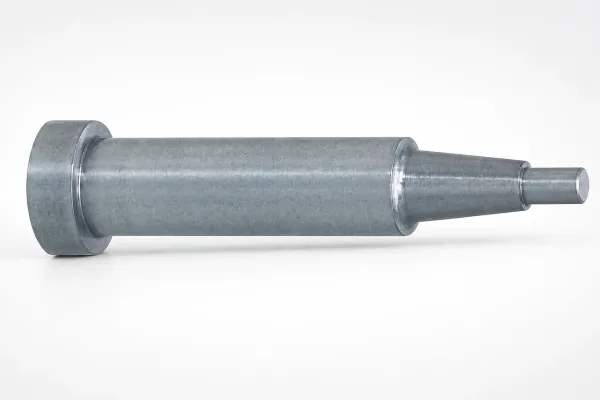
JIS Standard M2 Steel Straight Core Pins - Core Pin | OEM Available
Straight Core Pins in M2 Steel with Core Pin. Engineered for plastic injection molding with custom options. Contact us.
View Details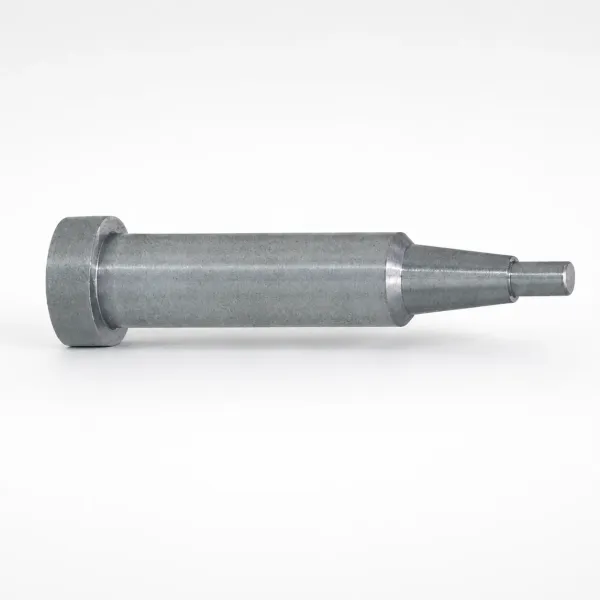
JIS Standard M2 Steel Straight Core Pins - Core Pin | OEM Available
Straight Core Pins in M2 Steel with Core Pin. Engineered for plastic injection molding with custom options. Contact us.
View DetailsInlay System: Cost-Benefit Decision
Inlay core pins use a modular design — only the worn tip insert is replaced, preserving the pin body. Decision depends on your production volume:
About Inlay Core Pins
In high-volume molds (500K+ shots), tip wear is the primary core pin failure mode. With solid pins, the entire pin — including the perfectly serviceable body — is discarded when the tip wears out. Inlay core pins separate the tip from the body, allowing only the worn insert to be replaced.
The practical benefit is dramatic: per-replacement cost drops by 60-80%, and replacement time is 2-5 minutes without removing the pin body from the mold plate. This translates to both lower consumable cost and less machine downtime per replacement cycle.
The trade-off is slightly higher initial cost for the pin body and first insert. For molds running under 100K shots total, solid pins remain more cost-effective. The breakeven point is typically reached within 2-3 replacement cycles.
Standard inserts have a flat cylindrical end face. Custom tip insert geometries are available on request for non-standard cavity features.
Application Scenarios
See how this product type solves real engineering challenges across different industries and applications:
High-Wear Tip Replacement Instead of Full Pin
Pain point: In abrasive resin applications (glass-filled PA, mineral-filled PPS), the core pin tip wears out long before the shaft — but replacing the entire pin wastes the still-good shaft.
Why it fits: Inlay core pins have a replaceable carbide or ceramic tip pressed into a reusable shank. When the tip wears, only the tip insert is replaced — cutting replacement cost by 60-70%.
Ultra-High-Cycle Production Molds
Pain point: Molds running 2M+ shots annually experience tip wear rates that require pin replacement every 200-400K shots — at significant cumulative tooling cost.
Why it fits: Carbide inlay tips last 3-5× longer than HSS tips in abrasive resins. When they finally wear, the quick-change tip design minimizes replacement downtime.
High-Temperature Corrosive Resin Molding
Pain point: Resins like PPS and LCP at 320°C+ cause both abrasive wear and chemical corrosion at the pin tip — standard HSS tips degrade within 100K shots.
Why it fits: Ceramic inlay tips resist both thermal erosion and chemical attack. The inlay design means the expensive ceramic tip is only used where needed — at the working face.
Related Categories
Frequently Asked Questions
When should I choose inlay over solid?+
How long to replace a tip insert?+
Custom tip insert geometries?+
Engineering Resources
Case Studies
Need a Custom Quote?
Send your specifications — material, dimensions, quantity — and receive a quote. MOQ: 1 piece. Custom dimensions available.