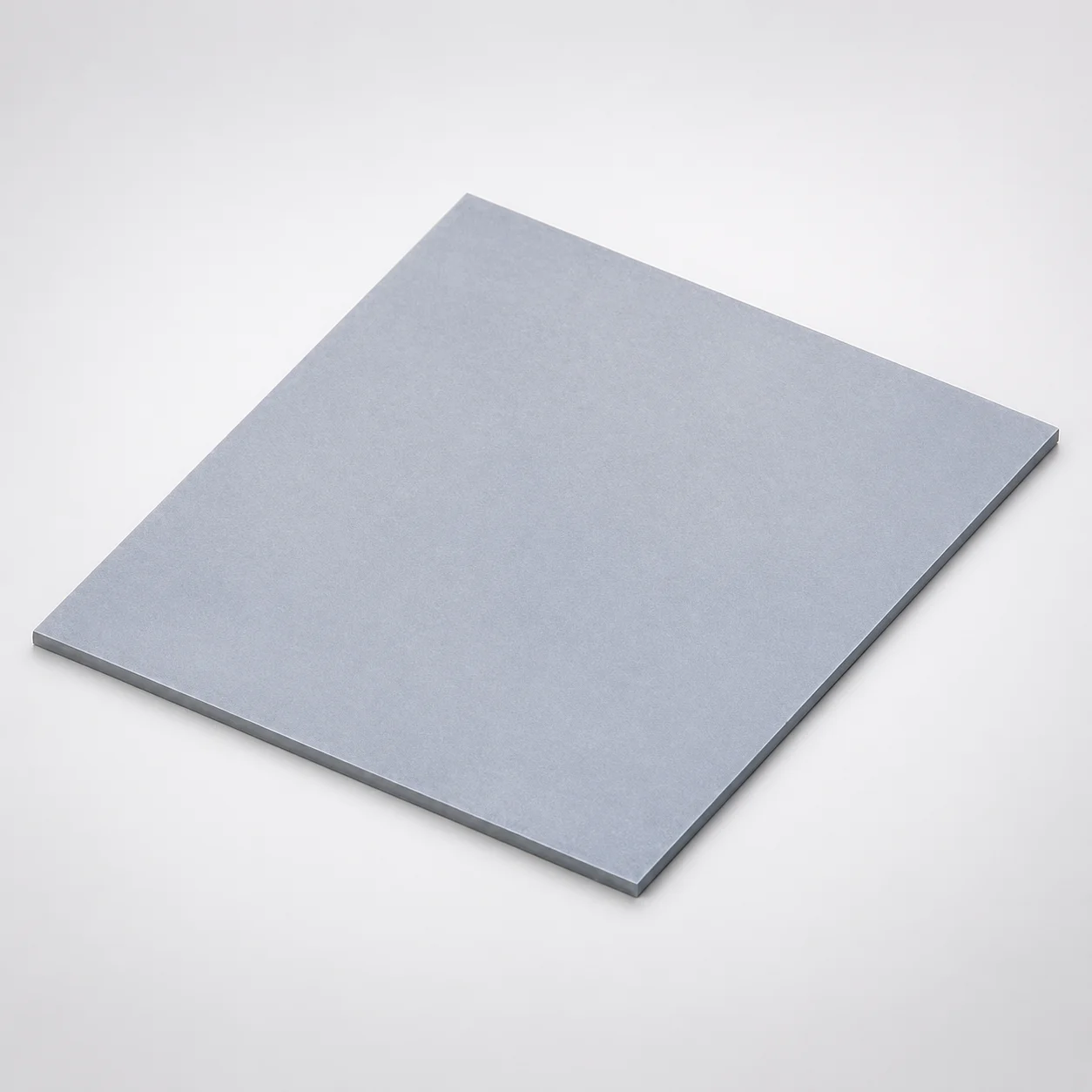
Hardened Plates for Core 6-Face Ground
Hardened Plates for Core 6-Face Ground provide precision-ready core plate surfaces for mold and die build-ups. The six-face ground finish supports consistent flatness and reliable assembly after machining.
- Six-face ground polishing delivers uniform surface geometry for accurate core fabrication
- Made from hardened steel options for wear resistance in demanding molding workflows
- Controlled parallelism and squareness help maintain stable fit between core components
- Typical use in core assemblies requiring accurate, hardened plate base surfaces
Specifications
26 configurations available
| Material | Thickness T Dimension Tolerance | Parallelism Between Top Bottom Plane | A·B Plane Squareness | T (Thickness) (mm) | type |
|---|---|---|---|---|---|
| SKD61 | +0.3/+0.1 | 0.2/100mm or less | 0.05/100mm or less | 1 | - |
| SKD61 | +0.3/+0.1 | 0.2/100mm or less | 0.05/100mm or less | 1.5 | - |
| SKD61 | +0.3/+0.1 | 0.1/100mm or less | 0.05/100mm or less | 2 | - |
| SKD61 | +0.3/+0.1 | 0.1/100mm or less | 0.05/100mm or less | 3 | - |
| SKD61 | +0.3/+0.1 | 0.1/100mm or less | 0.05/100mm or less | 4 | - |
| SKD61 | +0.3/+0.1 | 0.1/100mm or less | 0.05/100mm or less | 5 | - |
| SKD61 | +0.3/+0.1 | 0.1/100mm or less | 0.05/100mm or less | 6 | - |
| SKH51 | +0.05/+0.02 | 0.2/100mm or less | 0.05/100mm or less | 0.5 | - |
| SKH51 | +0.05/+0.02 | 0.2/100mm or less | 0.05/100mm or less | 0.6 | - |
| SKH51 | +0.05/+0.02 | 0.2/100mm or less | 0.05/100mm or less | 0.8 | - |
| SKH51 | +0.3/+0.1 | 0.2/100mm or less | 0.05/100mm or less | 1 | - |
| SKH51 | +0.3/+0.1 | 0.2/100mm or less | 0.05/100mm or less | 1.5 | - |
| SKH51 | +0.3/+0.1 | 0.1/100mm or less | 0.05/100mm or less | 2 | - |
| SKH51 | +0.3/+0.1 | 0.1/100mm or less | 0.05/100mm or less | 3 | - |
| SKH51 | +0.3/+0.1 | 0.1/100mm or less | 0.05/100mm or less | 4 | - |
| SKH51 | +0.3/+0.1 | 0.1/100mm or less | 0.05/100mm or less | 5 | - |
| SKH51 | +0.3/+0.1 | 0.1/100mm or less | 0.05/100mm or less | 6 | - |
| SKH51 | +0.05/+0.03 | 0.02/100mm or less | 0.02/100mm or less | 1 | - |
| SKH51 | +0.05/+0.03 | 0.02/100mm or less | 0.02/100mm or less | 1.3 | - |
| SKH51 | +0.05/+0.03 | 0.02/100mm or less | 0.02/100mm or less | 1.5 | - |
| SKH51 | +0.05/+0.03 | 0.02/100mm or less | 0.02/100mm or less | 1.8 | - |
| SKH51 | +0.05/+0.03 | 0.02/100mm or less | 0.02/100mm or less | 2 | - |
| SKH51 | +0.05/+0.03 | 0.02/100mm or less | 0.02/100mm or less | 3 | - |
| SKH51 | +0.05/+0.03 | 0.02/100mm or less | 0.02/100mm or less | 4 | - |
| SKH51 | +0.05/+0.03 | 0.02/100mm or less | 0.02/100mm or less | 5 | - |
| SKH51 | +0.05/+0.03 | 0.02/100mm or less | 0.02/100mm or less | 6 | - |
Product Guide
Application Scenarios+
Where it’s used: This hardened, six-face ground plate is intended for mold core build-ups and cavity insert assemblies where a stable, precision base surface is critical.
Scenario 1 – Automotive connector and housing cores: In multi-part core stacks, the six-face ground geometry helps maintain consistent flatness after machining, improving alignment during assembly. The controlled parallelism between the top and bottom planes supports uniform contact and reduces the risk of localized gaps under clamp load.
Scenario 2 – Precision plastic housings and mechanical components: When cores require repeated fit-up and reworking, the hardened construction improves dimensional stability and wear resistance on mating surfaces.
Scenario 3 – Core inserts for high-cycle molding: The ability to select SKD61 or SKH51 supports applications spanning hot-work wear demands and high-hardness cutting stability. Thickness availability from 0.5 to 6 mm supports tailoring the stack height to core/core insert requirements.
Material & Process Details+
Steel options: This plate is available in SKD61 and SKH51.
- SKD61: commonly used as an H13-type hot-work die steel. It balances hardness and toughness for long-run molding, with good resistance to thermal fatigue and wear.
- SKH51: commonly grouped with high-speed steel chemistry (often compared to M2-type behavior). It is selected when maintaining high hardness at the cutting/finishing stage and resisting abrasive wear are priorities.
Heat-treatment state: The listing specifies a hardened construction, designed to provide stable core plate surfaces for machining and assembly. Exact hardness (HRC) is not provided in the input data; when choosing between the two, consider the typical trade-off: hot-work steels (SKD61) tend to emphasize toughness under thermal cycling, while high-hardness tool steels (SKH51) typically emphasize wear resistance.
Sizing & Selection Guide+
Choose thickness (T): Select a plate thickness within 0.5 to 6 mm. Match this to your core build-up or shim stack so the cavity/core working height reaches the intended dimension after machining.
Verify dimensional geometry: For the selected thickness, confirm machining-to-contact requirements using the provided tolerances:
- Thickness tolerance T: options include +0.3/+0.1, +0.05/+0.02, or +0.05/+0.03.
- Parallelism (top to bottom plane): 0.2/100mm or less, 0.1/100mm or less, or 0.02/100mm or less.
- Squareness (A·B plane): 0.05/100mm or less or 0.02/100mm or less.
Fit consideration: Use the tighter parallelism/squareness grades for stacked core inserts and precision contact surfaces to reduce post-assembly rework. If you have tight tolerance stack-ups, select the thickness tolerance option that provides the required thickness build-up accuracy.
Frequently Asked Questions
Can I use these hardened 6-face ground plates as base surfaces for core stack-ups, and what geometry specs matter most?+
What material should I pick between SKD61 and SKH51 for M2/H13 core applications?+
How do the thickness and thickness tolerance ranges affect cavity/core height calculations?+
What parallelism and squareness targets should I choose for high-precision core insert assembly?+
Are these dimensions fixed, or can I select specific tolerance grades for the same thickness range?+
Related Products
Need Custom Specifications?
Our engineering team can help with custom configurations, material selection, and volume pricing.