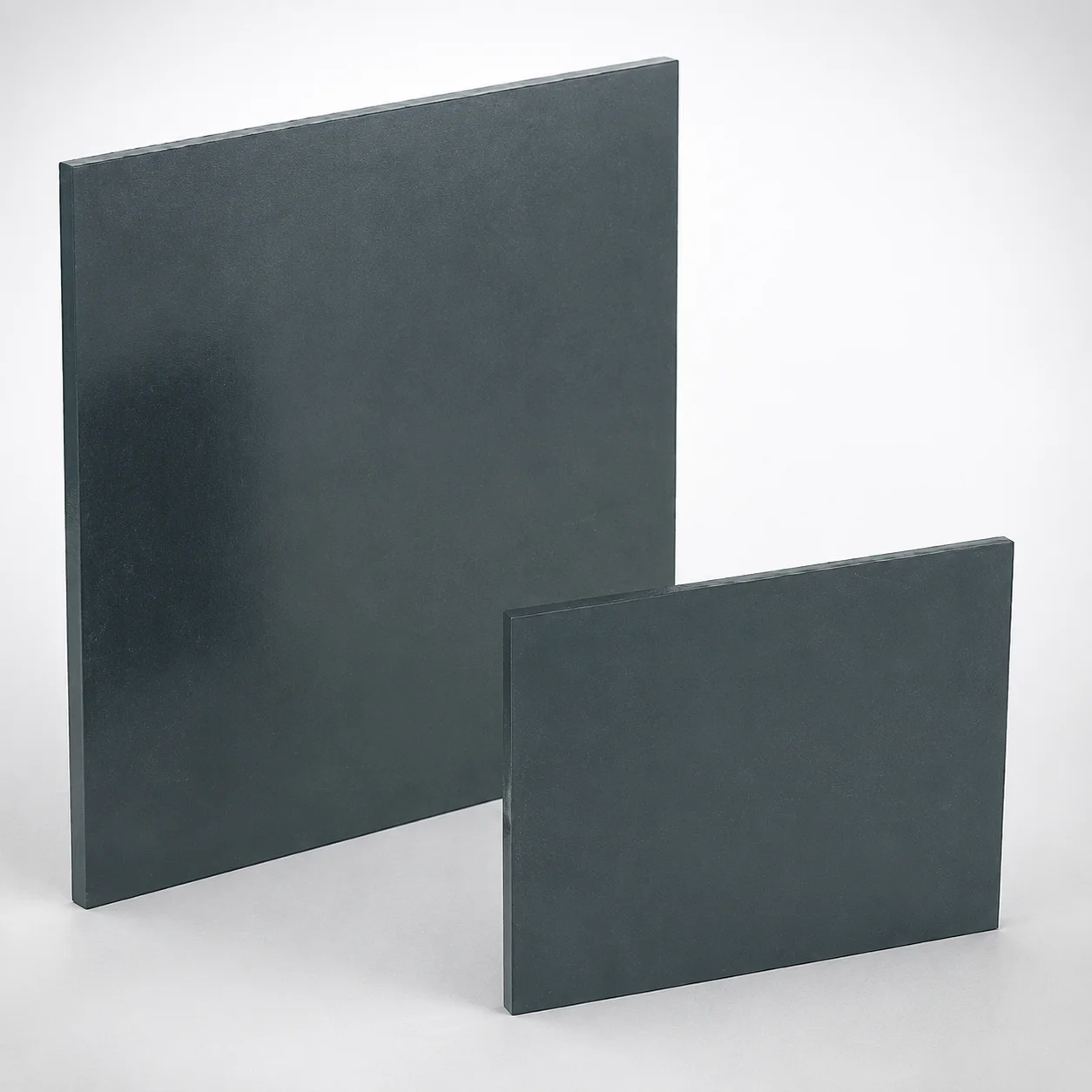
UTH Heavy Load Urethane Sheets - Shore A90 Sheet
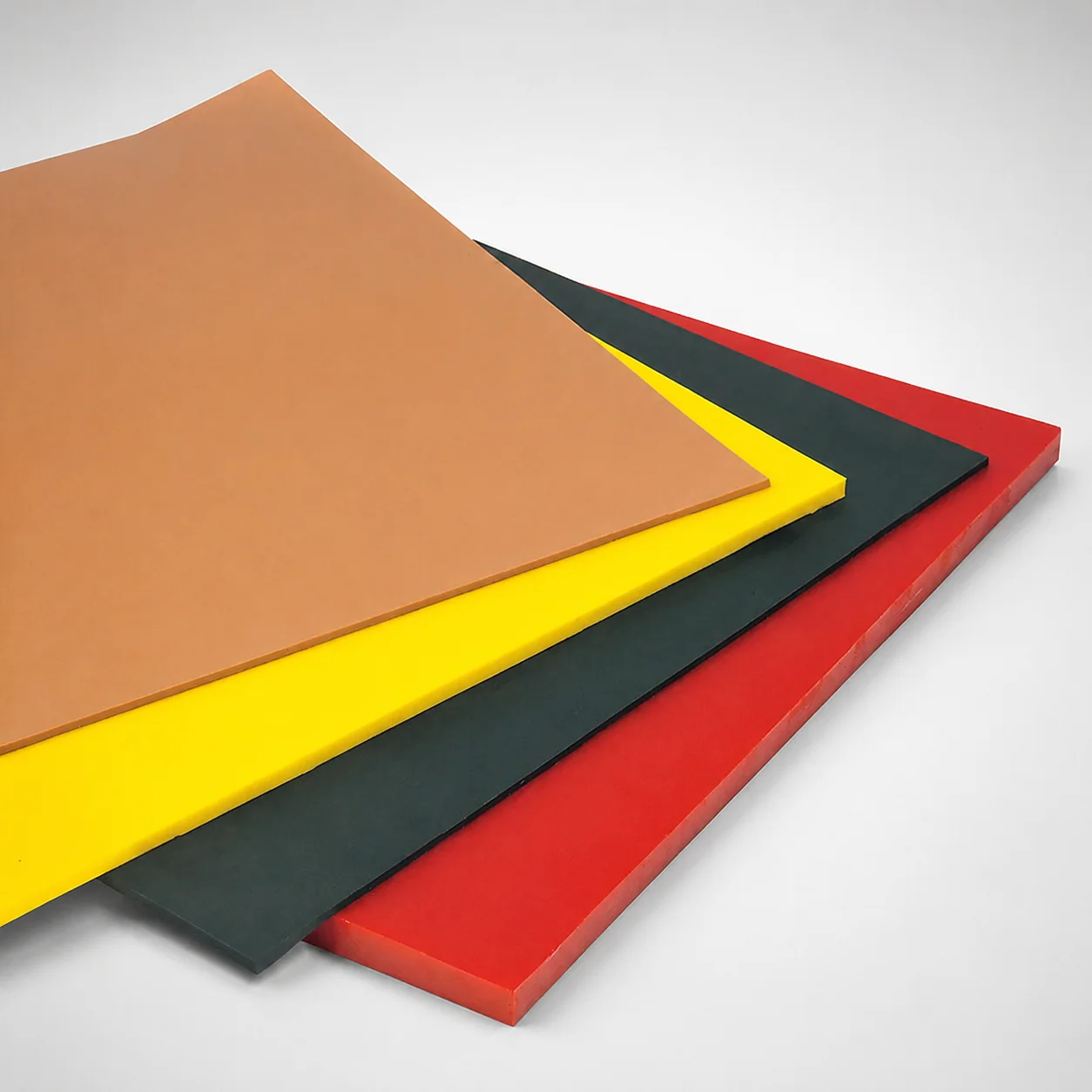
UTH Heavy Load Urethane Sheets - Shore A90 Sheet (UTH) are designed for heavy-duty load-bearing cushioning and durable wear resistance. Choose sheet thickness and planform to match your fabrication needs.
- Heavy-load urethane compound for stable cushioning under compression
- Shore A90 hardness supports long-lasting resistance to abrasion
- Sheet form makes it easy to cut, bond, and machine for custom parts
- Configurable thickness from 1 to 50 mm for application fit
Specifications
14 configurations available
| T (Height) (mm) | A (Width) (mm) | B (Width) (mm) | type |
|---|---|---|---|
| 1 | 20 ~ 500 | 20 ~ 500 | - |
| 2 | 20 ~ 500 | 20 ~ 500 | - |
| 3 | 20 ~ 500 | 20 ~ 500 | - |
| 4 | 20 ~ 500 | 20 ~ 500 | - |
| 5 | 20 ~ 500 | 20 ~ 500 | - |
| 6 | 20 ~ 500 | 20 ~ 500 | - |
| 8 | 20 ~ 500 | 20 ~ 500 | - |
| 10 | 20 ~ 500 | 20 ~ 500 | - |
| 15 | 20 ~ 500 | 20 ~ 500 | - |
| 20 | 20 ~ 500 | 20 ~ 500 | - |
| 25 | 20 ~ 500 | 20 ~ 500 | - |
| 30 | 20 ~ 500 | 20 ~ 500 | - |
| 40 | 20 ~ 500 | 20 ~ 500 | - |
| 50 | 20 ~ 500 | 20 ~ 500 | - |
Product Guide
Application Scenarios+
This heavy-load urethane sheet is used as an industrial cushioning layer inside injection mold tooling and end-effectors where vibration damping and abrasion resistance are required. In automotive connector and sensor production molds, it can be installed as a wear guard or backing pad on stationary components to help maintain consistent feel and protect adjacent surfaces under repeated clamp/stop events.
In electrical enclosure and housings molding lines, the Shore A90 compound provides stable compression support for drawer- or rack-style part handling fixtures, reducing surface scuffing caused by repeated contact with molded parts.
For medical device component assembly fixtures, urethane sheet form is advantageous because it can be cut to specific contours and bonded for localized damping, helping limit harsh impacts without requiring complex metal inserts. The configurable sheet thickness supports tailoring stiffness to the load level and contact area.
- Cut-and-fit wear protection where metal would be too harsh
- Compression cushioning with Shore A90 hardness for abrasion resistance
- Bondable/processable sheet format for custom tooling geometry
Material & Process Details+
The UTH variant is a heavy-load urethane compound supplied as sheet stock with Shore A90 hardness. This high durometer rating targets strong abrasion resistance while still providing elastic cushioning under compression.
As a polymer elastomer, the material balance prioritizes wear performance and dimensional stability in repeated contact. Compared with softer Shore A grades (lower durometer), Shore A90 typically offers improved scuff/tear resistance, but it may transmit more force and provide less “give” under the same load.
- Heat treatment state: provided as finished sheet (no post quench/temper required for use as supplied)
- Manufacturing process: compression molding/extrusion-type sheet production, then cut to specified planform and thickness
- Typical trade-off: higher hardness improves wear resistance; increased stiffness can reduce impact damping versus softer urethanes
Sizing & Selection Guide+
Select thickness T based on the required compliance and contact stress in the tooling interface. Available thickness range is 1 to 50 mm (variable), allowing engineers to tune stiffness for cushioning and abrasion protection.
Choose the sheet widths A and B, each fixed within 20 to 500 mm. The goal is to cover the high-wear or high-contact region with an adequate edge margin for bonding or mechanical fixation.
- Match sheet area to the contact footprint: use the smaller planform (A×B) that fully covers the contact zone.
- When bonding, ensure the sheet thickness (T) is sufficient to avoid “bottoming out” under expected compression.
- Plan for dimensional tolerances at the fabrication stage: confirm cutting/bonding allowance when converting from sheet stock to final tooling geometry.
If your application needs a custom shape, use the selectable thickness (T) as the primary stiffness control; A and B define the base planform.
Frequently Asked Questions
What thickness range is available for the UTH Heavy Load urethane sheets (Shore A90), and how should I choose T for cushioning?+
The sheet thickness T is configurable from 1 to 50 mm. For cushioning that avoids bottoming out, select a thickness that keeps the expected compression within the comfort range of a Shore A90 elastomer under your load. Use thinner sheets for localized wear protection and thicker sheets where you need more deflection reserve.
What are the available sheet size ranges for widths A and B, and how do I match them to a mold tooling wear area?+
Both fixed widths A and B are available in the range 20 to 500 mm. Select an A×B planform that fully covers the abrasion zone with enough margin for bonding or fixation. If you only need a partial coverage area, choose the smallest planform that still spans the critical contact region.
Is post heat treatment (quench/temper) required for this urethane sheet before installing in tooling?+
This product is supplied as finished urethane sheet stock with Shore A90 hardness intended for direct use as a cushioning and wear layer. Because it is a polymer elastomer sheet, the typical metal heat-treatment steps (quenching/tempering) are not applicable to establish hardness. Verify installation requirements such as cleaning and bonding surface prep for your specific assembly method.
How does Shore A90 hardness affect wear resistance versus impact damping in injection molding fixtures?+
Shore A90 hardness is selected to improve abrasion resistance under repeated contact. Compared with softer urethanes, Shore A90 generally provides less deflection (stiffer feel) and may transmit more force, which can reduce impact cushioning effectiveness if the load is dominated by shock. Choose based on whether wear protection or compliance is the primary need.
Can I machine or cut this urethane sheet into custom tooling shapes, and what should I consider for dimensional fit?+
The sheet form is intended to be cut and fabricated into custom parts, making it suitable for localized protection pads and inserts. When machining from A×B planform and thickness T, allow for cutting kerf and any bonding gap so the finished pad seats properly without interference. Confirm that your final thickness maintains clearance and does not exceed allowable compression during operation.
Related Products
Need Custom Specifications?
Our engineering team can help with custom configurations, material selection, and volume pricing.