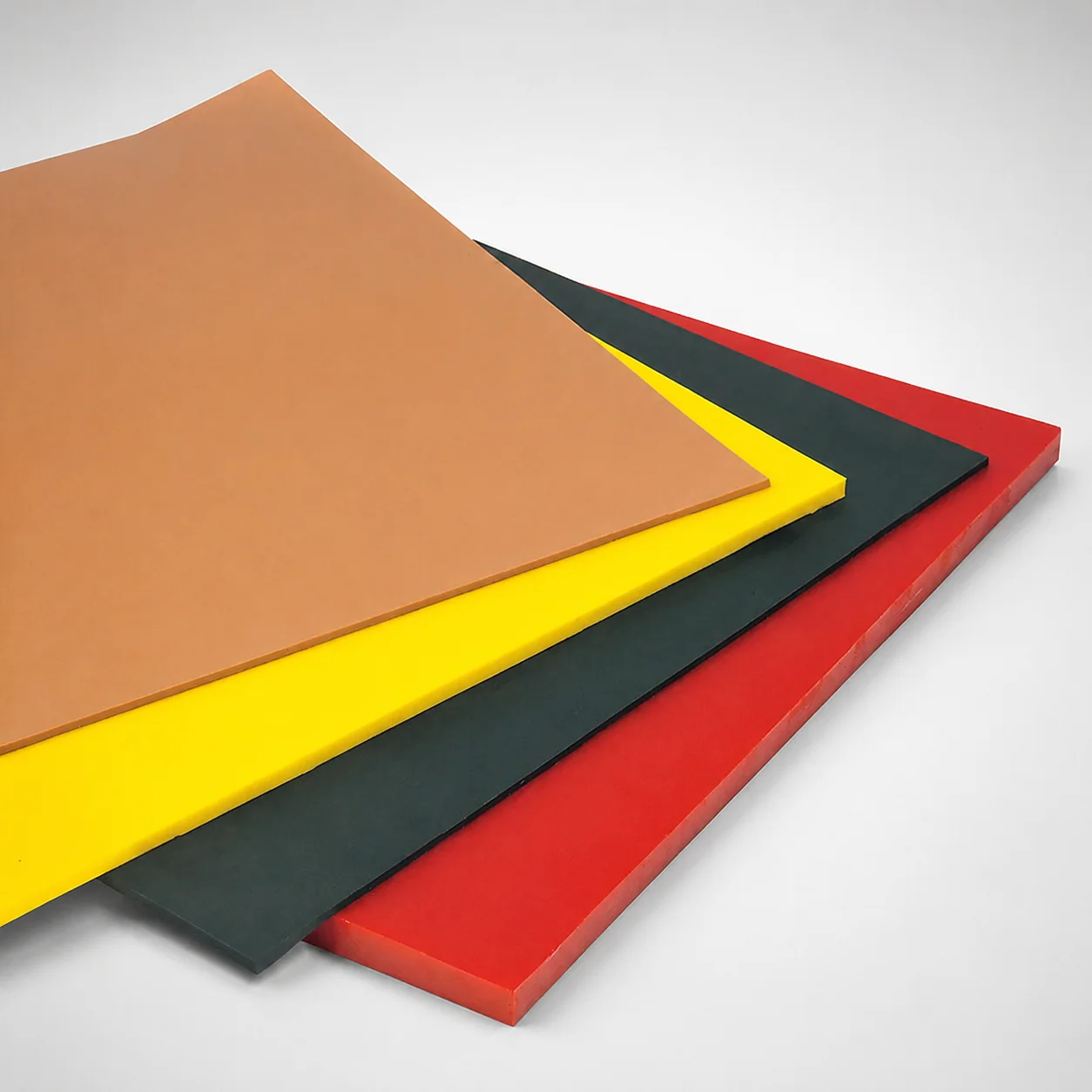
Precision-Cast Urethane Sheets & Slabs (Inch)
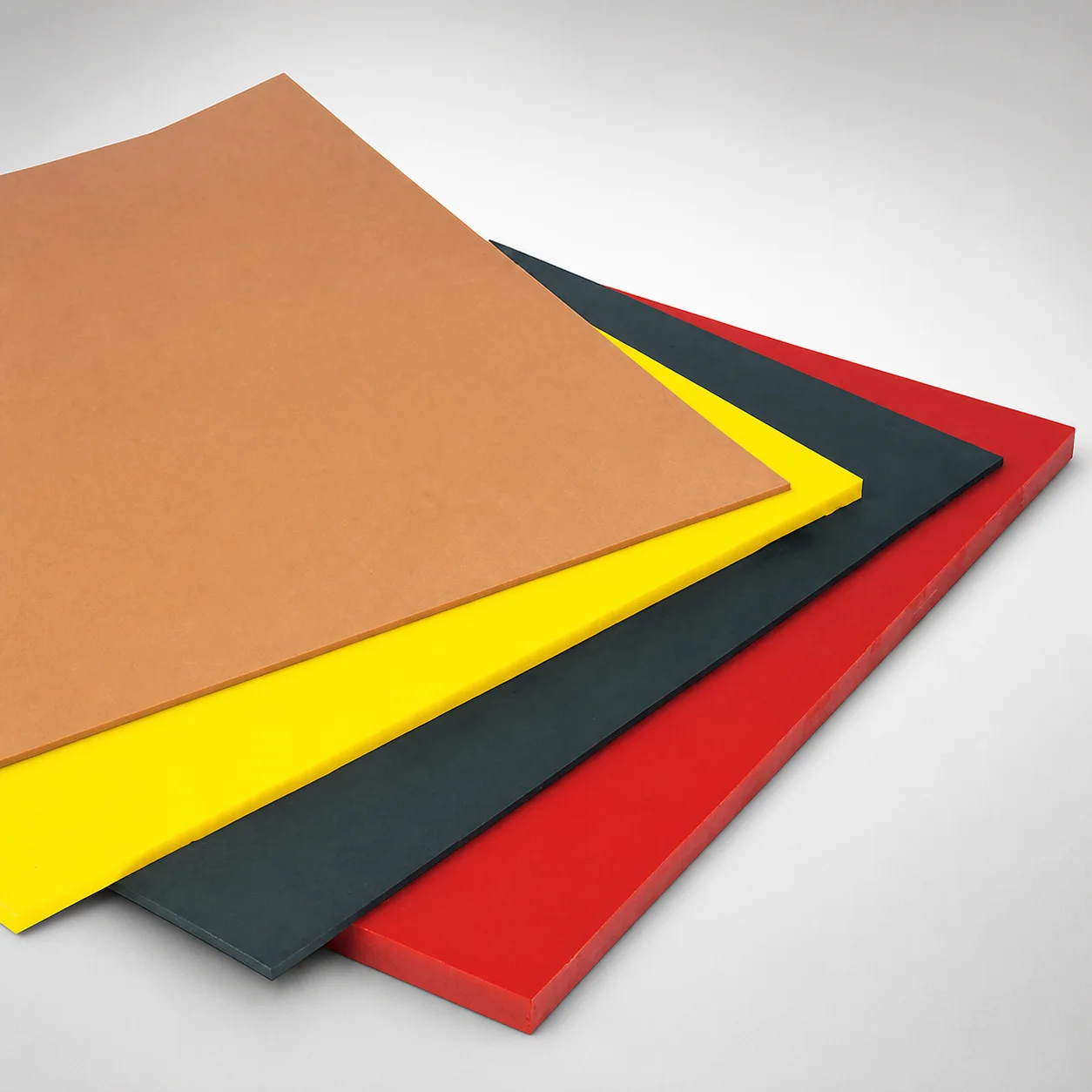
Precision-Cast Urethane Sheets & Slabs (Inch) deliver a tough, resilient wear barrier designed to protect equipment from abrasion and mechanical stress in demanding production environments.
- Robust urethane construction helps resist wear from continuous impact and friction
- Engineered shock absorption reduces stress transfer to sensitive systems
- Precision-cast process supports consistent material performance across cut-to-size parts
- Commonly used for manufacturing, packaging, and material handling wear components
Specifications
1472 configurations available
| Urethane Type | T (Height) (in) | A (Width) (in) | B (Width) (in) |
|---|---|---|---|
| PO-652 Tan (Very high load) | 1/16 | 1 | 48 |
| PO-670 Black (Very low load) | 1/16 | 1 | 48 |
| PO-650 Red (Medium load) | 1/16 | 1 | 48 |
| CU-290 Yellow (High load) | 1/16 | 1 | 48 |
| PO-652 Tan (Very high load) | 1/8 | 1 | 48 |
| PO-670 Black (Very low load) | 1/8 | 1 | 48 |
| PO-650 Red (Medium load) | 1/8 | 1 | 48 |
| CU-290 Yellow (High load) | 1/8 | 1 | 48 |
| PO-652 Tan (Very high load) | 3/16 | 1 | 48 |
| PO-670 Black (Very low load) | 3/16 | 1 | 48 |
| PO-650 Red (Medium load) | 3/16 | 1 | 48 |
| CU-290 Yellow (High load) | 3/16 | 1 | 48 |
| PO-652 Tan (Very high load) | 1/4 | 1 | 48 |
| PO-670 Black (Very low load) | 1/4 | 1 | 48 |
| PO-650 Red (Medium load) | 1/4 | 1 | 48 |
| CU-290 Yellow (High load) | 1/4 | 1 | 48 |
| PO-652 Tan (Very high load) | 3/8 | 1 | 48 |
| PO-670 Black (Very low load) | 3/8 | 1 | 48 |
| PO-650 Red (Medium load) | 3/8 | 1 | 48 |
| CU-290 Yellow (High load) | 3/8 | 1 | 48 |
| PO-652 Tan (Very high load) | 1/2 | 1 | 48 |
| PO-670 Black (Very low load) | 1/2 | 1 | 48 |
| PO-650 Red (Medium load) | 1/2 | 1 | 48 |
| CU-290 Yellow (High load) | 1/2 | 1 | 48 |
| PO-652 Tan (Very high load) | 5/8 | 1 | 48 |
| PO-670 Black (Very low load) | 5/8 | 1 | 48 |
| PO-650 Red (Medium load) | 5/8 | 1 | 48 |
| CU-290 Yellow (High load) | 5/8 | 1 | 48 |
| PO-652 Tan (Very high load) | 3/4 | 1 | 48 |
| PO-670 Black (Very low load) | 3/4 | 1 | 48 |
| PO-650 Red (Medium load) | 3/4 | 1 | 48 |
| CU-290 Yellow (High load) | 3/4 | 1 | 48 |
| PO-652 Tan (Very high load) | 1 | 1 | 48 |
| PO-670 Black (Very low load) | 1 | 1 | 48 |
| PO-650 Red (Medium load) | 1 | 1 | 48 |
| CU-290 Yellow (High load) | 1 | 1 | 48 |
| PO-652 Tan (Very high load) | 1-1/4 | 1 | 48 |
| PO-670 Black (Very low load) | 1-1/4 | 1 | 48 |
| PO-650 Red (Medium load) | 1-1/4 | 1 | 48 |
| CU-290 Yellow (High load) | 1-1/4 | 1 | 48 |
| PO-652 Tan (Very high load) | 1-1/2 | 1 | 48 |
| PO-670 Black (Very low load) | 1-1/2 | 1 | 48 |
| PO-650 Red (Medium load) | 1-1/2 | 1 | 48 |
| CU-290 Yellow (High load) | 1-1/2 | 1 | 48 |
| PO-652 Tan (Very high load) | 2 | 1 | 48 |
| PO-670 Black (Very low load) | 2 | 1 | 48 |
| PO-650 Red (Medium load) | 2 | 1 | 48 |
| CU-290 Yellow (High load) | 2 | 1 | 48 |
| PO-652 Tan (Very high load) | 2-1/2 | 1 | 48 |
| PO-670 Black (Very low load) | 2-1/2 | 1 | 48 |
Product Guide
Application Scenarios+
Urethane sheets and slabs are used as replaceable wear pads and energy-absorbing barriers in injection mold auxiliary equipment where metal-to-metal contact and frequent handling can quickly degrade tooling fixtures. Their precision-cast consistency helps maintain stable cut-to-size performance for long-running production.
- Automotive and industrial handling systems: Install as abrasion-resistant liners on guides, stops, and material carriers to reduce frictional wear and impact loading during part transfer.
- Packaging and in-plant conveying: Use for shock-absorbing surfaces that protect sensitive components from vibration and drop impacts while resisting surface fatigue.
- Mold shop protection: Apply as wear barriers under clamping fixtures or among handling tooling to absorb mechanical stress and limit transferable loads to underlying hardware.
Choose the urethane type based on load: PO-652 Tan (very high load) for heavy impact areas, or PO-670 Black (very low load) where compliance and light contact pressure are preferred.
Material & Process Details+
These sheets are precision-cast urethane components produced for uniform material performance after cutting. The available urethane formulations tune the balance between wear resistance and compliance: PO-652 Tan targets very high load durability, while PO-670 Black provides very low-load behavior. PO-650 Red is positioned for medium load, and CU-290 Yellow is specified for high load conditions.
- Wear resistance vs. toughness trade-off: Higher-load formulations generally prioritize resisting abrasion under impact, while lower-load grades emphasize flexibility for reduced stress transfer.
- Heat treatment: The provided data does not specify quench-and-temper, nitriding, or other heat treatment steps; selection is therefore based on the cast urethane grade rather than steel heat treatment routes.
- Manufacturing process relevance: Precision-casting supports consistent density and performance across cut-to-size wear parts.
Note: No hardness (HRC) values are provided for these urethane grades.
Sizing & Selection Guide+
Select dimensions by matching your wear-contact footprint and thickness to the expected load and impact environment. Thickness T is available from 1 ~ 5 in, allowing you to control deflection and energy absorption in service.
- Width options (A): 1 ~ 36 in for general slab sizing.
- Discrete B width options: Choose from 48, 6, 12, 18, 24, 36 in depending on your required panel width.
To fit mold shop or handling equipment interfaces, measure the contact area and leave practical clearance for mounting hardware and any locating features. For cut-to-size installations, ensure the selected A or B dimension covers the full wear zone, and use T to maintain sufficient remaining thickness under repeated impacts. The specification lists configurable size ranges (T and A) and fixed width choices for B; use the fixed B widths when your fixture standardizes on those panel sizes.
Tolerance note: No dimensional tolerances are provided in the input data, so confirm acceptable fit tolerances with your downstream machining/fixture requirements.
Frequently Asked Questions
Which urethane grade should I select for a high-impact wear liner on mold-handling fixtures?+
Can I order urethane sheets in custom thickness and width, or are widths fixed?+
What thickness should I use to minimize stress transfer to mounting hardware under repeated impacts?+
Are these urethane sheets heat-treated like tool steels, and what hardness should I expect?+
How do I match sheet width to the wear-contact area in a fixture design—should I use A or B?+
Related Products
Need Custom Specifications?
Our engineering team can help with custom configurations, material selection, and volume pricing.