Coil Springs for Press Dies
Chrome silicon die springs and round wire compression springs for stamping, blanking, and stripping applications. ISO 10243 color-coded load classes from light to extra heavy duty.
Coil Spring Categories
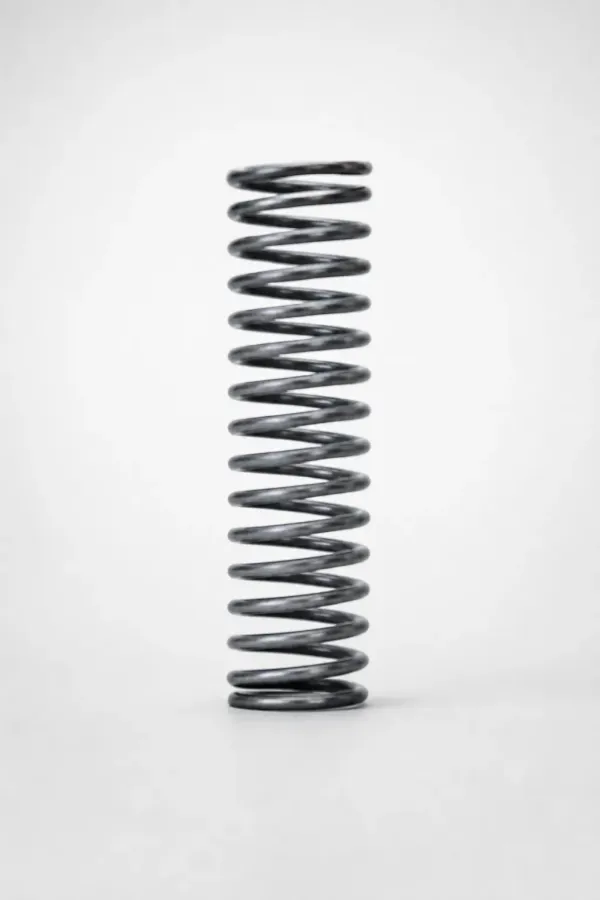
Round Wire Springs
General-purpose compression and extension springs with 25–75% deflection range. Music wire and carbon steel.
View Products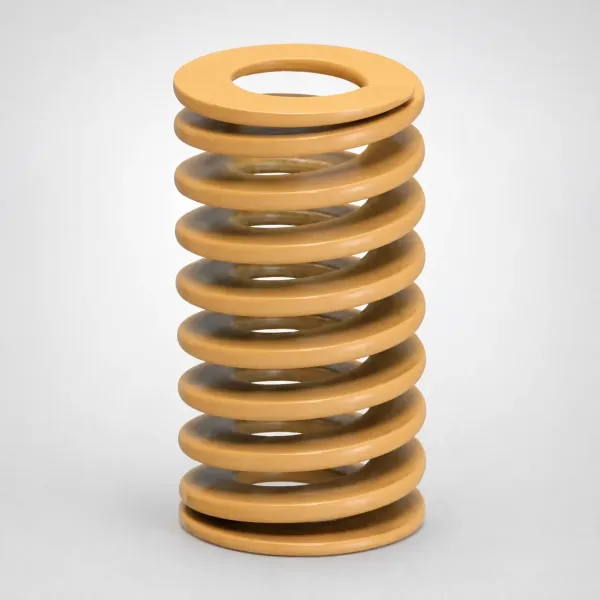
Die Springs
ISO 10243 color-coded rectangular wire springs. Chrome silicon alloy, light to extra heavy duty. JIS & Inch.
View Products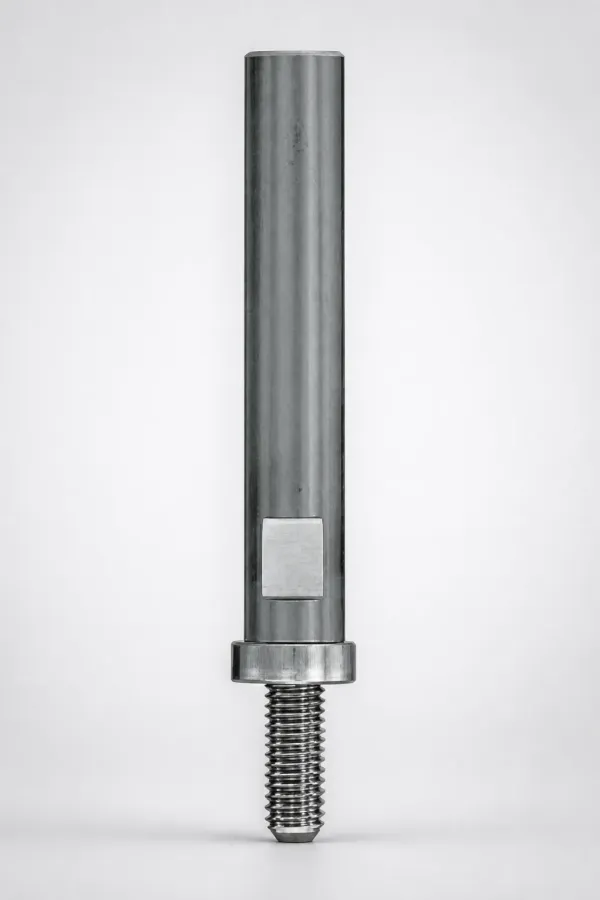
Spring Accessories & Components
Washers, guide pins, retainers, cages, guards, stock lifters, and roller guides for die spring assemblies.
View ProductsRound Wire Springs vs Die Springs — Which Do You Need?
Both are metal coil springs, but they serve different load ranges and applications in stamping dies.
| Criteria | Round Wire Springs | Die Springs |
|---|---|---|
| Wire Cross-Section | Circular | Rectangular (higher load/volume ratio) |
| Material | Music wire, carbon steel | Chrome silicon alloy (SWOSC-V, HRC 48-52) |
| Max Deflection | 25–75% of free length | 10–60% (varies by color class) |
| Load Capacity | Low to moderate | High to extreme |
| Standardization | No die-specific standard | ISO 10243 / JIS B 5012 color code |
| Fatigue Life | Moderate (depends on deflection) | Engineered for 500K–2M+ cycles at rated deflection |
| Typical Use | Cushioning, light stripping, guide returns | Blanking, heavy stripping, pressure pads |
| Cost Level | $ | $$–$$$ |
Decision rule: If your application requires stripping, blanking, or pressure pad force, die springs are the standard choice. Round wire springs are best suited for light-duty return mechanisms and cushioning. For a detailed comparison, see our Round Wire Springs vs Die Springs — Which Coil Spring Fits Your Application?.
Spring Accessories — What Else Do You Need?
Die springs perform best when paired with the right accessories. Here's what to include in your die design:
All ISO 10243 color classes
Hardened washers protect plate surface from spring end wear — recommended for all die springs
Medium to heavy duty
Center the spring in the bore, prevent lateral migration under cyclic loading
Red and yellow class springs
Contain fragments if spring fails — safety essential for high-energy springs
Pairing rule: At minimum, always pair die springs with washers. Add guide pins for springs Ø10 and above. Add cages/guards for heavy and extra heavy duty classes. For sizing details, see our How to Pair Die Springs with Washers, Guide Pins, and Cages.
Are Coil Springs the Right Choice?
✅ You're in the right place if:
- Your die has standard cylindrical spring pockets
- Your application follows ISO 10243 load-deflection requirements
- Operating temperature stays below 200°C
- You need consistent, predictable force over millions of cycles
- Your force requirement fits within ISO 10243 color class ranges
🔄 Consider switching to:
- Urethane Springs — if spring pocket space is too small for adequate metal spring, or corrosion/fragmentation is a concern
- Gas Springs — if you need constant force over long strokes, or force exceeding what die springs can deliver in the available space
About Coil Springs for Press Dies
Coil springs are the most widely used spring type in press die tooling. Our range includes ISO 10243 color-coded die springs in chrome silicon alloy (light through extra heavy duty), general-purpose round wire compression and extension springs, and a complete line of accessories including washers, guide pins, cages, retainers, and stock lifters. Available in JIS metric and Inch standards from MISUMI, DANLY IEM, Lamina, and LEMPCO.
Application Scenarios
Progressive Die Stripping
Multi-station progressive dies require uniform stripping force across all stations to prevent part distortion during strip advancement.
Why coil springs fit: Die springs provide repeatable force per ISO 10243 — same color class across all stations ensures balanced stripping. Guide pins keep springs centered under high-speed cycling.
Blanking & Piercing Pressure Pads
Heavy blanking operations need high spring force to hold material flat during cutting, preventing burr formation and dimensional drift.
Why coil springs fit: Heavy and extra heavy duty die springs deliver the highest force per unit volume in standard cylindrical pockets. Chrome silicon withstands >1M cycles at rated deflection.
Frequently Asked Questions
Engineering Resources
Round Wire Springs vs Die Springs — Which Coil Spring Fits Your Application?
Full-dimension comparison of circular vs rectangular wire springs for stamping applications.
How to Pair Die Springs with Washers, Guide Pins, and Cages
Complete accessory selection and installation guide for die spring assemblies.
Frequently Asked Questions
What is the difference between round wire springs and die springs for stamping applications?+
Do I need spring guide pins and washers with my die springs?+
When should I switch from coil springs to urethane or gas springs?+
What are spring cages and guards, and when should I use them?+
Engineering Resources
Round Wire Springs vs Die Springs — Which Coil Spring Fits Your Application?
Full-dimension comparison of circular vs rectangular wire springs for stamping applications.
How to Pair Die Springs with Washers, Guide Pins, and Cages
Complete accessory selection and installation guide for die spring assemblies.
Need a Custom Quote?
Specify your spring type (round wire or die spring), load class color code, outer diameter, free length, and quantity. JIS metric and Inch standards available from 4 major brands.