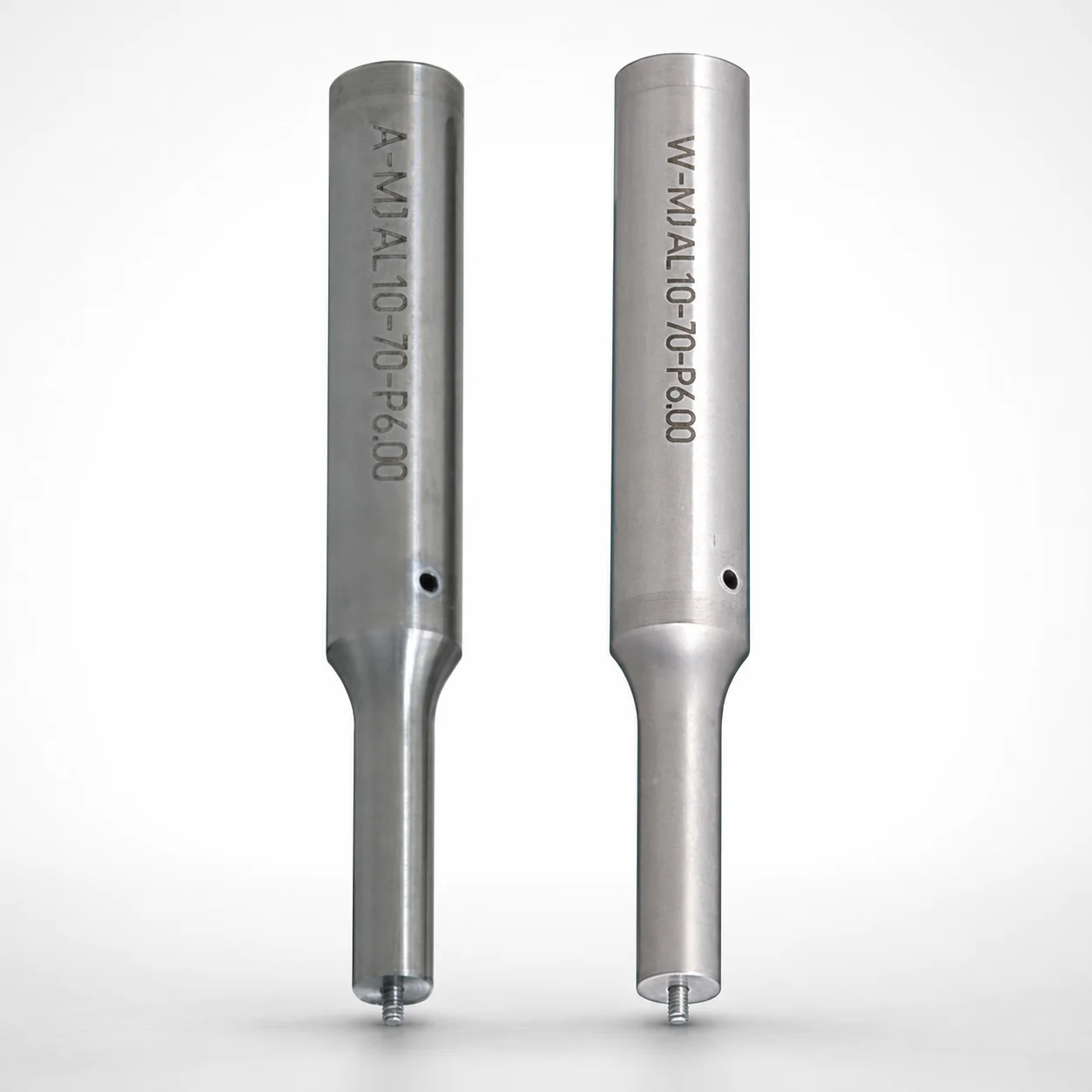
SKD11 Steel Single-Stepped Tapped Punches
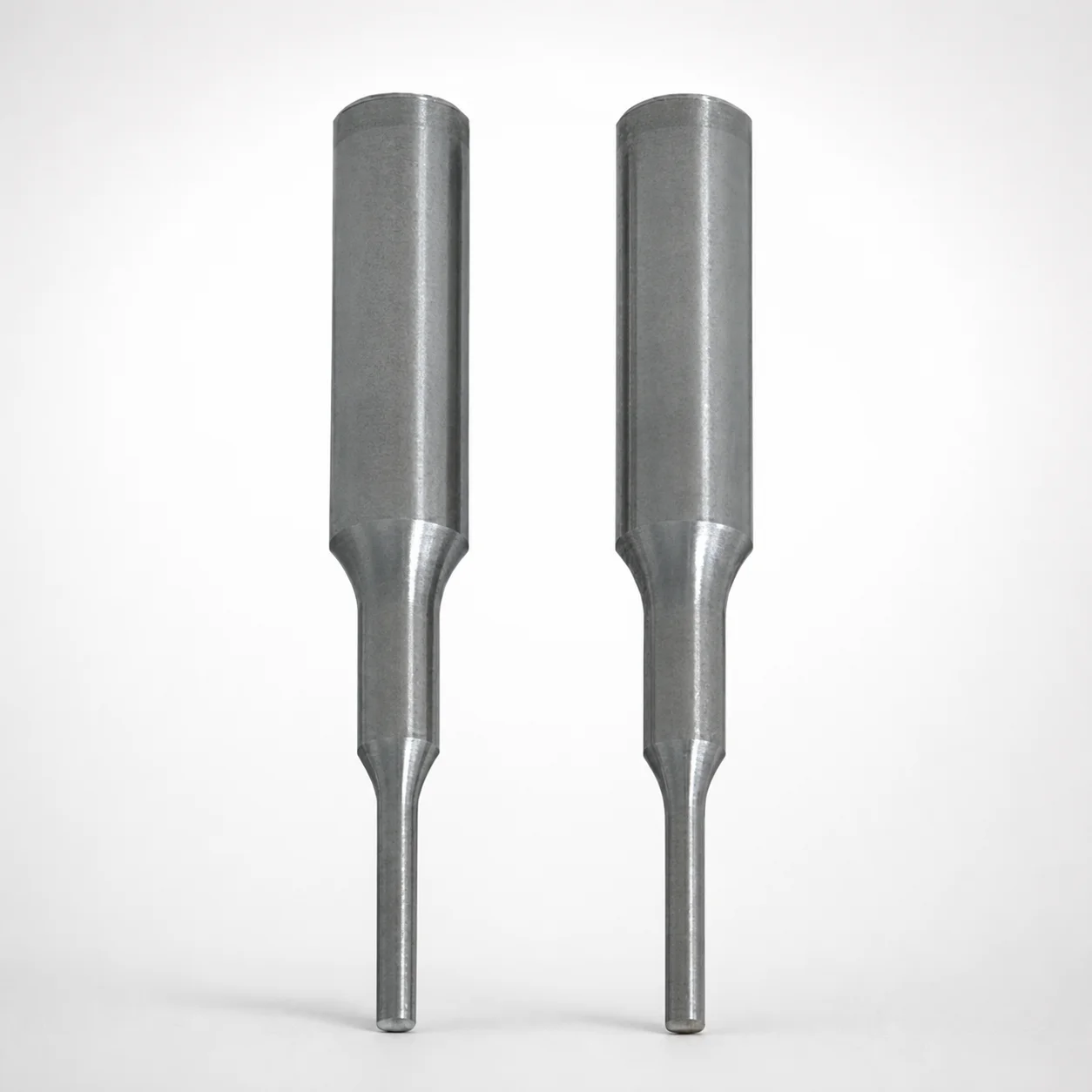
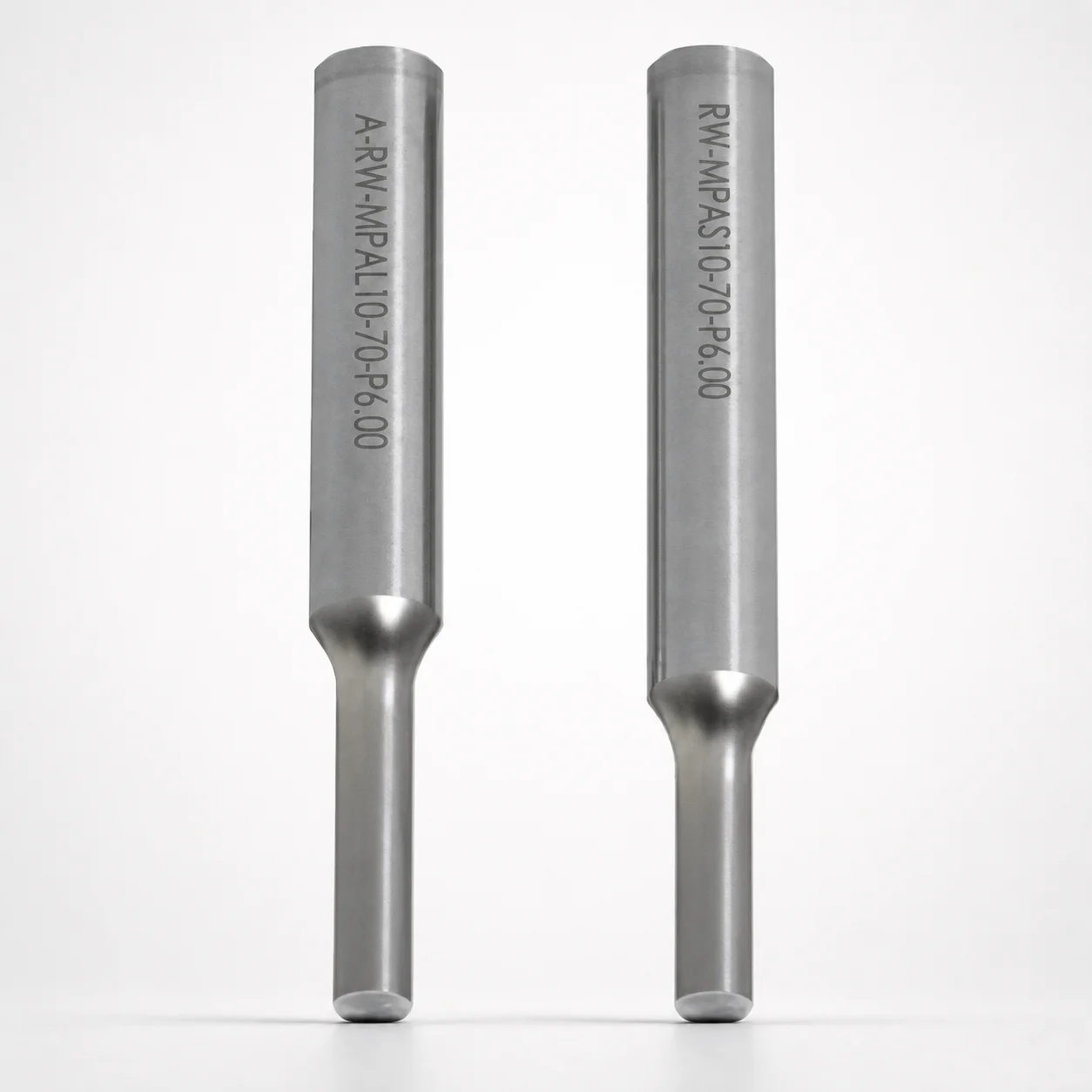
Single-stepped tapped punches (SKD11 steel) provide a tapped shank for positive mounting in tooling. The standard type design supports efficient ejector operation and stable punch seating.
- Single-stepped shank geometry for controlled guidance during ejection cycles
- SKD11 equivalent steel offers strong wear resistance under repeated loads
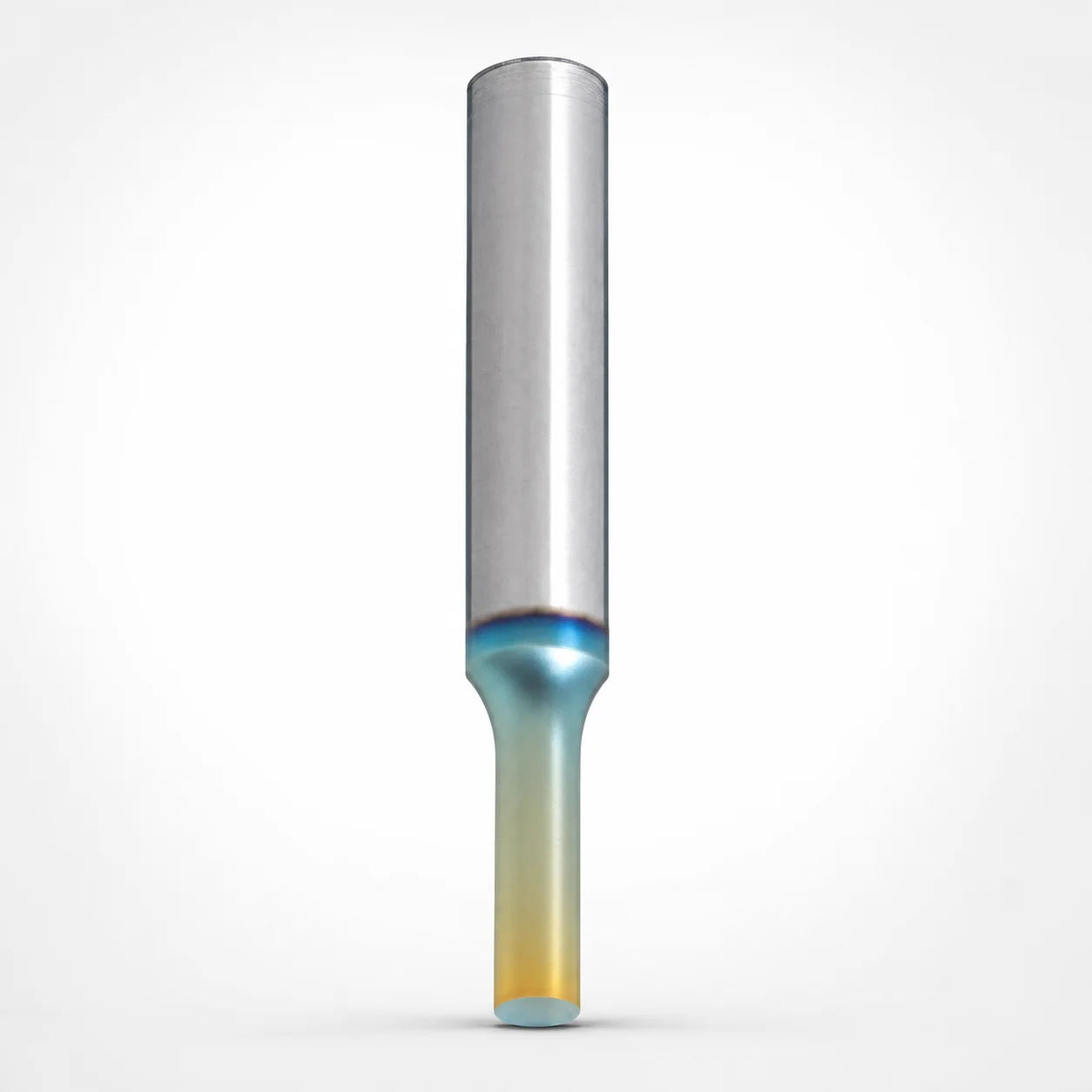
- Optional WPC surface treatment helps improve surface durability and tool life
- Tapped shank mount in standard tap configurations for straightforward integration
Specifications
2016 configurations available
| Tip shape | Surface treatment | Shank diameter D tolerance | B (Tip length) | D (Shank diameter) (mm) | P (Tip dimension) (mm) | L (L dimension) (mm) | LC (Full length alteration) (mm) | PC (Tip dimension alteration) (mm) | R (Tip corner R) (mm) | W (Tip dimension) (mm) | WC (Tip dimension alteration) (mm) | type |
|---|---|---|---|---|---|---|---|---|---|---|---|---|
| A | None | +0.005/0 | L | 6 | 2 ~ 5.99 | 50 ~ 80 | - | - | - | - | - | - |
| A | None | +0.005/0 | L | 6 | - | 50 ��� 80 | - | 1.8 ~ 1.99 | - | - | - | - |
| A | None | +0.005/0 | L | 6 | 2 ~ 5.99 | - | 36 ~ 79.9 | - | - | - | - | - |
| A | None | +0.005/0 | L | 6 | - | - | 36 ~ 79.9 | 1.8 ~ 1.99 | - | - | - | - |
| A | None | +0.005/0 | L | 8 | 3 ~ 7.99 | 50 ~ 100 | - | - | - | - | - | - |
| A | None | +0.005/0 | L | 8 | - | 50 ~ 100 | - | 2.5 ~ 2.99 | - | - | - | - |
| A | None | +0.005/0 | L | 8 | 3 ~ 7.99 | - | 36 ~ 99.9 | - | - | - | - | - |
| A | None | +0.005/0 | L | 8 | - | - | 36 ~ 99.9 | 2.5 ~ 2.99 | - | - | - | - |
| A | None | +0.005/0 | L | 10 | 3 ~ 9.99 | 50 ~ 100 | - | - | - | - | - | - |
| A | None | +0.005/0 | L | 10 | - | 50 ~ 100 | - | 2.8 ~ 2.99 | - | - | - | - |
| A | None | +0.005/0 | L | 10 | 3 ~ 9.99 | - | 36 ~ 99.9 | - | - | - | - | - |
| A | None | +0.005/0 | L | 10 | - | - | 36 ~ 99.9 | 2.8 ~ 2.99 | - | - | - | - |
| A | None | +0.005/0 | L | 13 | 6 ~ 12.99 | 50 ~ 100 | - | - | - | - | - | - |
| A | None | +0.005/0 | L | 13 | - | 50 ~ 100 | - | 5 ~ 5.99 | - | - | - | - |
| A | None | +0.005/0 | L | 13 | 6 ~ 12.99 | - | 36 ~ 99.9 | - | - | - | - | - |
| A | None | +0.005/0 | L | 13 | - | - | 36 ~ 99.9 | 5 ~ 5.99 | - | - | - | - |
| A | None | +0.005/0 | L | 16 | 10 ~ 15.99 | 60 ~ 100 | - | - | - | - | - | - |
| A | None | +0.005/0 | L | 16 | - | 60 ~ 100 | - | 8 ~ 9.99 | - | - | - | - |
| A | None | +0.005/0 | L | 16 | 10 ~ 15.99 | - | 36 ~ 99.9 | - | - | - | - | - |
| A | None | +0.005/0 | L | 16 | - | - | 36 ~ 99.9 | 8 ~ 9.99 | - | - | - | - |
| A | None | +0.005/0 | L | 20 | 13 ~ 19.99 | 60 ~ 100 | - | - | - | - | - | - |
| A | None | +0.005/0 | L | 20 | - | 60 ~ 100 | - | 9 ~ 12.99 | - | - | - | - |
| A | None | +0.005/0 | L | 20 | 13 ~ 19.99 | - | 36 ~ 99.9 | - | - | - | - | - |
| A | None | +0.005/0 | L | 20 | - | - | 36 ~ 99.9 | 9 ~ 12.99 | - | - | - | - |
| A | None | +0.005/0 | L | 25 | 18 ~ 24.99 | 60 ~ 100 | - | - | - | - | - | - |
| A | None | +0.005/0 | L | 25 | - | 60 ~ 100 | - | 9 ~ 17.99 | - | - | - | - |
| A | None | +0.005/0 | L | 25 | 18 ~ 24.99 | - | 36 ~ 99.9 | - | - | - | - | - |
| A | None | +0.005/0 | L | 25 | - | - | 36 ~ 99.9 | 9 ~ 17.99 | - | - | - | - |
| A | None | +0.005/0 | S | 6 | 2 ~ 5.99 | 40 ~ 80 | - | - | - | - | - | - |
| A | None | +0.005/0 | S | 6 | - | 40 ~ 80 | - | 1.8 ~ 1.99 | - | - | - | - |
| A | None | +0.005/0 | S | 6 | 2 ~ 5.99 | - | 36 ~ 79.9 | - | - | - | - | - |
| A | None | +0.005/0 | S | 6 | - | - | 36 ~ 79.9 | 1.8 ~ 1.99 | - | - | - | - |
| A | None | +0.005/0 | S | 8 | 3 ~ 7.99 | 40 ~ 100 | - | - | - | - | - | - |
| A | None | +0.005/0 | S | 8 | - | 40 ~ 100 | - | 2.5 ~ 2.99 | - | - | - | - |
| A | None | +0.005/0 | S | 8 | 3 ~ 7.99 | - | 36 ~ 99.9 | - | - | - | - | - |
| A | None | +0.005/0 | S | 8 | - | - | 36 ~ 99.9 | 2.5 ~ 2.99 | - | - | - | - |
| A | None | +0.005/0 | S | 10 | 3 ~ 9.99 | 40 ~ 100 | - | - | - | - | - | - |
| A | None | +0.005/0 | S | 10 | - | 40 ~ 100 | - | 2.8 ~ 2.99 | - | - | - | - |
| A | None | +0.005/0 | S | 10 | 3 ~ 9.99 | - | 36 ~ 99.9 | - | - | - | - | - |
| A | None | +0.005/0 | S | 10 | - | - | 36 ~ 99.9 | 2.8 ~ 2.99 | - | - | - | - |
| A | None | +0.005/0 | S | 13 | 6 ~ 12.99 | 40 ~ 100 | - | - | - | - | - | - |
| A | None | +0.005/0 | S | 13 | - | 40 ~ 100 | - | 5 ~ 5.99 | - | - | - | - |
| A | None | +0.005/0 | S | 13 | 6 ~ 12.99 | - | 36 ~ 99.9 | - | - | - | - | - |
| A | None | +0.005/0 | S | 13 | - | - | 36 ~ 99.9 | 5 ~ 5.99 | - | - | - | - |
| A | None | +0.005/0 | S | 16 | 10 ~ 15.99 | 40 ~ 100 | - | - | - | - | - | - |
| A | None | +0.005/0 | S | 16 | - | 40 ~ 100 | - | 8 ~ 9.99 | - | - | - | - |
| A | None | +0.005/0 | S | 16 | 10 ~ 15.99 | - | 36 ~ 99.9 | - | - | - | - | - |
| A | None | +0.005/0 | S | 16 | - | - | 36 ~ 99.9 | 8 ~ 9.99 | - | - | - | - |
| A | None | +0.005/0 | S | 20 | 13 ~ 19.99 | 40 ~ 100 | - | - | - | - | - | - |
| A | None | +0.005/0 | S | 20 | - | 40 ~ 100 | - | 9 ~ 12.99 | - | - | - | - |
Product Guide
Application Scenarios+
These single-stepped tapped punches are designed for injection mold tooling where a threaded shank provides secure, repeatable mounting into the mold body. The single-step geometry improves alignment and seating stability during ejection, helping maintain consistent punch tip-to-cavity positioning under cyclic loads.
- Automotive connector and bracket molds: Use the tapped shank mounting to reduce play in high-cycle ejection. The SKD11 steel base supports reliable wear performance when producing fine features and repeated punch-through cycles.
- Electronics housings and in-mold inserts: When precise punch guidance is needed, the controlled shank profile helps prevent wobble and supports smooth ejector operation.
- General purpose stamping-through features (tool inserts, sliders fixed by threaded pockets): Select the optional WPC surface treatment when the tool is expected to face abrasive wear or sliding contact at the punch surface.
Choose this variant when your design benefits from threaded integration and predictable punch guidance, especially where long production runs demand stable seating and wear resistance.
Material & Process Details+
SKD11 is a chromium-molybdenum tool steel commonly used for punches and dies due to its balance of hardness and wear resistance. In typical applications, SKD11 is considered comparable to AISI D2 class tooling steels, making it suitable for repeated cutting and punching loads.
- Hardness / performance trade-off: Higher hardness improves wear resistance, but can reduce toughness if over-hardened. For punching tools, a tempered condition is typically used to maintain impact resistance during ejection cycles.
- Surface durability option: The optional WPC treatment is provided to enhance surface life under abrasion and friction at the working faces.
- Heat treatment state: The punches are supplied as SKD11 steel with the stated optional surface treatment; heat-treatment optimization (quench & temper / tempering level) is typically selected by the toolmaker based on target hardness and required toughness.
Compared with untreated SKD11, WPC adds an extra layer of wear protection, which can be advantageous for molds exposed to abrasive wear or frequent sliding contact.
Sizing & Selection Guide+
To select the correct tapped punch, start by matching the shank diameter D and the available threaded mounting interface in your mold base. The shank diameter range is 6 ~ 25 mm and is specified with tolerance +0.005/0, m5, so align the punch shank size to your tapped pocket or guide bore design accordingly.
- Choose tip geometry: Select Tip shape (A, D, E, G, R) and confirm tip dimensions using P (2 ~ 18 mm), W (2 ~ 6 mm), and corner radius R (0.15 mm).
- Match lengths for stack-up: The L dimension is available across multiple ranges (e.g., 50 ~ 80, 50 ~ 100, 60 ~ 100, 40 ~ 80, 40 ~ 100). Use LC (full length alteration) and PC (tip alteration, 1.8 ~ 9) to fine-tune protrusion and engagement.
- Thread fit considerations: Because D has an m5 class tolerance, ensure your threaded pocket and insertion depth allow full seating without binding.
Finally, select surface treatment (None or WPC) based on expected wear and friction conditions at the punch working region.
Frequently Asked Questions
Which shank diameter D range and tolerance should I design for when integrating this tapped punch?+
This series covers D = 6 ~ 25 mm. The shank diameter is specified with tolerance +0.005/0, m5, so your tapped pocket/guide bore and seating depth should be designed to match that size class to avoid interference or excessive clearance.
How do I select the correct tip shape and tip dimensions (P, W, R) for a specific punching feature?+
Choose the Tip shape from A, D, E, G, R. Then confirm tip dimensions using P = 2 ~ 18 mm, W = 2 ~ 6 mm, and the tip corner R = 0.15 mm to ensure the working profile matches your cavity feature requirements.
What length options (L, LC) are available to control punch protrusion and engagement?+
The L dimension is offered in multiple ranges such as 50 ~ 80, 50 ~ 100, 60 ~ 100, and 40 ~ 100 (depending on configuration). Use LC full length alteration ranges (e.g., 36 ~ 79.9, 32 ~ 99.9, or 32 ~ 79.9) to tune the overall stack-up and protrusion.
Is WPC surface treatment recommended for abrasive or high-friction mold cycles?+
The product offers surface treatment: None or WPC. When the punch experiences abrasive wear or sliding friction at the working area, WPC can improve surface durability and tool life compared with the untreated condition.
How does the single-stepped geometry affect ejector guidance in tapped punch applications?+
The design includes a single-stepped shank geometry intended to support controlled guidance and stable punch seating during ejection cycles. This helps maintain consistent punch position relative to the cavity, which is important when the tooling needs predictable engagement and repeatability.
Related Products
Need Custom Specifications?
Our engineering team can help with custom configurations, material selection, and volume pricing.