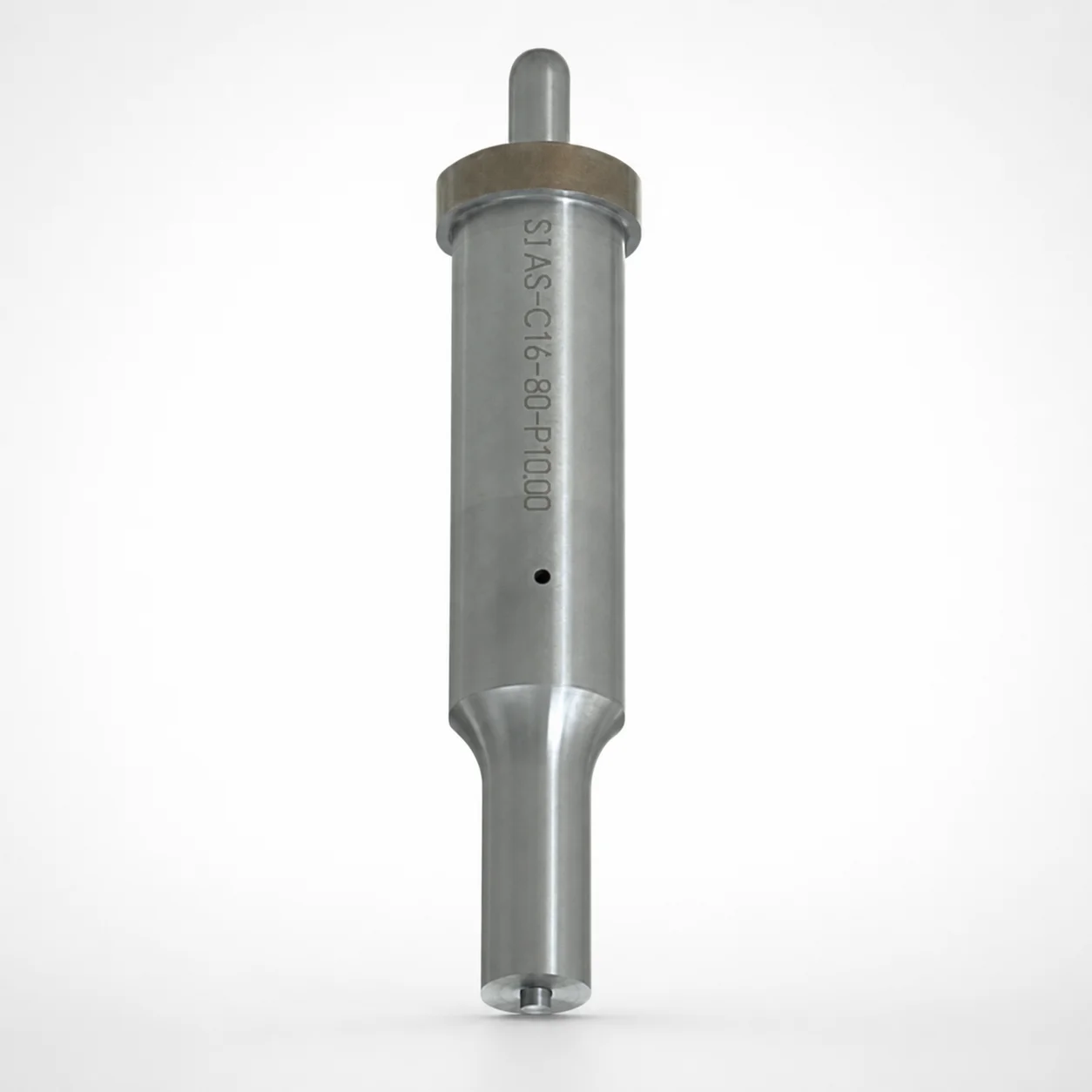
DIN Standard SKD11 Steel Gas Release Single-Stepped Ejector Punches
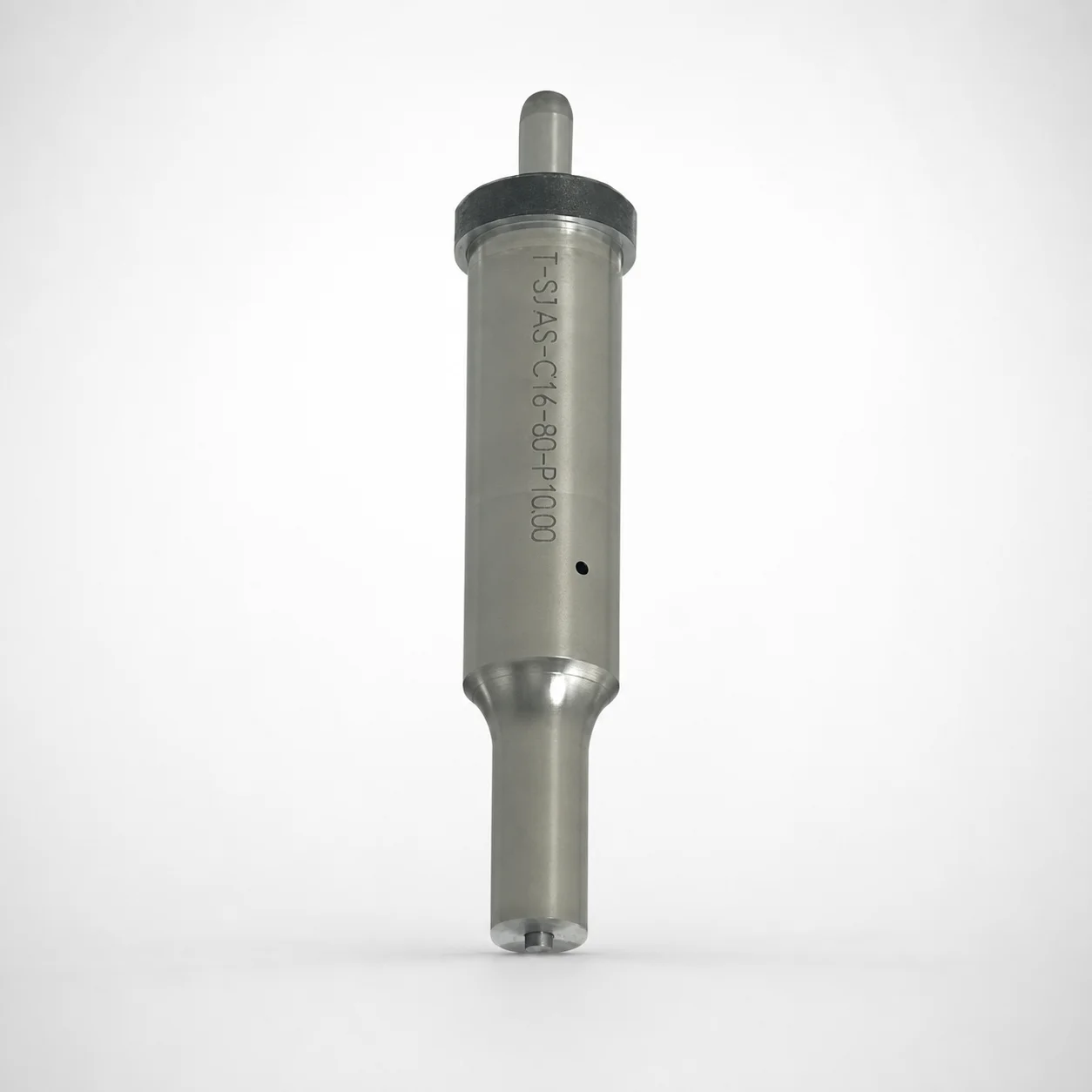
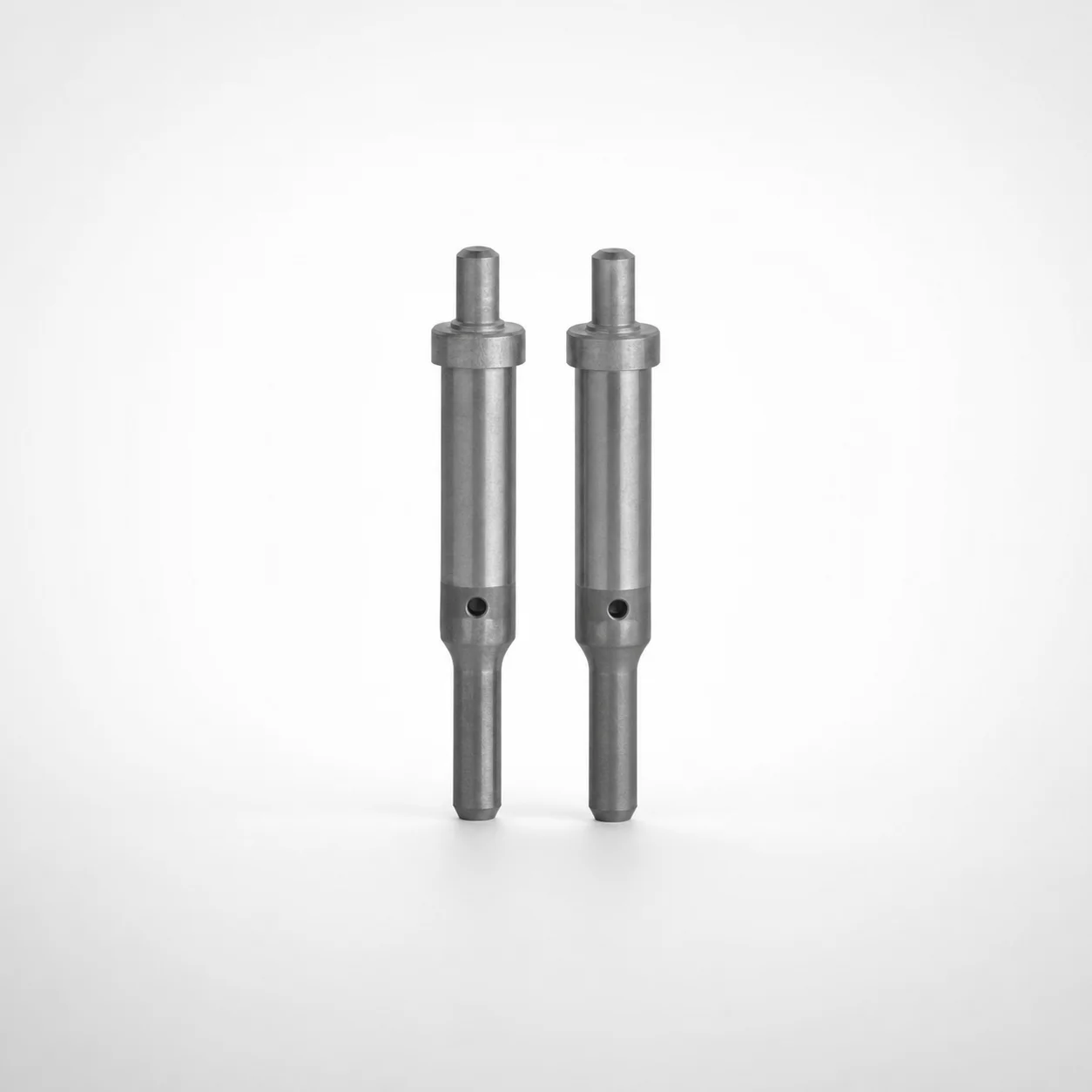
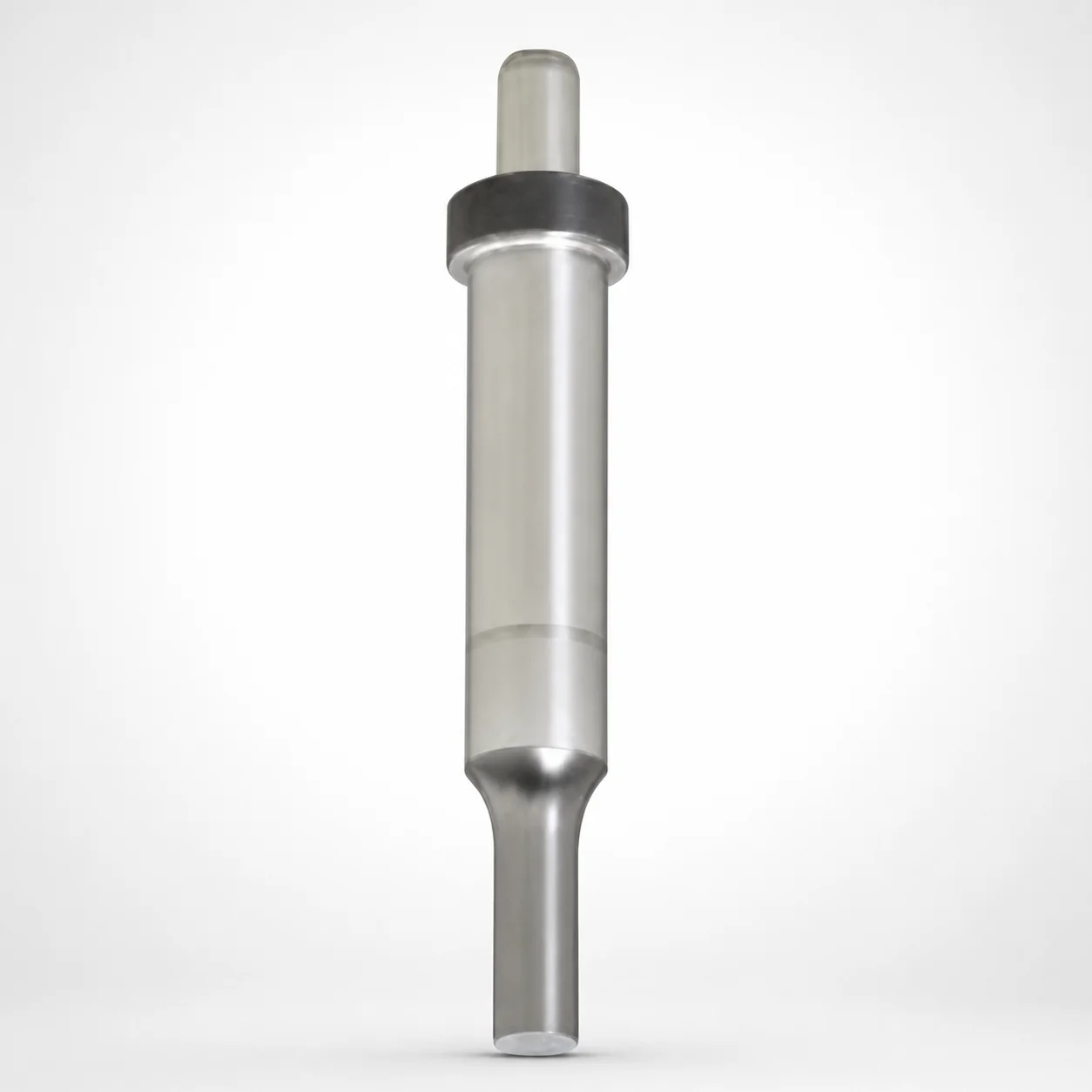
Gas release single-stepped ejector punches (SKD11 steel) are designed for stable ejection with a locating dowel hole to improve alignment in die assemblies. The single-stepped shank supports consistent positioning during production cycles.
- Single-stepped shank with a locating dowel hole for repeatable centering
- SKD11 equivalent (D2) steel construction provides strong wear resistance
- Supports m5 shank diameter tolerance for reliable fit in guide systems
- DIN-standard construction suited for typical ejector punch applications
Specifications
1338 configurations available
| Jector | Tip shape | B (Tip length) | D (Shank diameter) (mm) | P (Tip dimension) (mm) | L (L dimension) (mm) | LC (Full length alteration) (mm) | PC (Tip dimension alteration) (mm) | R (Tip corner R) (mm) | W (Tip dimension) (mm) | WC (Tip dimension alteration) (mm) | type |
|---|---|---|---|---|---|---|---|---|---|---|---|
| Standard type | Round | L | 10 | 3 ~ 9.99 | 70 ~ 120 | - | - | - | - | - | - |
| Standard type | Round | L | 10 | - | 70 ~ 120 | - | 2.8 ~ 2.99 | - | - | - | - |
| Standard type | Round | L | 10 | 3 ~ 9.99 | - | 34 ~ 119.9 | - | - | - | - | - |
| Standard type | Round | L | 10 | - | - | 34 ~ 119.9 | 2.8 ~ 2.99 | - | - | - | - |
| Standard type | Round | L | 13 | 6 ~ 12.99 | 70 ~ 120 | - | - | - | - | - | - |
| Standard type | Round | L | 13 | - | 70 ~ 120 | - | 5 ~ 5.99 | - | - | - | - |
| Standard type | Round | L | 13 | 6 ~ 12.99 | - | 34 ~ 119.9 | - | - | - | - | - |
| Standard type | Round | L | 13 | - | - | 34 ~ 119.9 | 5 ~ 5.99 | - | - | - | - |
| Standard type | Round | L | 16 | 10 ~ 15.99 | 70 ~ 80 | - | - | - | - | - | - |
| Standard type | Round | L | 16 | - | 70 ~ 80 | - | 8 ~ 9.99 | - | - | - | - |
| Standard type | Round | L | 16 | 10 ~ 15.99 | 90 ~ 120 | - | - | - | - | - | - |
| Standard type | Round | L | 16 | - | 90 ~ 120 | - | 8 ~ 9.99 | - | - | - | - |
| Standard type | Round | L | 16 | 10 ~ 15.99 | - | 34 ~ 69.9 | - | - | - | - | - |
| Standard type | Round | L | 16 | - | - | 34 ~ 69.9 | 8 ~ 9.99 | - | - | - | - |
| Standard type | Round | L | 16 | 10 ~ 15.99 | - | 70.01 ~ 119.91 | - | - | - | - | - |
| Standard type | Round | L | 16 | - | - | 70.01 ~ 119.91 | 8 ~ 9.99 | - | - | - | - |
| Standard type | Round | L | 20 | 13 ~ 19.99 | 70 ~ 120 | - | - | - | - | - | - |
| Standard type | Round | L | 20 | - | 70 ~ 120 | - | 9 ~ 12.99 | - | - | - | - |
| Standard type | Round | L | 20 | 13 ~ 19.99 | - | 34 ~ 119.9 | - | - | - | - | - |
| Standard type | Round | L | 20 | - | - | 34 ~ 119.9 | 9 ~ 12.99 | - | - | - | - |
| Standard type | Round | L | 25 | 18 ~ 24.99 | 70 ~ 120 | - | - | - | - | - | - |
| Standard type | Round | L | 25 | - | 70 ~ 120 | - | 9 ~ 17.99 | - | - | - | - |
| Standard type | Round | L | 25 | 18 ~ 24.99 | - | 34 ~ 119.9 | - | - | - | - | - |
| Standard type | Round | L | 25 | - | - | 34 ~ 119.9 | 9 ~ 17.99 | - | - | - | - |
| Standard type | Round | L | 32 | 20 ~ 31.99 | 70 ~ 120 | - | - | - | - | - | - |
| Standard type | Round | L | 32 | - | 70 ~ 120 | - | 15 ~ 19.99 | - | - | - | - |
| Standard type | Round | L | 32 | 20 ~ 31.99 | - | 34 ~ 119.9 | - | - | - | - | - |
| Standard type | Round | L | 32 | - | - | 34 ~ 119.9 | 15 ~ 19.99 | - | - | - | - |
| Standard type | Round | L | 38 | 28 ~ 37.99 | 70 ~ 120 | - | - | - | - | - | - |
| Standard type | Round | L | 38 | - | 70 ~ 120 | - | 23 ~ 28 | - | - | - | - |
| Standard type | Round | L | 38 | 28 ~ 37.99 | - | 34 ~ 119.9 | - | - | - | - | - |
| Standard type | Round | L | 38 | - | - | 34 ~ 119.9 | 23 ~ 28 | - | - | - | - |
| Standard type | Round | L | 45 | 35 ~ 44.99 | 70 ~ 120 | - | - | - | - | - | - |
| Standard type | Round | L | 45 | - | 70 ~ 120 | - | 30 ~ 35 | - | - | - | - |
| Standard type | Round | L | 45 | 35 ~ 44.99 | - | 34 ~ 119.9 | - | - | - | - | - |
| Standard type | Round | L | 45 | - | - | 34 ~ 119.9 | 30 ~ 35 | - | - | - | - |
| Standard type | Round | S | 10 | 3 ~ 9.99 | 60 ~ 120 | - | - | - | - | - | - |
| Standard type | Round | S | 10 | - | 60 ~ 120 | - | 2.8 ~ 2.99 | - | - | - | - |
| Standard type | Round | S | 10 | 3 ~ 9.99 | - | 34 ~ 119.9 | - | - | - | - | - |
| Standard type | Round | S | 10 | - | - | 34 ~ 119.9 | 2.8 ~ 2.99 | - | - | - | - |
| Standard type | Round | S | 13 | 6 ~ 12.99 | 60 ~ 120 | - | - | - | - | - | - |
| Standard type | Round | S | 13 | - | 60 ~ 120 | - | 5 ~ 5.99 | - | - | - | - |
| Standard type | Round | S | 13 | 6 ~ 12.99 | - | 34 ~ 119.9 | - | - | - | - | - |
| Standard type | Round | S | 13 | - | - | 34 ~ 119.9 | 5 ~ 5.99 | - | - | - | - |
| Standard type | Round | S | 16 | 10 ~ 15.99 | 80 | - | - | - | - | - | - |
| Standard type | Round | S | 16 | - | 80 | - | 8 ~ 9.99 | - | - | - | - |
| Standard type | Round | S | 16 | 10 ~ 15.99 | 60 ~ 70 | - | - | - | - | - | - |
| Standard type | Round | S | 16 | - | 60 ~ 70 | - | 8 ~ 9.99 | - | - | - | - |
| Standard type | Round | S | 16 | 10 ~ 15.99 | 90 ~ 120 | - | - | - | - | - | - |
| Standard type | Round | S | 16 | - | 90 ~ 120 | - | 8 ~ 9.99 | - | - | - | - |
Product Guide
Application Scenarios+
This gas release, single-stepped ejector punch is used in injection mold tooling where stable ejection and reliable alignment are critical. The locating dowel hole improves centering inside the die set, helping prevent punch-to-bushing misalignment during repeated press cycles.
Automotive connector and housing molds benefit from the consistent shank positioning, especially when thin-wall parts require controlled knockout to avoid surface marking. The single-stepped geometry supports repeatable placement through normal production wear cycles.
Consumer electronics and appliance housings often require uniform ejection across multiple cavities. This punch’s DIN-standard form factor and wear-resistant SKD11 (D2) steel help maintain dimensional stability in die assemblies that run high cycle counts.
Thermoplastic medical device housings and other precision parts can use the locating hole for repeatable alignment, supporting clean part release without dwell-related drift in guided systems.
- Single-stepped shank + locating dowel hole for repeatable centering
- SKD11 (D2) wear resistance for stable die operation
- DIN-standard suitability for typical ejector punch layouts
Material & Process Details+
The punch is manufactured from SKD11 steel, commonly associated with AISI D2 tool steel. SKD11 is selected for its high wear resistance in die and punch environments where sliding contact and abrasive action can gradually degrade tool surfaces.
In tooling practice, SKD11 is typically supplied in a hardened and tempered state for balanced performance. After heat treatment, the material targets high hardness (commonly around the mid-50s HRC range for D2-class steels) to resist edge rounding and surface wear during ejection cycles.
Hardness provides durability, but it can reduce toughness compared with softer grades; therefore, the single-stepped support and proper fit in the guide system are important to limit bending and chipping risk.
- SKD11 (D2 equivalent): high wear resistance; hardened & tempered
- Trade-off: higher hardness may lower toughness versus lower-alloy alternatives
- Best use: die setups needing long service life in punching/ejection locations
Sizing & Selection Guide+
Select the ejector punch by matching the shank diameter (D) and overall length features to the mold’s guide and ejector stroke geometry. This series provides D = 10 ~ 45 mm, so choose the diameter that matches your guide bushing or fitted bore for stable alignment.
Match the working end geometry to the part and ejector clearance. Tip shape options include Round, Rectangle, Oblong, Double flatted round, Radius rectangle, with P (tip dimension) = 3 ~ 35 mm and W (tip dimension) = 3 ~ 9 mm. Tip length is defined by B (tip length) = L, S, X and the corresponding tip-length alteration parameters PC = 2.8 ~ 30 mm and WC = 2.8 ~ 8 mm depending on variant.
For overall travel and clearance, use L = 60 ~ 100 mm and LC = 34 ~ 72 mm (full length alteration). The listed values should be verified against your die layout drawing; where a guide interface is involved, maintain the intended fit using the available m5 shank diameter tolerance guidance to ensure smooth, repeatable centering.
- Choose D within 10–45 mm for guide compatibility
- Choose P within 3–35 mm for contact/clearance
- Verify L (60–100 mm) against ejection stroke and safe clearance
- Use LC (34–72 mm) and tip alteration ranges to fit cavity/core spacing
Frequently Asked Questions
Which parameters control the locating and centering of this gas release single-stepped ejector punch in the die set?+
How do I choose the ejector punch tip shape and tip dimensions for reliable gas release and part knockout?+
Is SKD11 suitable for high-cycle ejection compared with lower-wear tool steels?+
What length dimensions should be matched to prevent interference during ejector stroke?+
What are the available variants for the ejector type and how should they affect selection?+
Related Products
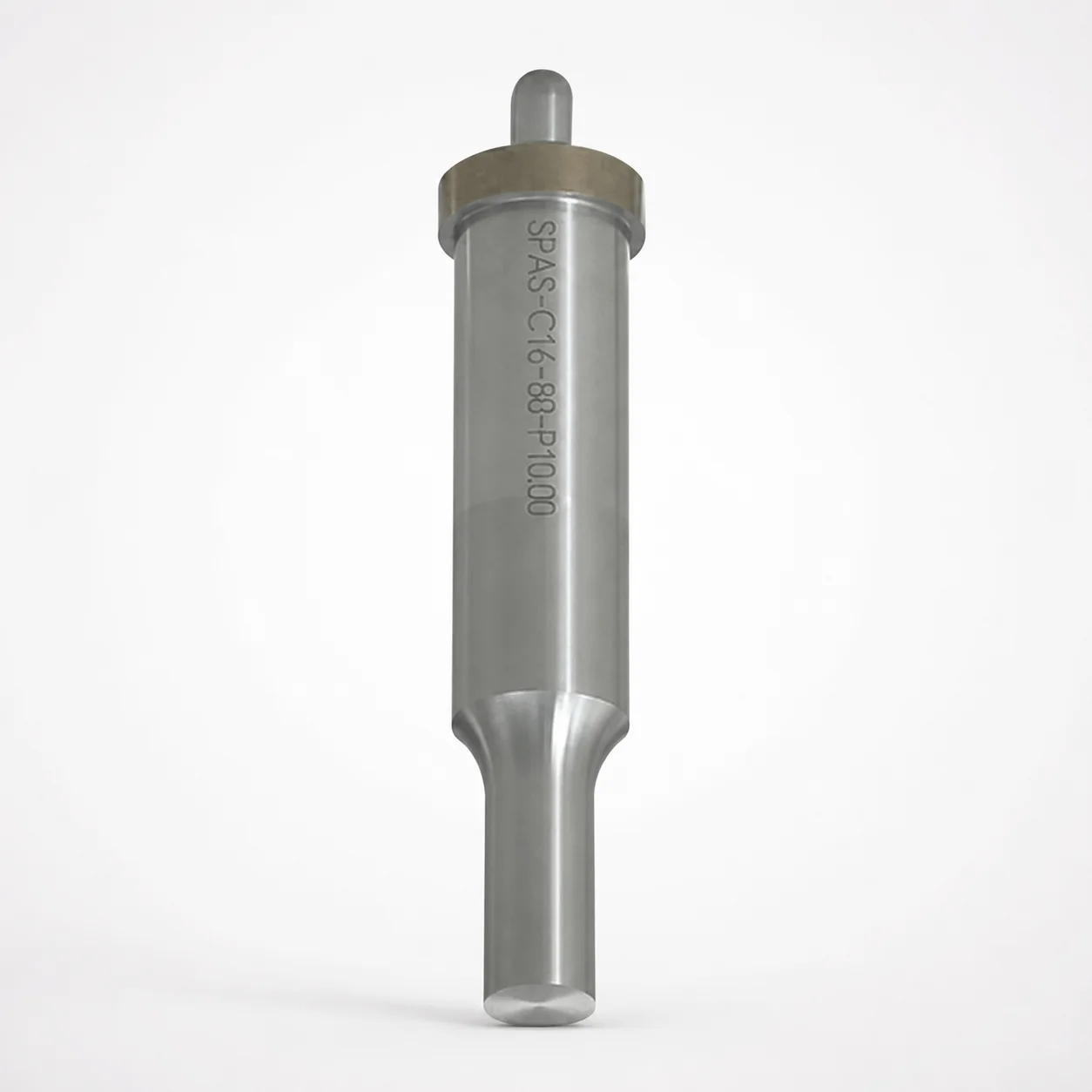
Metric Center Dowel Ejector Punches (SKD11 Equivalent)
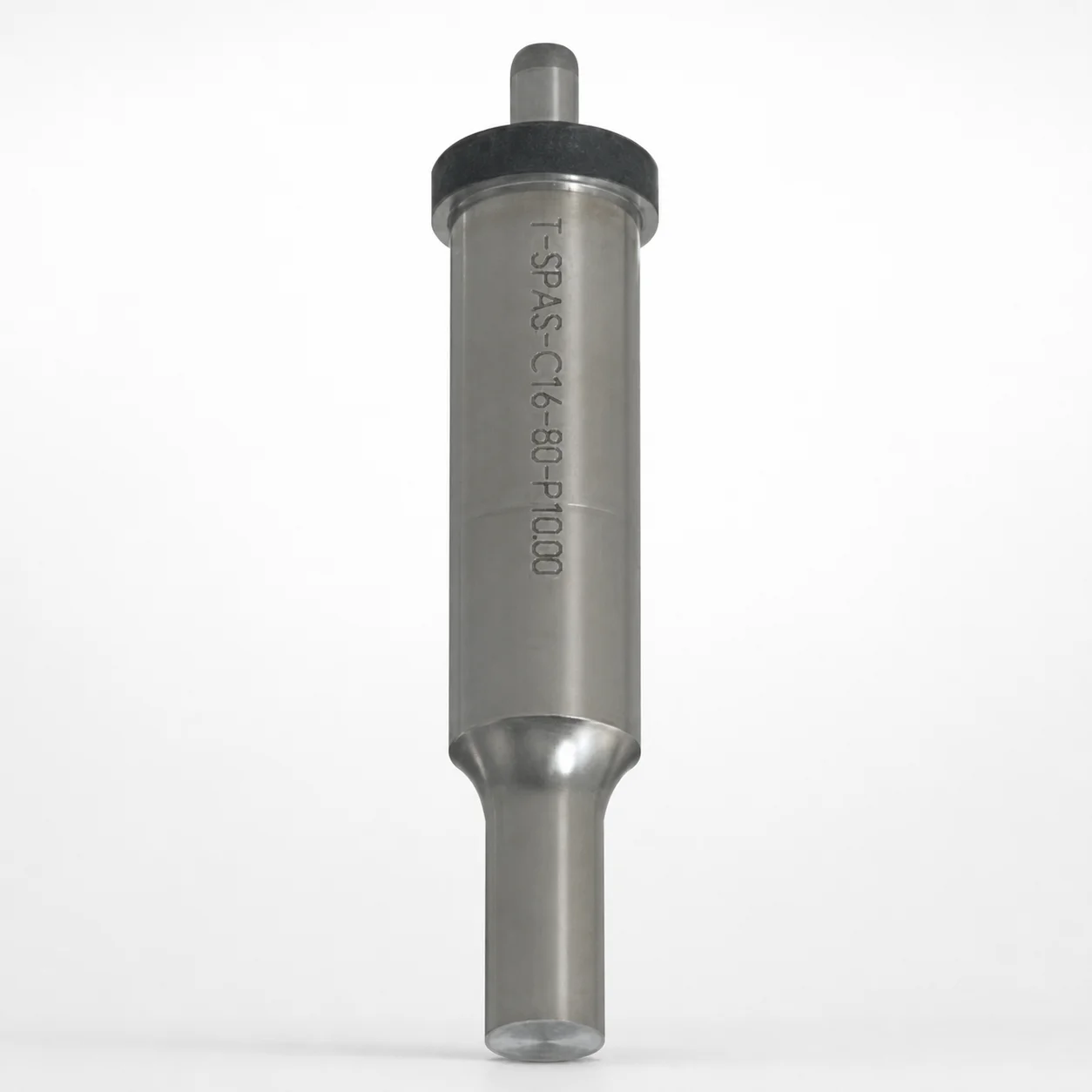
Dicoat Treatment SKD11 Steel Center Dowel Ejector Punches - Metric
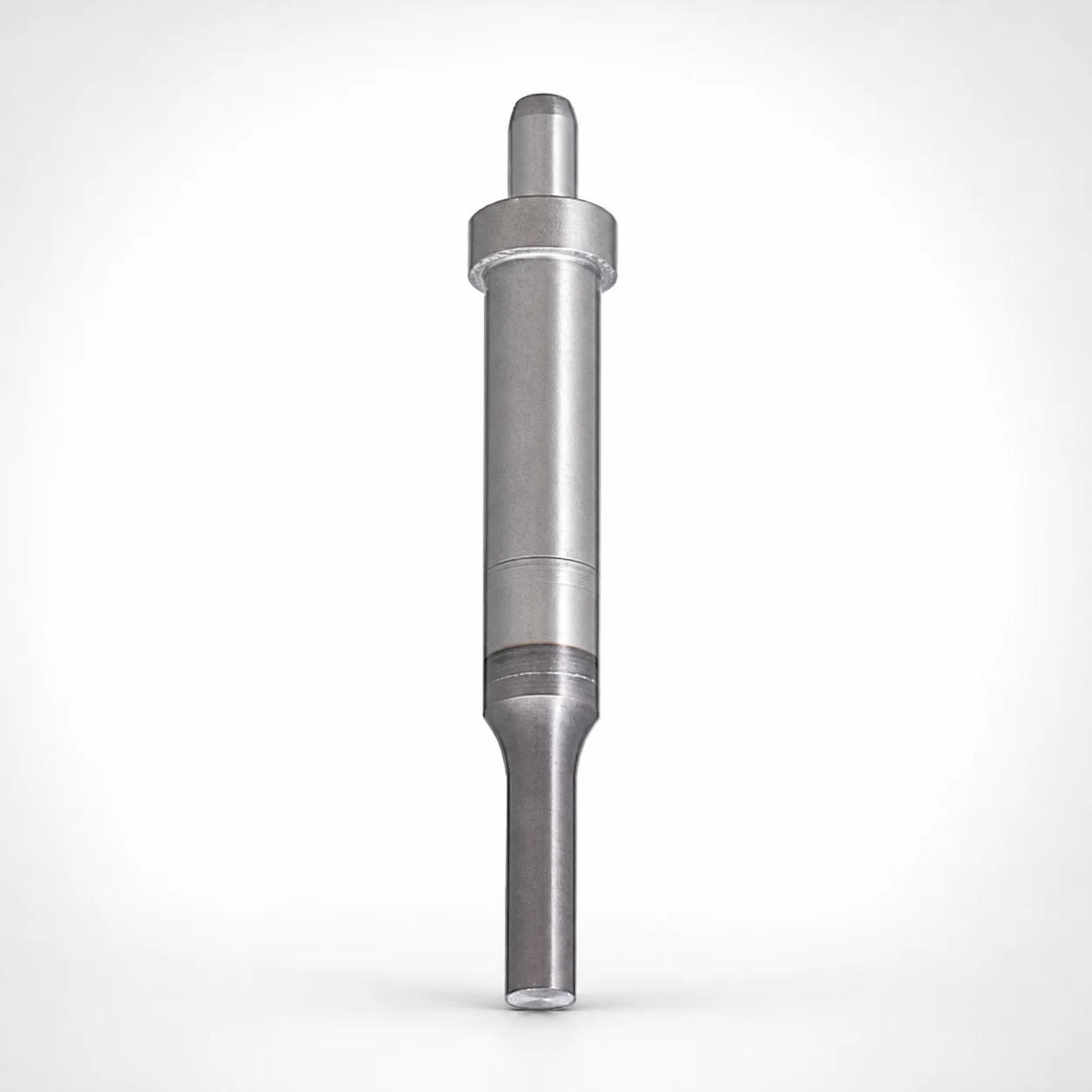
Center Dowel Ejector Punches - Metric, XCN TiCN Coating
Center Dowel Ejector Punches with Locating Dowel Hole
DIN Standard TiCN Center Dowel Ejector Punches
RW Coat SKD11 Equivalent (D2) Center Dowel Ejector Punches
Need Custom Specifications?
Our engineering team can help with custom configurations, material selection, and volume pricing.