
Coil Springs - Extra-Heavy Pressure - Inch
Coil Springs - Extra-Heavy Pressure - Inch are engineered for demanding load cycles, using hardened alloy steel and a corrosion-resistant e-coat finish. Optimized free-length strategies help extend fatigue life under controlled deflection.
- Green/Silver color-coded identification for quick spec matching in production
- E-coat corrosion resistance supports dependable performance in harsh environments
- Hardened alloy steel construction for high strength under extra-heavy pressure demands
- Temperature rating up to 482°F (250°C) for stable operation
Specifications
2 configurations available
| Dd (Rod Diameter) (in) | DH (Hole Diameter) (in) | R (Spring Rate +/-10% ) (lbs/.10 Inch Deflec.) |
|---|---|---|
| 9/32" | 1/2" | 31 |
| 3/8" | 3/4" | 140 |
Product Guide
Application Scenarios+
Coil springs like this are used in precision injection mold tooling anywhere extra-heavy clamping force and stable return are required. Typical applications include slide-gate or shut-off systems in automotive connector molds, where frequent cycling demands consistent force over controlled deflection.
- Automotive connector molds: The extra-heavy pressure design helps maintain reliable actuation and return during high-cycle production.
- Medical device housings: The hardened alloy steel and e-coat corrosion resistance support dependable long-term performance in controlled, cleanliness-focused molding environments.
- Electronics and appliance parts: For compact mechanisms needing strong spring rate, the available rates (31 or 140 lbs/0.10 in deflection) support repeatable motion tuning.
This variant is suited because it combines hardened alloy steel strength with an e-coat finish and a temperature capability up to 482°F (250°C), helping the spring hold performance under both load and environmental stress.
Material & Process Details+
This spring is made from hardened alloy steel, selected for high strength under extra-heavy pressure and improved fatigue resistance during repeated mold cycles. The surface finish is provided as an e-coat corrosion-resistant layer, which helps protect the spring in environments where oxidation or moisture exposure can accelerate wear.
- Heat treatment state: Hardened alloy steel construction (exact tempering parameters and target hardness in HRC are not specified in the provided data).
- Wear resistance vs. toughness: Hardened steel improves load capacity and spring life, while the spring geometry maintains the toughness needed to survive cyclic deflection without brittle failure.
- Corrosion performance: E-coat adds protection compared with bare or lightly finished steel, reducing degradation that can otherwise change force behavior.
Color coding (green/silver) supports fast material and specification matching across tool builds and maintenance schedules.
Sizing & Selection Guide+
Select the correct spring by matching both fit geometry and required force/deflection to the mold mechanism. Use Dd (rod diameter) to ensure the spring sits properly on or around the intended guide rod: choose 9/32 in or 3/8 in based on your stack-up.
- Spring mounting clearance: Match the available DH (hole diameter) values of 1/2 in or 3/4 in to your housing/seat bore.
- Force tuning: Choose spring rate R = 31 lbs/0.10 in or 140 lbs/0.10 in (±10%). This is the key parameter for achieving the target return force at your planned deflection.
- Tolerance/fit: The spring rate is specified at ±10%, so account for rate variation when sizing the mechanism for consistent motion.
Because only Dd, DH, and rate ranges are provided here (no free length or preload dimensions), treat this spring as a fixed-dimension variant for those parameters and tune preload/deflection using the surrounding mold hardware.
Frequently Asked Questions
Which spring rate should I select for extra-heavy pressure mechanisms, and how does the ±10% tolerance affect force calculations?+
This series offers R = 31 or 140 lbs per 0.10 in deflection with a ±10% rate tolerance. When calculating required return force, multiply your expected deflection (in 0.10 in increments) by the selected rate, then consider worst-case variation for consistent actuation. For mechanisms sensitive to small force changes, prefer the rate that provides sufficient margin under the expected deflection range.
How do I choose the correct Dd and DH values so the spring fits the mold’s bore and guide structure?+
Match Dd (rod diameter) to the guide/rod it interfaces with: available options are 9/32 in or 3/8 in. Then match DH (hole diameter) to the housing/seat bore using 1/2 in or 3/4 in. If your design has limited radial clearance, verify that the spring sits without binding through the full deflection travel.
Is this spring suitable for high-temperature molding, and what is its stated temperature limit?+
The provided specification states a temperature rating of up to 482°F (250°C). This supports stable operation in tooling conditions where spring performance must be maintained under elevated temperatures. Always confirm that the surrounding mechanism materials and lubrication strategy are compatible with the same temperature range.
What corrosion protection is provided, and how does that impact long-term spring force consistency?+
The spring includes an e-coat corrosion-resistant finish, intended to reduce oxidation and corrosion-related degradation. By limiting corrosion, the coating helps preserve the spring’s geometry and reduces the likelihood of force drift caused by surface damage over time. This is especially relevant in environments with moisture exposure or aggressive atmospheres.
What does the green/silver color coding indicate for mold maintenance and spec matching?+
The data specifies green/silver color coding for quick identification and spec matching in production. Use this marker during assembly and maintenance to ensure the correct spring variant is installed for the intended Dd, DH, and spring rate requirements. This reduces the risk of mismatched spring force or fit during tool refurbishment.
Related Products
Heat Resistant Round Wire Spring - 60% Deflection (WFH Series)
WLH Series Heat Resistant Round Wire Spring - 50% Deflection
WHH Series 35% Deflection Heat Resistant Coil Spring
Heat Resistant Round Wire Spring 40% Deflection (WMH Series)
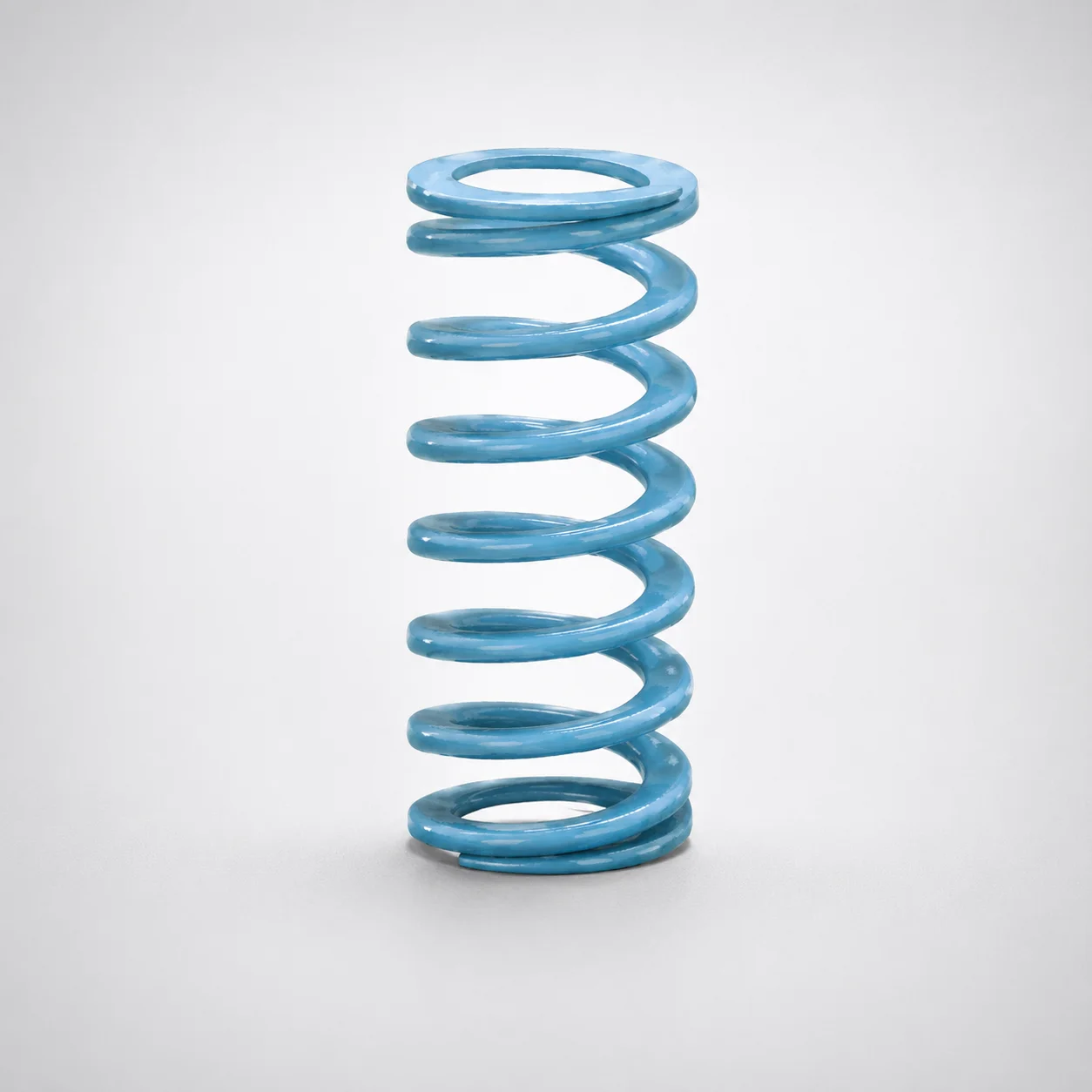
Super-High Deflection Coil Spring - 60% Deflection
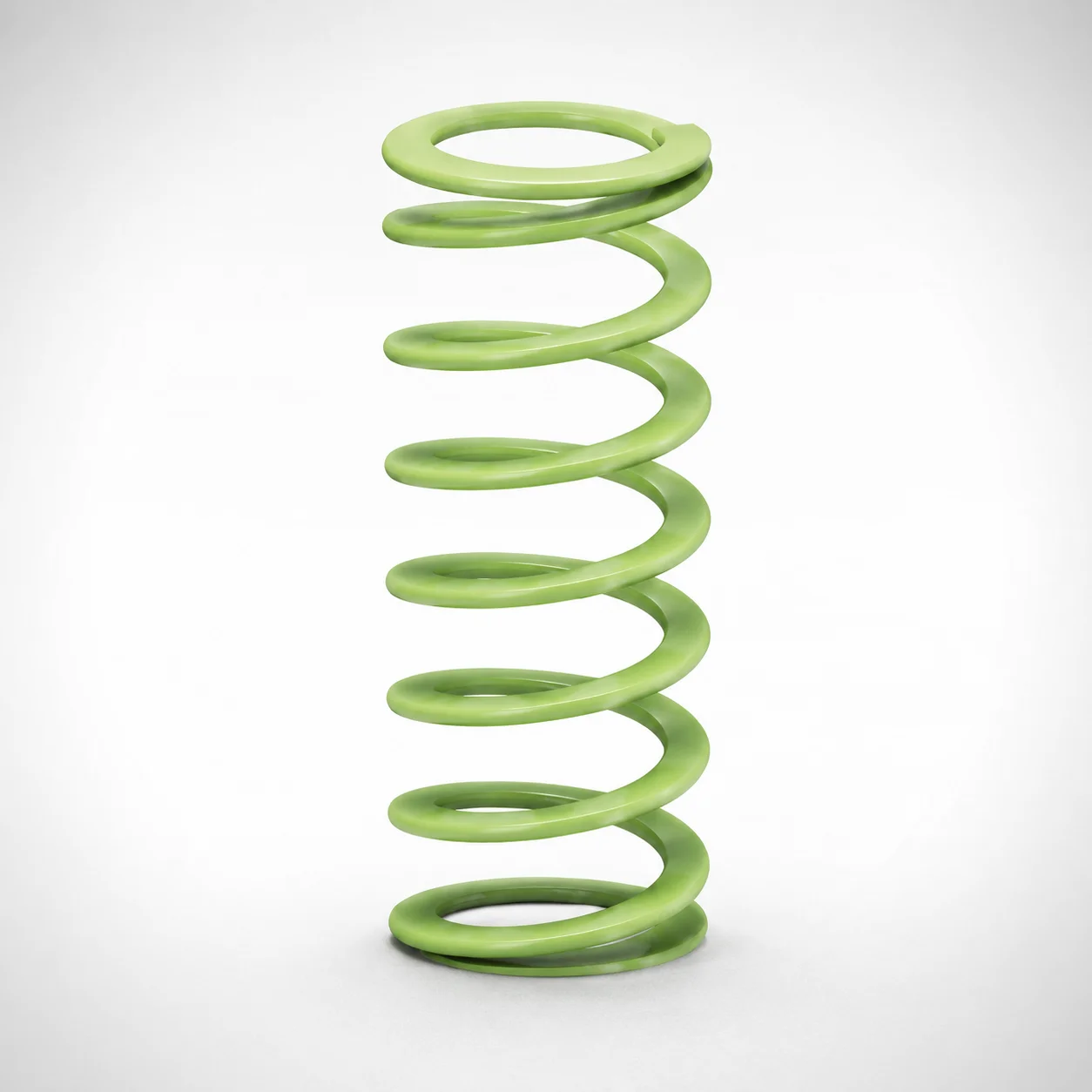
Ultra-High Deflection Coil Springs - 65% Deflection SWY Series
Need Custom Specifications?
Our engineering team can help with custom configurations, material selection, and volume pricing.