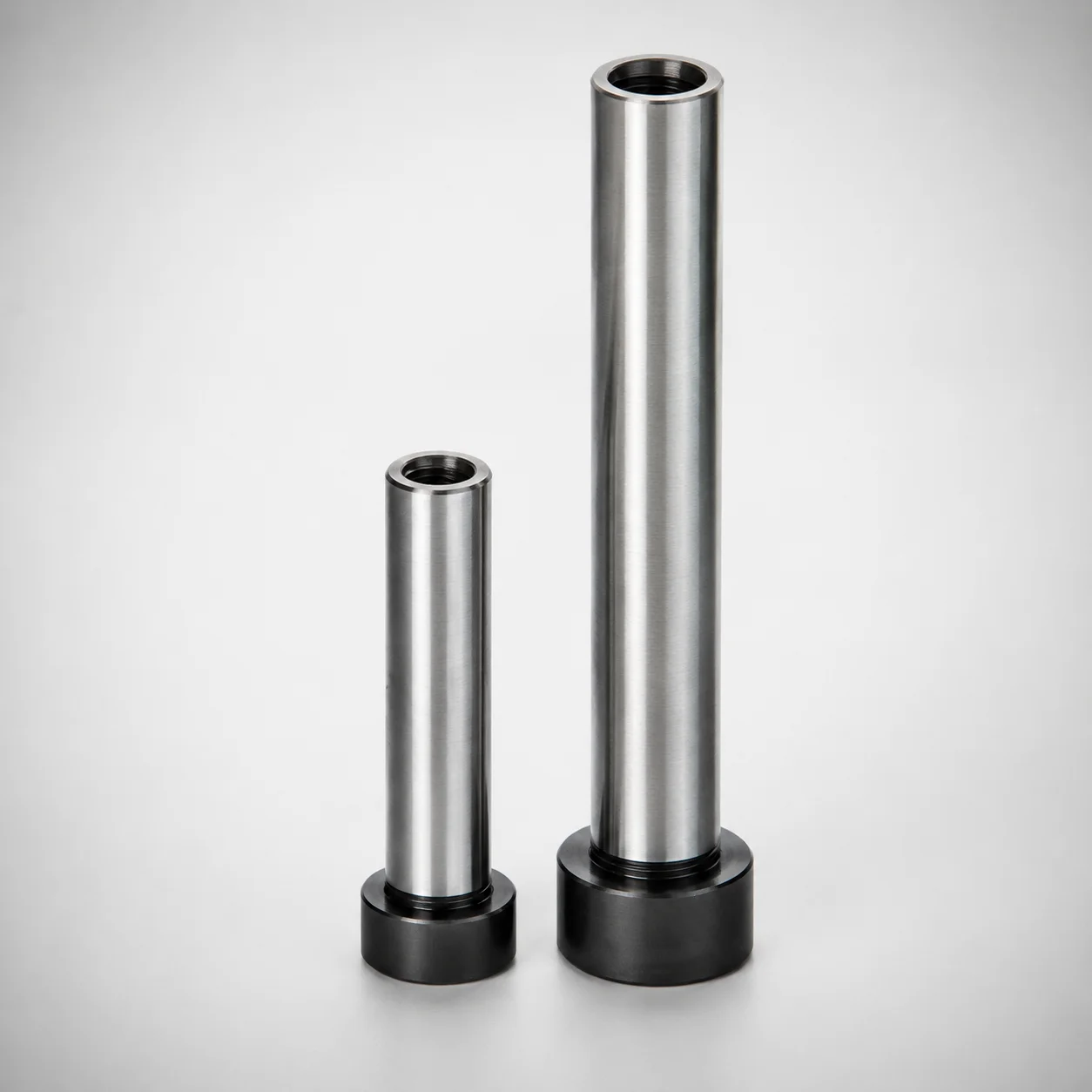
Female Thread Puller Bolts for Three-Plate Mold
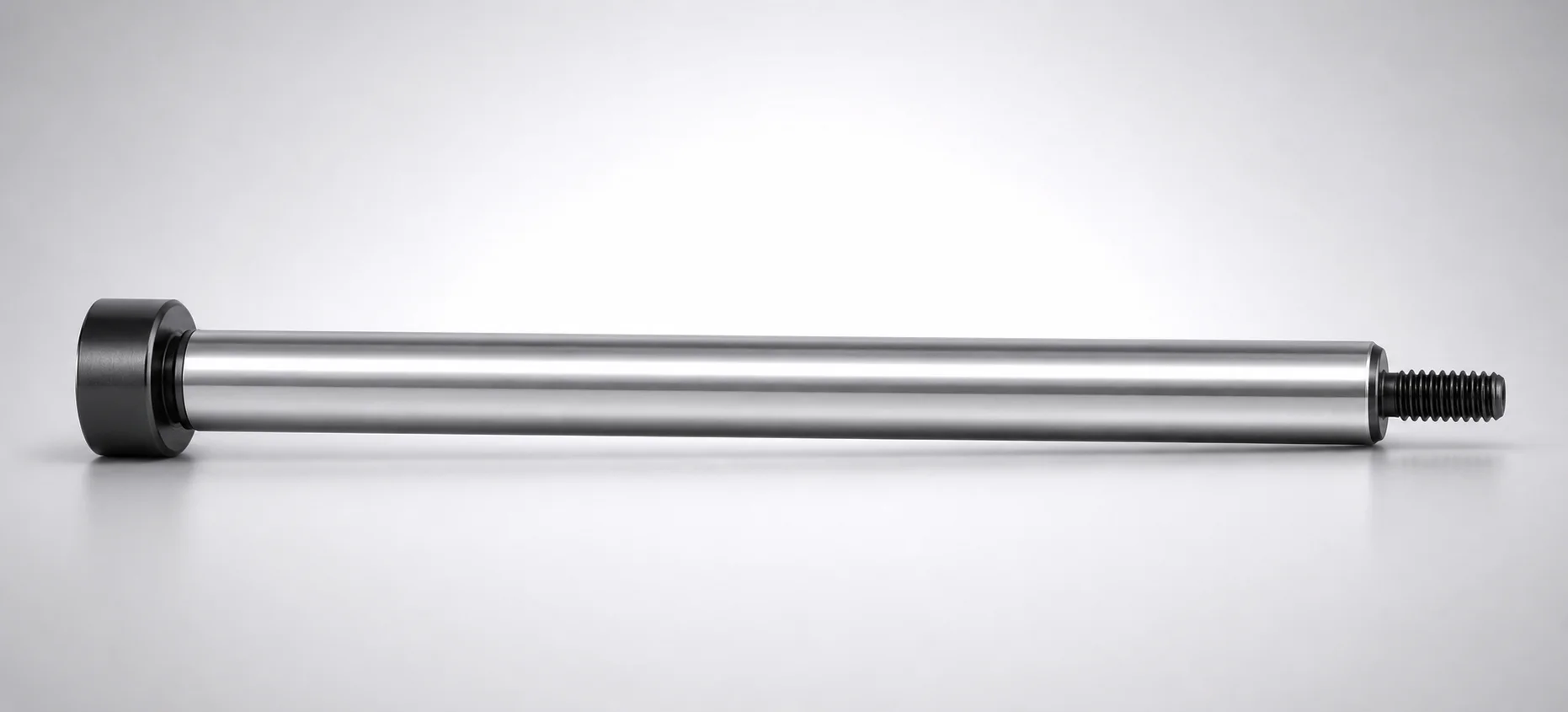
Female Thread Puller Bolts for Three-Plate Mold are designed for secure pulling engagement using a female thread screw interface. This PBTN type supports stable three-plate mold handling during maintenance and operation.
- Female thread screw type enables consistent pulling bolt engagement
- Type PBTN construction supports dependable performance in mold assemblies
- Available shaft diameters and L lengths help match different mold sizes
- Used for three-plate mold puller applications, improving maintenance efficiency
Specifications
25 configurations available
| D (Shaft Diameter) (mm) | Alterations | Dimension L (mm) | LC (L dimension alteration) (mm) | type |
|---|---|---|---|---|
| 10 | Yes | 40 ~ 180 | - | - |
| 10 | Yes | - | 35 ~ 175 | - |
| 13 | No | 160 | - | - |
| 13 | Yes | 280 | - | - |
| 13 | Yes | 60 ~ 260 | - | - |
| 13 | Yes | - | 55 ~ 275 | - |
| 16 | Yes | 100 ~ 260 | - | - |
| 16 | Yes | 280 ~ 300 | - | - |
| 16 | Yes | - | 95 ~ 295 | - |
| 20 | No | 180 | - | - |
| 20 | No | 200 | - | - |
| 20 | No | 220 | - | - |
| 20 | No | 250 | - | - |
| 20 | No | 260 | - | - |
| 20 | No | 300 | - | - |
| 20 | Yes | 120 ~ 260 | - | - |
| 20 | Yes | 280 ~ 400 | - | - |
| 20 | Yes | - | 115 ~ 395 | - |
| 25 | No | 300 | - | - |
| 25 | No | 350 | - | - |
| 25 | Yes | 170 ~ 260 | - | - |
| 25 | Yes | 280 ~ 400 | - | - |
| 25 | Yes | - | 165 ~ 395 | - |
| 30 | Yes | 200 ~ 400 | - | - |
| 30 | Yes | - | 165 ~ 395 | - |
Product Guide
Application Scenarios+
Female thread puller bolts are used in three-plate injection mold tooling to create a controlled pulling engagement between the moving/actuated mold components and the opening mechanism. In typical setups, these bolts engage via a female thread interface, providing repeatable load transfer during mold handling and maintenance.
- Maintenance and mold swap fixtures: Pair these puller bolts with the corresponding male pulling screws to ensure reliable engagement while technicians separate the mold plates.
- Precision automotive connector molds: The stable engagement helps maintain consistent plate positioning during repeated open/close cycles, supporting fine alignment requirements.
- Industrial appliance housing molds: Choose appropriate shaft diameter and length to match the plate thickness and pulling stroke so the engagement depth remains dependable throughout operation.
This variant is suited because it is designed around a female thread screw interface (PBTN type), allowing consistent pulling bolt engagement across different mold sizes by selecting the correct D and L dimensions.
Material & Process Details+
The provided product data specifies a PBTN-type female thread puller bolt with selectable shaft diameters (D: 10, 13, 16, 20, 25, 30 mm) and lengths (L: 40 to 350 mm). However, the steel grade, heat-treatment state, and hardness (HRC) are not included in the supplied specifications, so exact mechanical performance claims cannot be stated here.
In general, puller/stop-related mold hardware is commonly made from tool steels and then heat treated (e.g., quenched & tempered, sometimes surface hardened) to balance wear resistance at the threaded interface with toughness against shock during repeated actuation. When selecting a material option (if multiple are available), engineers typically compare thread-wear life versus resistance to chipping under misalignment loads.
- Confirm the exact material grade and heat treatment from the product datasheet for final design validation.
Sizing & Selection Guide+
To select the correct female thread puller bolts for a three-plate mold, match the shaft diameter (D) and working length (L) to the mounting and pulling geometry of your mold plates.
- Shaft diameter D options (mm): 10, 13, 16, 20, 25, 30
- Length L range (mm): 40 ~ 350
- LC (L alteration) options (mm): 35~175, 55~275, 95~295, 115~395, 165~395
Use the mold’s core/cavity layout and plate separation stroke to determine required engagement and clearance, then choose L so the pulling interface remains engaged without bottoming. If your design uses an altered length configuration, select the appropriate LC range that corresponds to your planned geometry.
Tolerance & fit: Because this is a female thread interface, ensure compatibility with the corresponding male screw diameter and thread standard used in the pulling mechanism. Maintain sufficient engagement depth for load transfer while allowing for assembly variation.
Frequently Asked Questions
How do I choose the correct shaft diameter D for three-plate mold puller engagement?+
Select D from the available options: 10, 13, 16, 20, 25, 30 mm. Use the mold’s pulling/attachment hole size and the corresponding screw engagement requirements so the female-thread interface can transfer force without excessive clearance.
What length L range is available, and how should I account for the LC alteration ranges?+
Standard lengths are available in the range L = 40 ~ 350 mm. For configurations that require length alteration, choose the suitable LC (L alteration) range from: 35~175, 55~275, 95~295, 115~395, 165~395 to match your mold’s plate spacing and pulling stroke.
What does “Type PBTN” imply for compatibility with a three-plate mold pulling system?+
“Type PBTN” indicates the puller bolt is designed with a female thread screw interface for pulling engagement. Confirm the matching male screw used by your three-plate mold handler so the threaded interface provides consistent engagement depth across service cycles.
Are there fixed dimensions or can dimensions be configured (Alterations = Yes/No)?+
The specification includes Alterations: Yes, No, meaning some dimension configurations may be offered as adjustable options while others are fixed. When designing, confirm which of your required D and L combinations correspond to the allowed alteration mode for this series.
Which tolerance considerations matter most for a female-thread puller bolt design?+
Because engagement is through a female-thread interface, the critical fit is compatibility with the mating male screw’s thread size and engagement depth. Use the selected D and L to ensure the bolt threads maintain adequate contact during plate separation without interference or bottoming.
Related Products
Need Custom Specifications?
Our engineering team can help with custom configurations, material selection, and volume pricing.