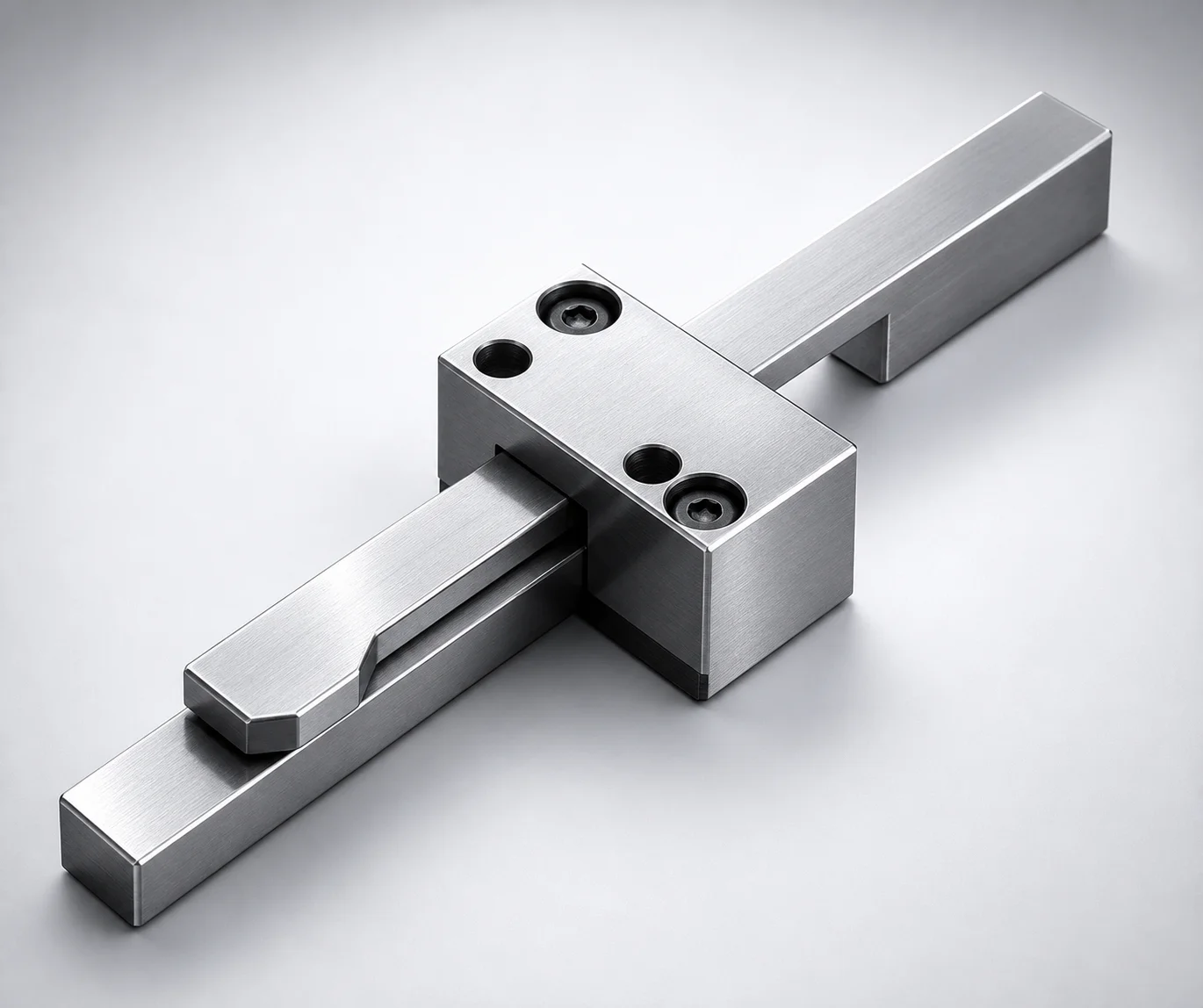
PLSW Compact Parting Lock Sets, 1t Load Capacity or Lower
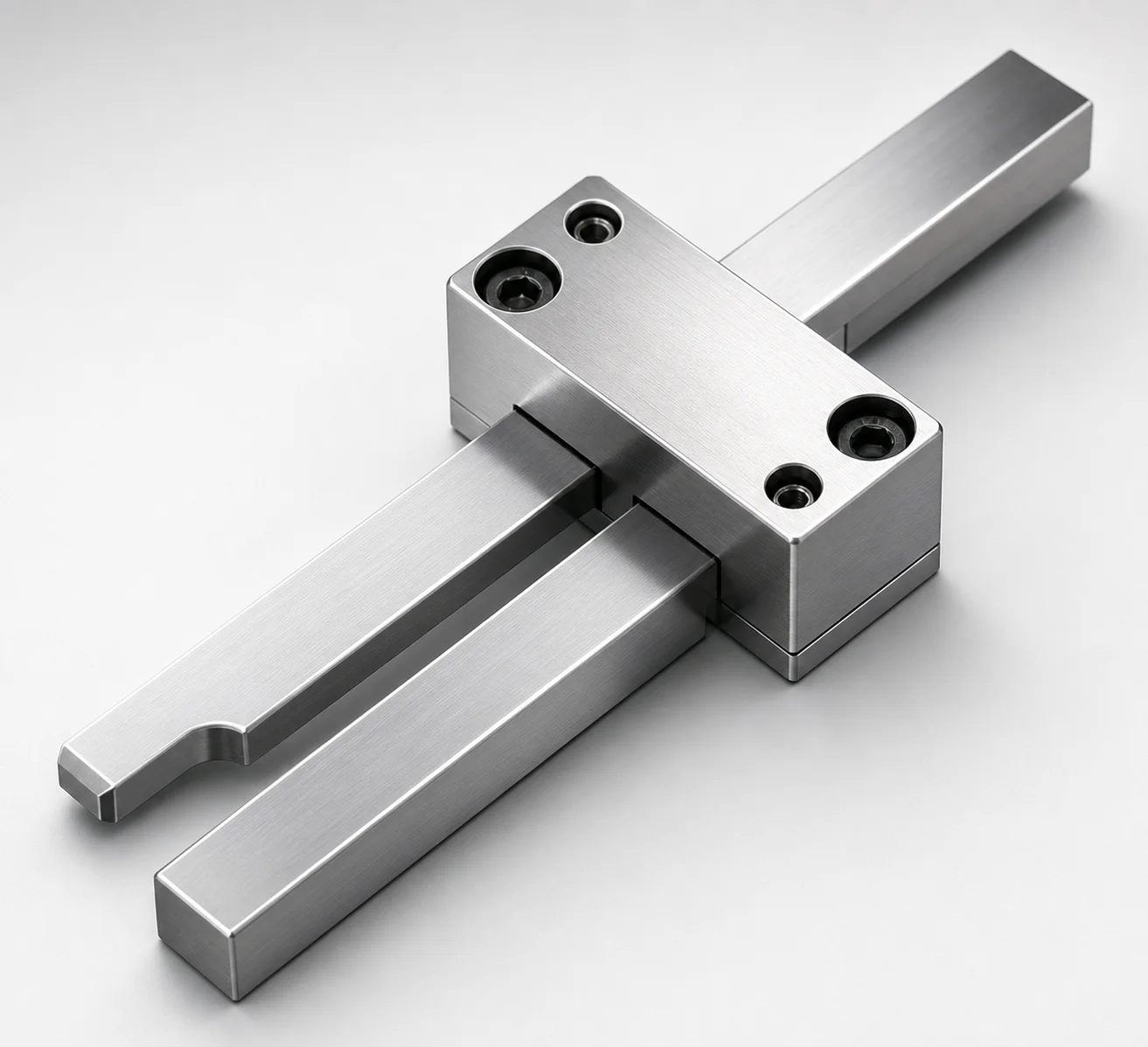
PLSW compact parting lock sets provide controlled locking for PLSW mechanisms with a load capacity of 1t (10kN) or lower. They help stabilize parting movement and improve consistency in mold opening/closing operations.
- Compact lock set design for PLSW and related control setups
- Specified for a maximum 1t (10kN) or lower load rating
- Reliable locking elements support repeatable parting behavior
- Used in PLSW systems requiring dependable opening/closing control
Specifications
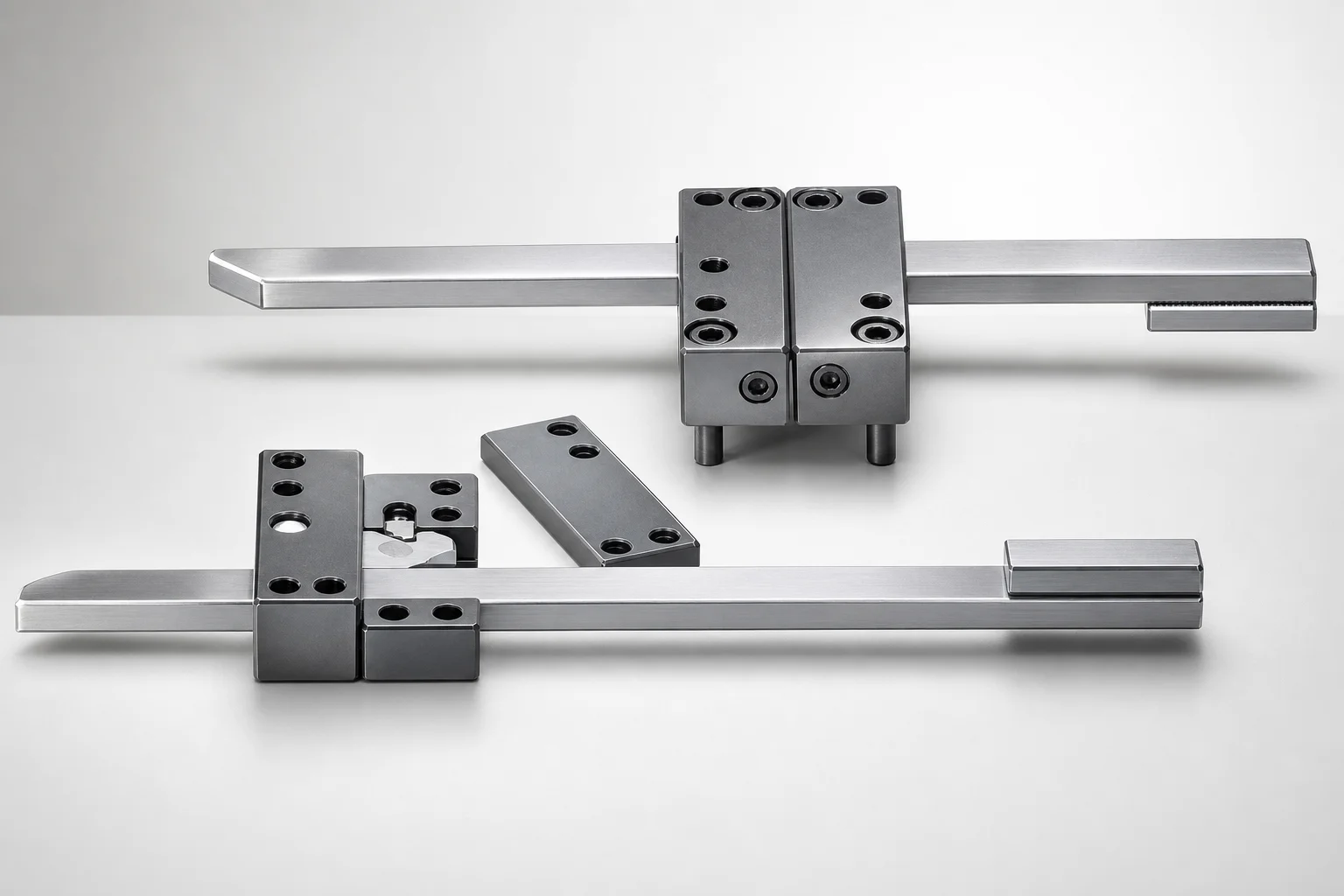
6 configurations available
| Load Capacity | Parts | type |
|---|---|---|
| 1t(10KN) or lower | Set | - |
| - | Cam holder set | - |
| - | Release bar long type | - |
| - | Lock bar | - |
| - | Release bar | - |
| - | Slide lock | - |
Product Guide
Application Scenarios+
This compact side-mount parting lock set is designed for PLSW (Parting Lock System) control architectures where stable locking directly influences repeatability. In injection mold tooling, it is used to manage controlled locking during the mold opening/closing cycle, helping prevent unintended parting movement under low-to-moderate actuation loads.
- Automotive and industrial connector molds: suited for consistent parting control where the system is tuned to 1t (10kN) or lower load capacity, supporting steady slide/parting behavior across high-cycle operations.
- Appliance and housings with moderate motion requirements: the compact lock set layout fits tighter side-mount spaces while maintaining reliable locking for repeatable ejection/parting timing.
- Multi-cavity molds with PLSW control systems: helps standardize operation on shared opening/closing mechanisms, reducing variation caused by inconsistent lock engagement.
Its variant-specific low load rating is the key fit factor for selecting the right locking components to match the intended PLSW mechanical duty.
Material & Process Details+
The provided metadata specifies the functional load capacity and compatible PLSW components, but does not list a specific steel grade, hardness (HRC), or heat treatment state for this parting lock set. Because of that, material property claims such as wear resistance, toughness, nitriding, or quenching & tempering cannot be stated from the available data.
In general mold designers should confirm the actual material grade and surface/heat treatment from the manufacturer documentation for the chosen set and sub-parts (cam holder, release bar long type, lock bar, slide lock). This verification is important when selecting for:
- Wear resistance at the locking interface under repeated cycling
- Toughness vs. hardness trade-offs to avoid chipping or deformation during load reversals
- Corrosion and scuff performance depending on lubrication and environment
If multiple material options exist, compare them by hardness (HRC) and stated heat treatment condition to match your target cycle life.
Sizing & Selection Guide+
Selection for this PLSW compact side-mount lock set is primarily governed by its fixed load capacity: 1t (10kN) or lower. To size correctly, start by calculating the maximum locking load the mechanism will experience during the full mold opening/closing stroke (including dynamic effects) and ensure it remains at or below 10kN.
- Check load envelope: confirm your required locking force does not exceed 1t (10kN) for the selected control setup.
- Match compatible parts: confirm the set configuration aligns with the variable parts included in your design: Set, Cam holder set, Release bar long type, Lock bar, Release bar, and Slide lock.
- Verify mechanical fit: since explicit shaft/overall dimensions and tolerances are not provided in the metadata, you should reference the drawing for the specific variant to match your PLSW mounting features and clearances.
Where tolerances are critical (alignment of cam holder and locking bars), rely on the manufacturer’s dimensional drawings for the exact interface fit; do not substitute dimensions based on assumptions.
Frequently Asked Questions
What is the maximum locking load for the PLSW compact parting lock set variant 110200108520?+
This series specifies a fixed load capacity of 1t (10kN) or lower. For safe design, your calculated peak locking load during opening/closing (including dynamic effects) should not exceed 10kN.
Which PLSW-related sub-parts can be included with this compact lock set configuration?+
The variable parts listed for this series include Set, Cam holder set, Release bar long type, Lock bar, Release bar, and Slide lock.
Confirm the exact bundle/variant you need so the cam-holder and release/bar interfaces match your PLSW mechanism layout.
Is this parting lock set intended for higher-load applications beyond 10kN?+
No. The metadata restricts the load rating to 1t (10kN) or lower, indicating it is not intended for higher locking forces.
If your design requires greater force, you should select a higher-capacity parting lock set series that explicitly supports your peak load.
What material grade and hardness (HRC) should I assume for wear-critical locking surfaces?+
The provided data does not include a specific steel grade, hardness value (HRC), or heat treatment condition for this item.
To ensure wear performance and the correct hardness/toughness balance, verify the material and heat-treatment state from the manufacturer’s technical drawings or datasheet for the exact set configuration.
How do I confirm dimensional compatibility if the metadata does not list part dimensions or tolerances?+
Because explicit dimensions and tolerances are not included in the provided parameters, the correct approach is to use the manufacturer’s drawings for the selected variant (including cam holder and release bar type).
Match the interface geometry to the PLSW mounting features and confirm clearance/alignment requirements for reliable lock engagement.
Related Products
Need Custom Specifications?
Our engineering team can help with custom configurations, material selection, and volume pricing.