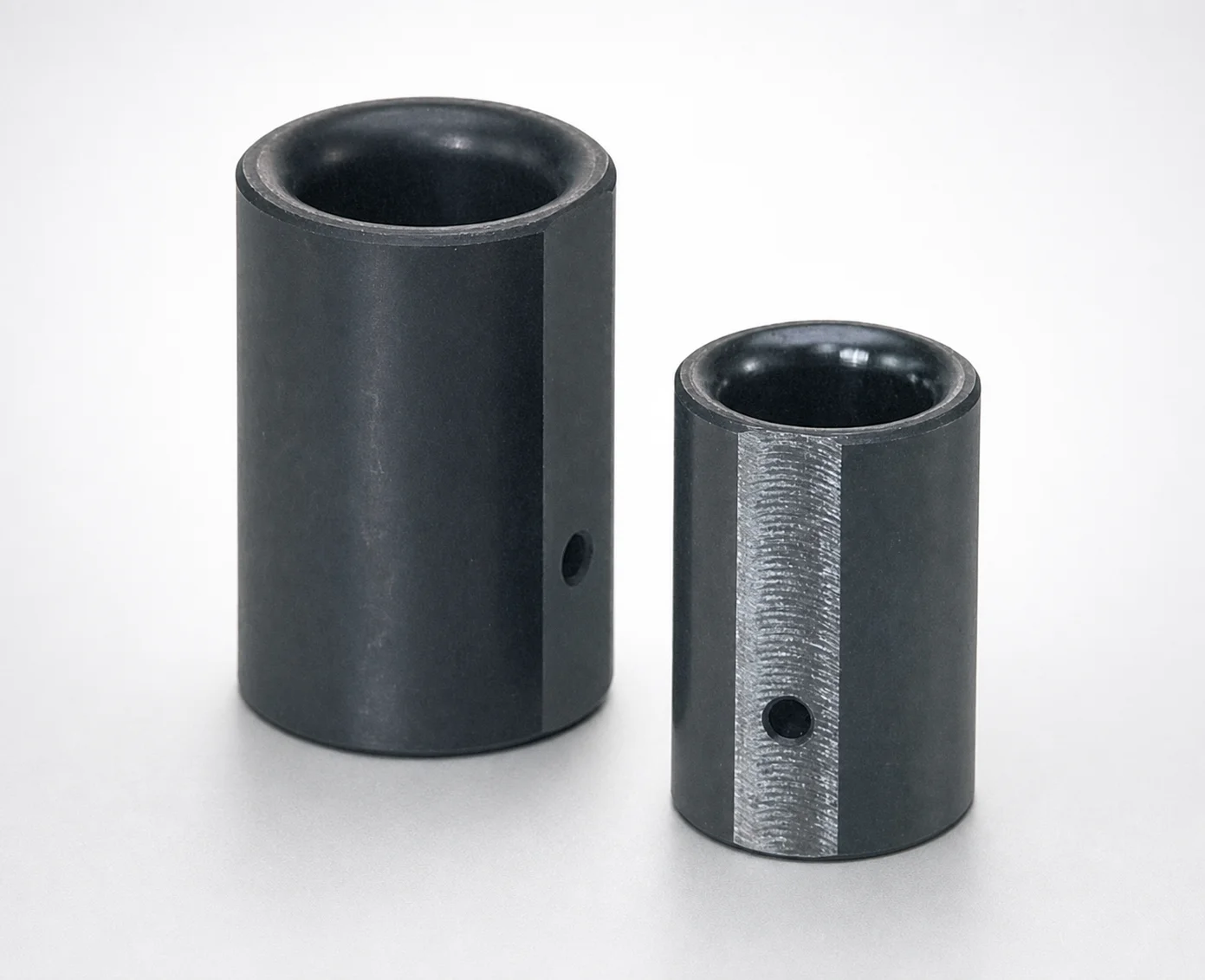
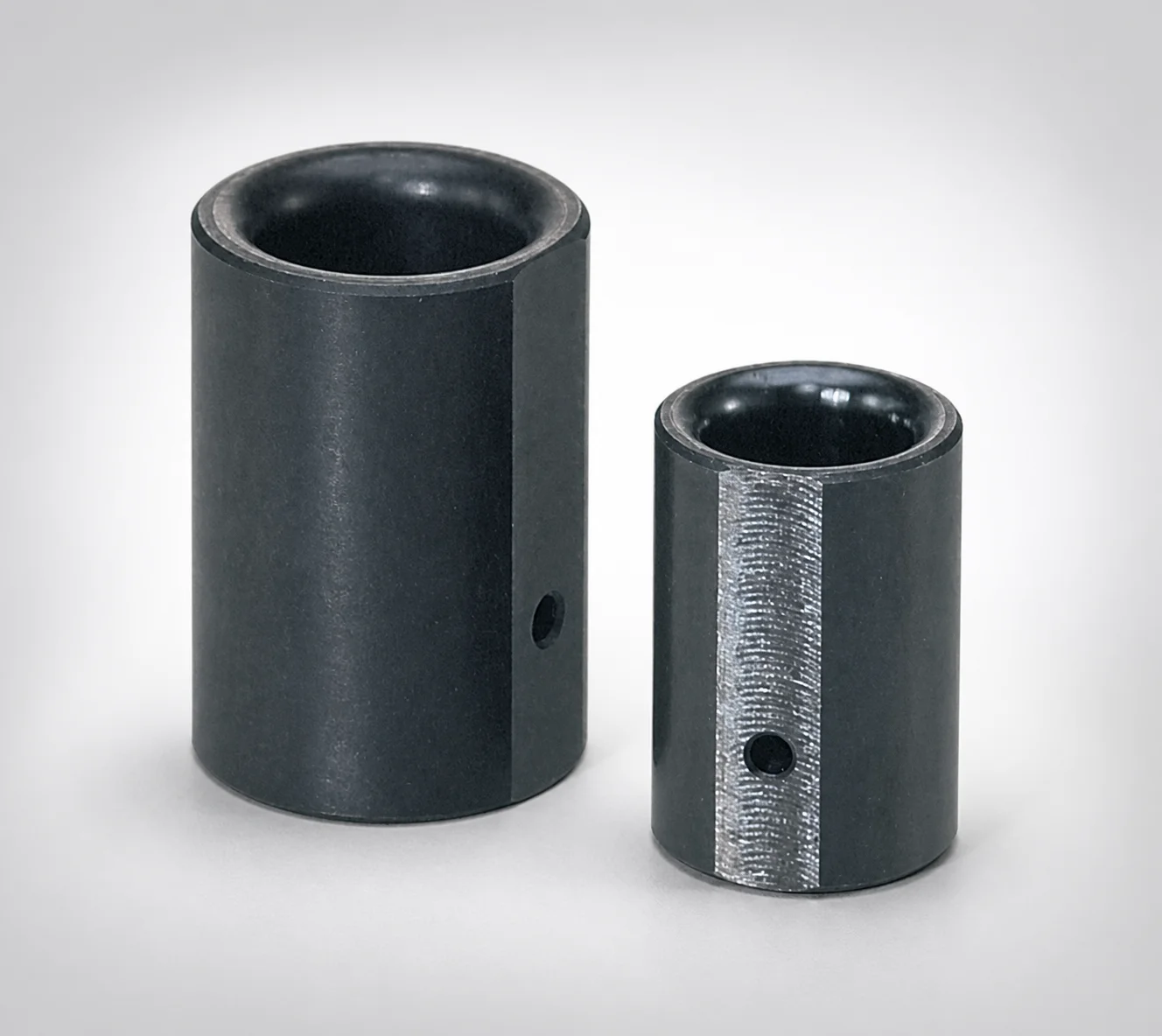
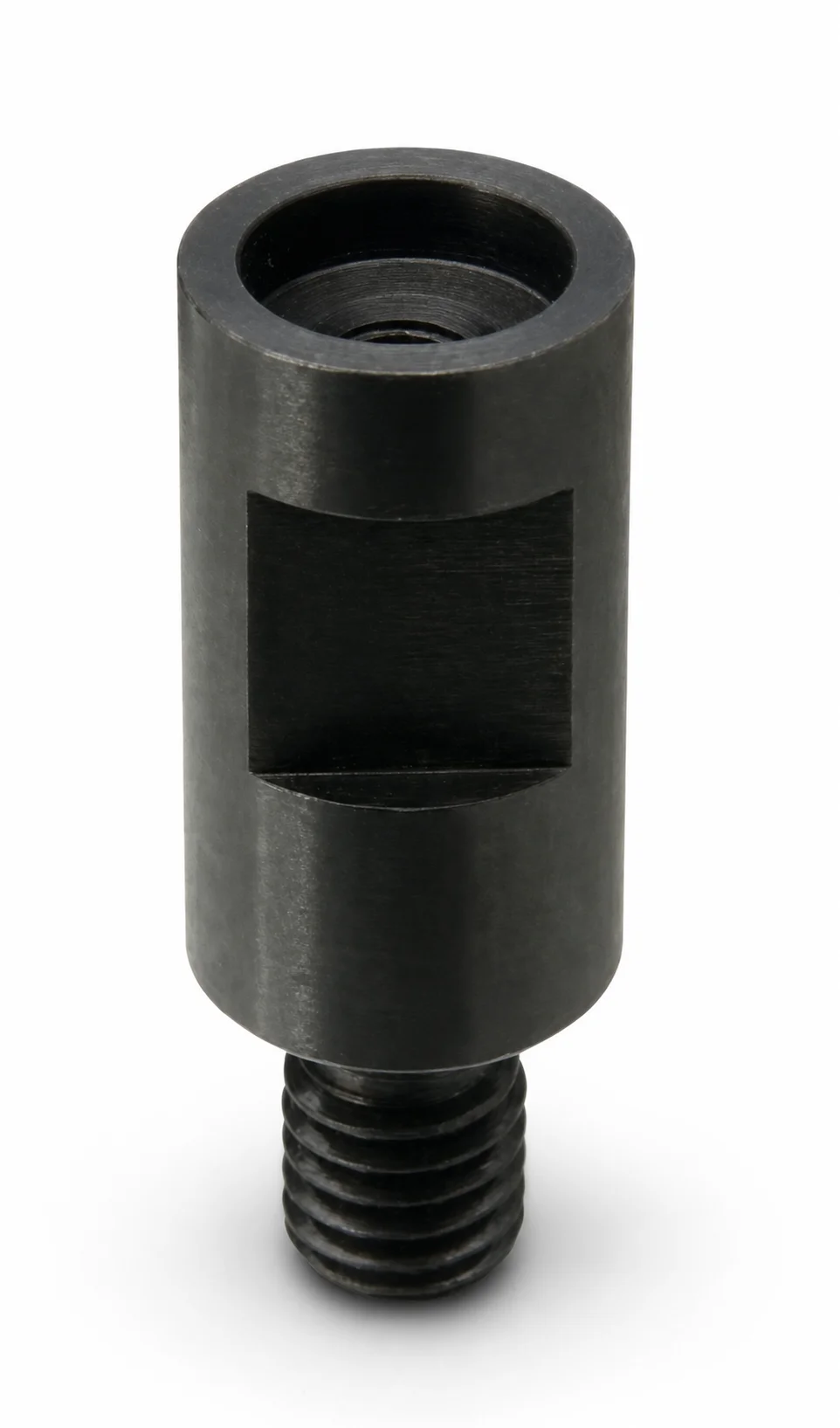
PLBS Parting Lock Bushings 1045 Steel
PLBS parting lock bushings (1045 steel) are designed as a rear-face mounted bushing component for reliable parting lock actuation and stable alignment in tool assemblies.
- Rear face mount configuration supports consistent positioning during operation
- 1045 steel construction delivers solid strength for repeated tool cycles
- PLBS bushing type provides a defined fit interface for parting lock systems
- Commonly used on press tool parting lock hardware requiring dependable wear control
Specifications
4 configurations available
| D (Plastic/Resin Sleeve Diameter) (mm) | type |
|---|---|
| 10 | - |
| 13 | - |
| 16 | - |
| 20 | - |
Product Guide
Application Scenarios+
This rear-face mounted bushing is used in injection mold tool assemblies where a parting lock controls the open/close motion and must maintain repeatable alignment under cycle loads.
In automotive connector and housing molds, the PLBS bushing type helps establish a stable fit interface on the rear side, supporting consistent actuation during frequent cycling. The 10/13/16/20 mm resin-sleeve diameter options allow engineers to match the local sleeve bore size to the parting lock hardware geometry.
For consumer electronics housings and appliance components, the bushing interface can reduce positional drift at the parting lock engagement area, which supports stable parting performance as resin flow and thermal expansion vary.
- Rear face mounting supports reliable positioning throughout operation
- Defined resin-sleeve diameter matching improves mechanical compatibility with the lock hardware
- 1045 steel construction is suited for robust strength in repeated tool cycles
Material & Process Details+
These PLBS parting lock bushings are manufactured from 1045 steel (a medium-carbon steel commonly selected for parts requiring good strength and machinability).
Compared with higher-alloy mold steels used for very high wear applications, 1045 focuses on a balance between toughness and manufacturability, making it appropriate when the bushing primarily functions as a guided alignment interface rather than a surface intended for extreme abrasion.
- Heat treatment state: the provided specification does not include a hardness target or exact treatment (e.g., quenched & tempered, nitrided). Final properties should be confirmed with incoming inspection/COC for the specific lot.
- Hardness (HRC): not specified in the input data; therefore, do not use a hardness-based wear prediction without supplier documentation.
- Wear resistance vs. toughness trade-off: if hardened beyond typical 1045 tempering ranges, toughness may decrease; if left softer, wear resistance may be lower.
For projects requiring quantified wear resistance, request hardness and heat treatment details for this 1045 variant.
Sizing & Selection Guide+
Selection is driven by the required D (Plastic/Resin Sleeve Diameter). This PLBS bushing series is available in D = 10, 13, 16, or 20 mm.
To size correctly, match the bushing’s resin-sleeve diameter to the corresponding sleeve bore or mating resin sleeve feature in your parting lock assembly. The goal is to ensure proper sliding/fit at the engagement interface so the parting lock can actuate without binding.
- Step 1: Identify the resin sleeve diameter used in your parting lock hardware (from the drawings or upstream components).
- Step 2: Choose the PLBS bushing with the same D value (10/13/16/20 mm).
- Step 3: Verify clearance/interference requirements based on your design intent (free sliding vs. guided fit). Tolerance values are not specified in the input data, so confirm the allowable fit and stack-up tolerance with your engineering standard.
The listed D options are configurable; other dimensional parameters (length, overall diameter, and tolerances) are not provided here and should be checked in the detailed drawings for the exact part number.
Frequently Asked Questions
Which PLBS bushing size should I choose for my parting lock resin sleeve diameter?+
Is this PLBS bushing suitable for high-cycle wear environments in press tooling?+
What does “rear face mounting” imply for installation in my mold assembly?+
Are there multiple heat-treated versions of the 1045 PLBS bushing in this series?+
Does the PLBS bushing require tight tolerances for proper parting lock actuation?+
Related Products
Need Custom Specifications?
Our engineering team can help with custom configurations, material selection, and volume pricing.