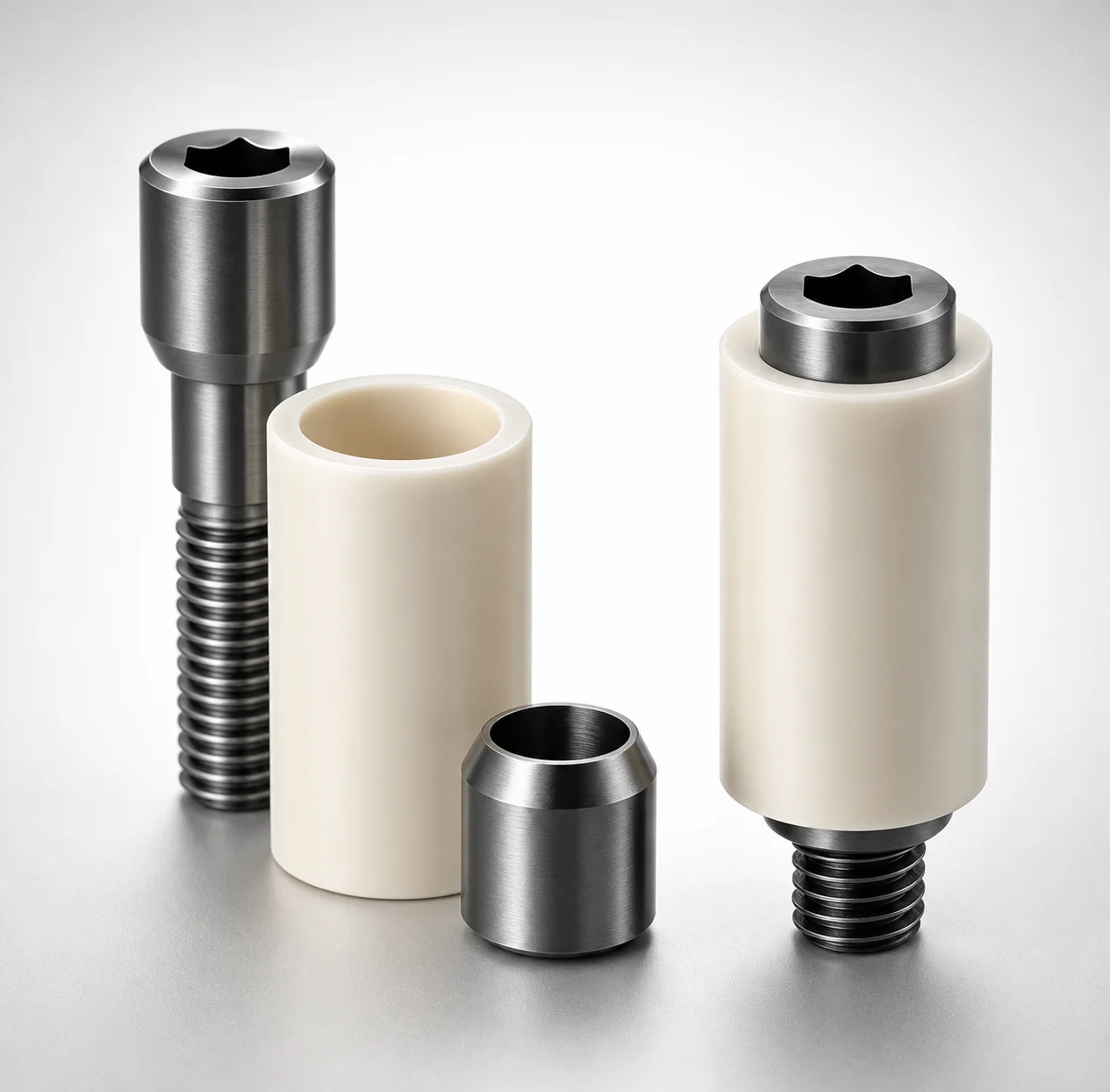
Parting Locks - Heat and Wear Resistant
Parting Locks - Heat and Wear Resistant are designed to secure precise parting positions in industrial tooling where heat and wear can degrade performance. They support stable locking during repeated cycles while maintaining consistent fit.
- Built for heat resistance at 120°C or lower to withstand hot tooling conditions
- Engineered locking system to reduce wear and maintain long-term dimensional stability
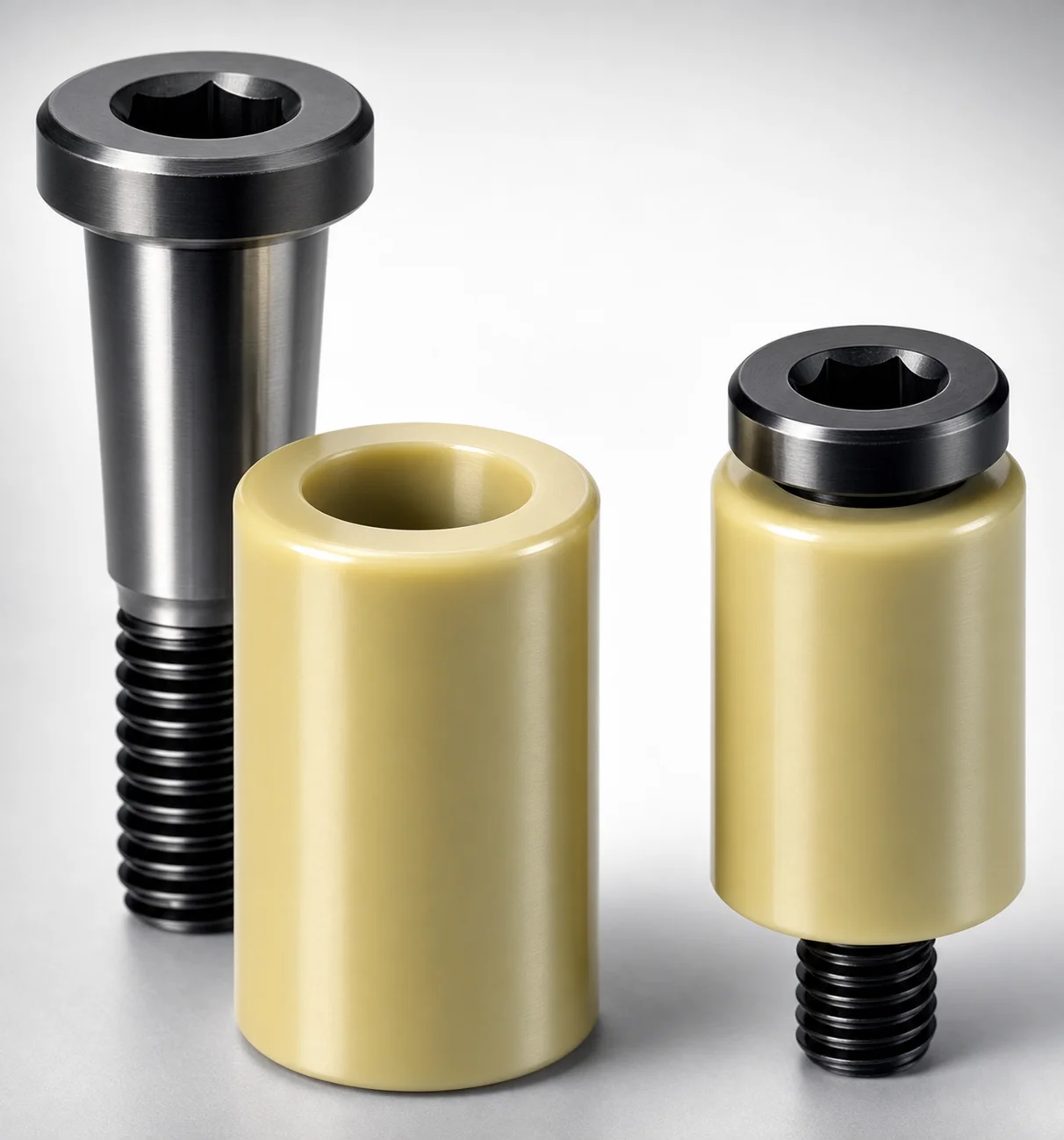
- Supports configurable assemblies, including Resin sleeve + Ring + Bolt and Bolt + Ring
- Used on stripper plates and parting mechanisms requiring dependable positional repeatability
Specifications
12 configurations available
| Components | D (Plastic/Resin Sleeve Diameter) (mm) | No. (Nominal diameter) (mm) | type |
|---|---|---|---|
| Set (Resin sleeve + Ring + Bolt) | 10 | - | - |
| Set (Resin sleeve + Ring + Bolt) | 13 | - | - |
| Set (Resin sleeve + Ring + Bolt) | 16 | - | - |
| Set (Resin sleeve + Ring + Bolt) | 20 | - | - |
| Bolt + Ring | - | 10 | - |
| Bolt + Ring | - | 13 | - |
| Bolt + Ring | - | 16 | - |
| Bolt + Ring | - | 20 | - |
| Resin sleeve | 10 | - | - |
| Resin sleeve | 13 | - | - |
| Resin sleeve | 16 | - | - |
| Resin sleeve | 20 | - | - |
Product Guide
Application Scenarios+
Parting locks are used in injection mold tooling to hold precise stripper and parting positions through repeated open/close cycles. This heat- and wear-resistant variant is suited for tooling stations where friction and elevated temperatures can loosen components over time.
- Automotive and appliance connector molds: In stripper plate and parting mechanism assemblies, consistent locking helps maintain repeatable parting travel, supporting stable ejection timing even under frequent cycling.
- Consumer electronics housings: When resin sleeve interfaces experience rubbing during mold opening, the design helps reduce wear-related fit drift, supporting long-term dimensional stability.
- General hot-runner or warm tooling conditions (≤120°C): The specified heat resistance up to 120°C makes it appropriate where thermal exposure would otherwise accelerate wear and compromise positioning repeatability.
Material & Process Details+
The provided specifications emphasize heat and wear resistant performance with allowable operating conditions up to 120°C or lower. While the exact steel grade and hardness (HRC) are not specified in the available data, the intended function is to maintain consistent locking fit by resisting thermal degradation and rubbing wear at the resin sleeve interface.
- Heat resistance basis: Designed to withstand tool temperatures up to 120°C to help limit wear acceleration.
- Wear vs. toughness trade-off: Parting locks that prioritize wear resistance typically balance hardness and toughness to prevent chipping or deformation under repeated cycling; exact trade-offs depend on the specific material/heat treatment used by the supplier.
- Manufacturing approach: Configurations are assembled as Resin sleeve + Ring + Bolt or Bolt + Ring, indicating a system where wear-critical contact surfaces are designed for stable long-term engagement.
Sizing & Selection Guide+
Selection is primarily governed by the resin sleeve nominal diameter D and the corresponding nominal diameter number. Choose one of the available sizes: 10, 13, 16, or 20 mm for D (Plastic/Resin Sleeve Diameter) / No. (Nominal diameter).
- Match to cavity/core requirement: Identify the required sleeve diameter for your stripper plate or parting lock interface, then select the lock set with the same D value to ensure proper seating and positional repeatability.
- Component-set compatibility: If your assembly uses Resin sleeve + Ring + Bolt, select the set intended for that configuration. If the design calls for Bolt + Ring, choose that component combination.
- Tolerance/fit notes: Because locking performance depends on engagement stability, use the correct diameter class (10/13/16/20) and verify that your mating features are dimensioned to accept the intended sleeve/ring geometry without excessive clearance or interference.
Frequently Asked Questions
Which resin sleeve diameters are available for this heat and wear resistant parting lock series?+
Is this parting lock suitable for warm tooling conditions above typical room-temperature operation?+
What component configurations can I choose when designing my parting/stripper mechanism?+
How do I ensure the parting lock will maintain repeatable positioning over long cycling?+
Does the available data specify the steel grade and hardness (HRC) for this parting lock?+
Related Products
Need Custom Specifications?
Our engineering team can help with custom configurations, material selection, and volume pricing.