Mold Opening Components
Elastic and mechanical components that provide plate separation force, impact cushioning, and runner stripping in injection molds. Includes urethane washers for cushioning, urethane springs for active separation, and pusher pins for runner stripper plates.
Products (3 Categories)
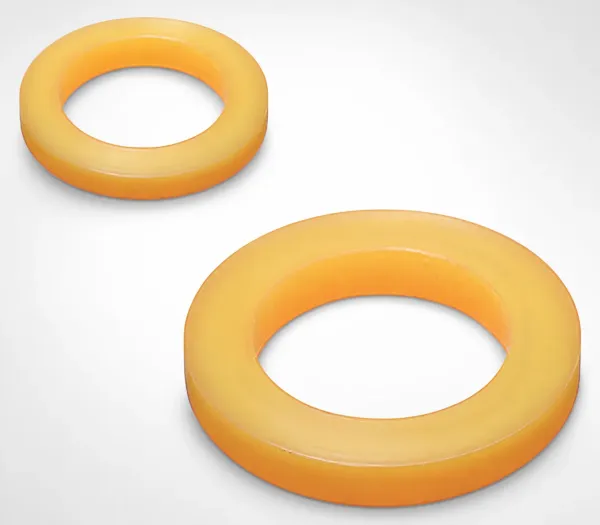
Urethane Washers UW Series for Soundproofing
Urethane Washers UW Series for soundproofing when the mold opens. Selectable inner diameter, outer diameter, and thic...
View Details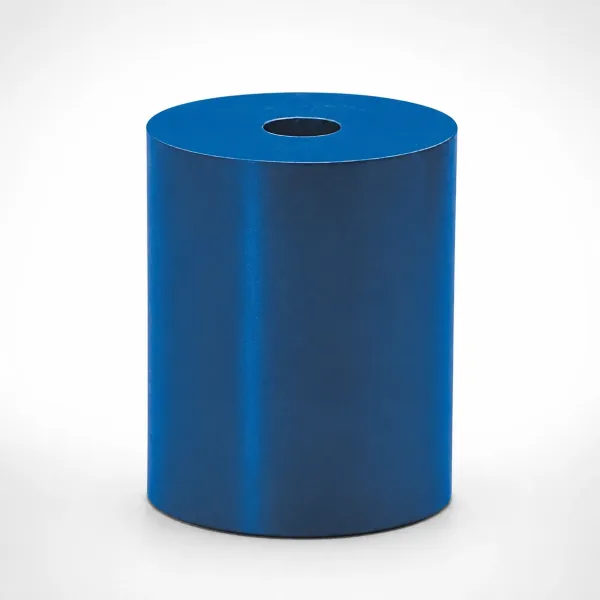
MAZ Urethane Spring
MAZ urethane spring for counterbore designs with selectable outside diameter and length. Built for stable force and r...
View Details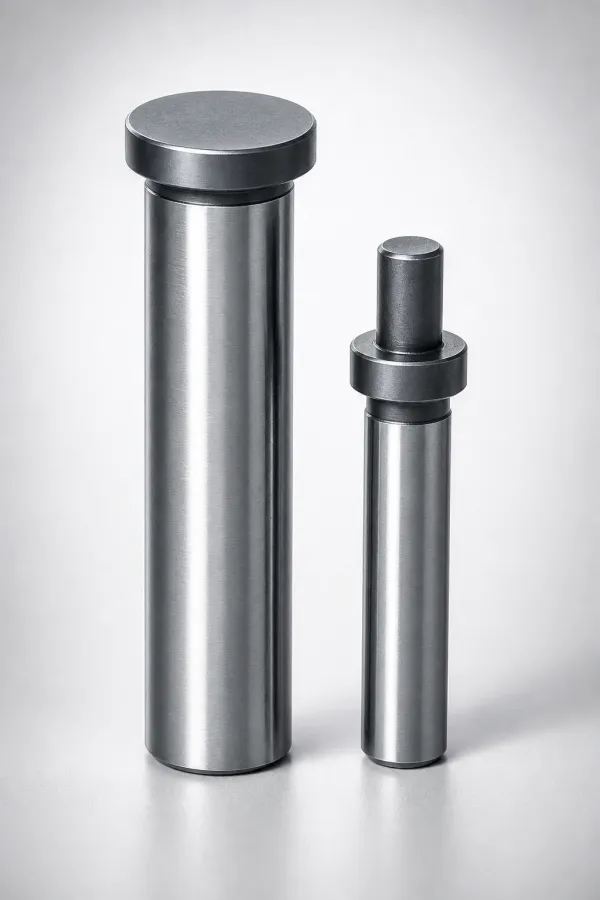
Pusher Pins for Runner Stripper Plates
Pusher Pins for Runner Stripper Plates (PSP type) support smooth part ejection in mold opening systems, helping reduc...
View DetailsWasher vs Spring vs Pin — How to Choose
| Criteria | Urethane Washers | Urethane Springs | Pusher Pins |
|---|---|---|---|
| Function | Cushioning, low-force separation | Active plate separation force | Runner ejection from plate |
| Force Output | Low (cushioning) | Medium-High (compression) | Point force (pin push) |
| Mechanism | Elastic deformation + return | Compression spring force | Mechanical push during opening |
| Typical Application | Between mold plates for impact absorption | Plate separation at parting lines | Runner stripper plate assemblies |
| Replaces | Rubber pads, O-rings | Steel die springs (in moderate force apps) | Nothing — unique function |
Selection tip: Most three-plate molds use urethane springs between runner plate and cavity plate for initial separation, plus pusher pins on the runner plate for clean runner removal. See our How to Choose Between Urethane Washers and Springs for Mold Opening Force.
Which Component Fits Your Scenario?
Plate Cushioning & Impact Absorption
You need to cushion plate impact during mold closing or provide gentle separation force during opening.
Active Plate Separation Force
You need positive force to push plates apart, overcoming resin adhesion and gravity on the runner plate.
Runner Stripping from Plate Surface
Runners stick to the runner plate and don't release cleanly during mold opening.
How Urethane Elastic Elements Work in Mold Opening
Compression and Return
Urethane is an elastomeric material that compresses under load and returns to its original shape when the load is removed. In mold opening applications, urethane washers/springs are pre-compressed between plates when the mold closes. When the clamp force releases, the stored elastic energy pushes the plates apart, providing the initial separation force needed to overcome friction, resin adhesion, and gravity.
Advantages Over Steel Springs
Unlike steel die springs, urethane elements: (1) cannot fracture or break, eliminating safety risk from broken spring fragments; (2) absorb vibration and reduce opening/closing noise; (3) are available in multiple hardness grades (60A-95A Shore) for fine-tuning force output; and (4) can be machined to custom shapes. However, steel springs provide higher force per unit volume for applications requiring maximum separation force.
Urethane vs Standard Die Springs
✅ Use urethane washers/springs when:
- Moderate separation force is sufficient
- Noise reduction is important
- Safety from spring breakage is a concern
- Custom shapes or hardness grades are needed
🔄 Use standard die springs when:
- Standard Die Springs — maximum force density is required (heavy plates, large molds)
- Operating temperature exceeds urethane rating (typically 80°C max)
Frequently Asked Questions
What is the difference between urethane washers and springs?+
How do I calculate the required spring force?+
Can urethane springs replace die springs?+
What do pusher pins do in runner stripper plates?+
Engineering Resources
How to Choose Between Urethane Washers and Springs for Mold Opening Force
Comparison of urethane washer vs spring characteristics with force calculation methods.
When to Use Urethane Springs Instead of Standard Die Springs in Mold Design
Decision framework for choosing between urethane and steel spring technologies.
Need a Custom Quote?
Specify washer/spring dimensions (ID, OD, thickness), hardness grade (60A-95A Shore), and quantity. Custom shapes and hardness grades available.