Two-Step Stepped Center Pins
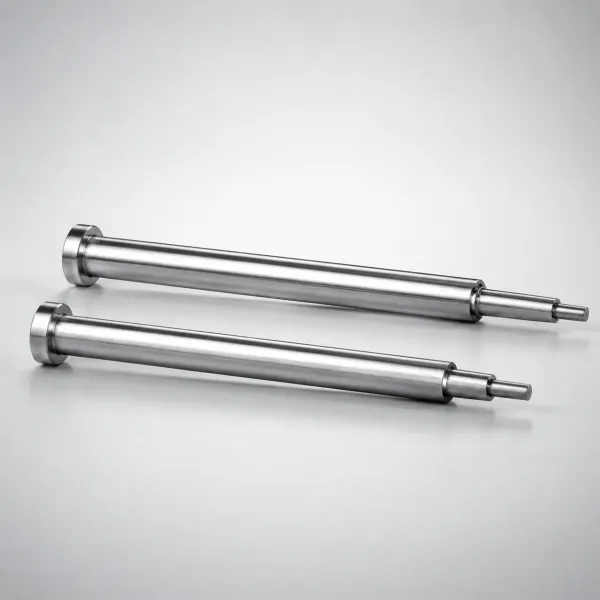
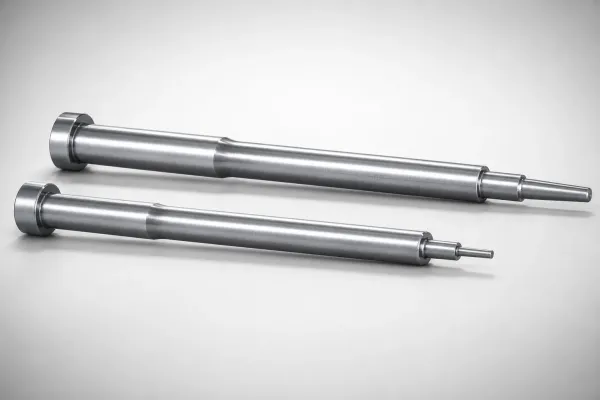
Double diameter transition center core pins. Features two guided shoulders for heavy-duty alignment in complex, multi-stage ejector systems.
Products
Selection Matrix: Two-Step Pin Materials
Select the correct high-speed tool steel for double-step center core pins:
| Material Grade | Hardness Range | Shock Resistance | Recommended Fit |
|---|---|---|---|
| SKH51 (HSS) | 58-61 HRC | Excellent (resists fracturing under impact) | Standard clearance guide setups (h6) |
| M2 (Premium HSS) | 61-64 HRC | High (outstanding hardness retention) | Precision micro-guided tolerance setups (m6) |
Decision rule: For two-step pins, SKD61 is preferred over SKH51 due to superior toughness at the step shoulder. For detailed fatigue life data, see our Secondary Ejection with Two-Step Center Pins guide.
Secondary Ejection Pairing Guidelines
How two-step center pins coordinate stroke limits with stepped ejector sleeves:
Application Scenarios: Two-Step Center Pins
Industrial applications requiring the dual-step configuration:
Multi-Cavity Electrical Connectors
Connector housing molds have thin walls that crack if ejector pins push unevenly or at the wrong stage.
Why it fits: Two-step pins provide double-stage guiding, delaying the release of thin core sections to prevent structural damage.
Heavy-Duty Core Guidance
Large industrial components require heavy core pins that endure lateral shear force from asymmetric polymer flow.
Why it fits: Double guided shoulders provide massive structural support, resisting lateral deflection.
Frequently Asked Questions
What are the hardness characteristics of M2 high-speed steel vs SKH51 in two-step center pins?+
What tolerance grades are standard for two-step center pins?+
How do two-step center pins facilitate secondary ejection in multi-cavity connector molds?+
About Two-Step Stepped Center Pins
Two-step center pins feature two diameter transitions, creating three distinct sections: the head, an intermediate guide section, and the molding tip. This dual-step design enables secondary ejection layouts, improves core rigidity in deep cavities, and allows pairing with correspondingly stepped ejector sleeves for synchronized multi-stage part demolding. Commonly used in precision connector molds and multi-cavity tooling.
Engineering Resources
Need a Custom Quote?
Specify both step diameters, lengths, and material (M2/SKH51). Paired sets with matching two-step stepped ejector sleeves available. Contact us for secondary ejection layout consulting.