Rolling Gate Cut Units
In-mold rolling gate cut units (MRGC) that automatically trim gates during the molding cycle, eliminating post-mold gate trimming operations and reducing cycle time by 15–30%.
Products — 1 Variant
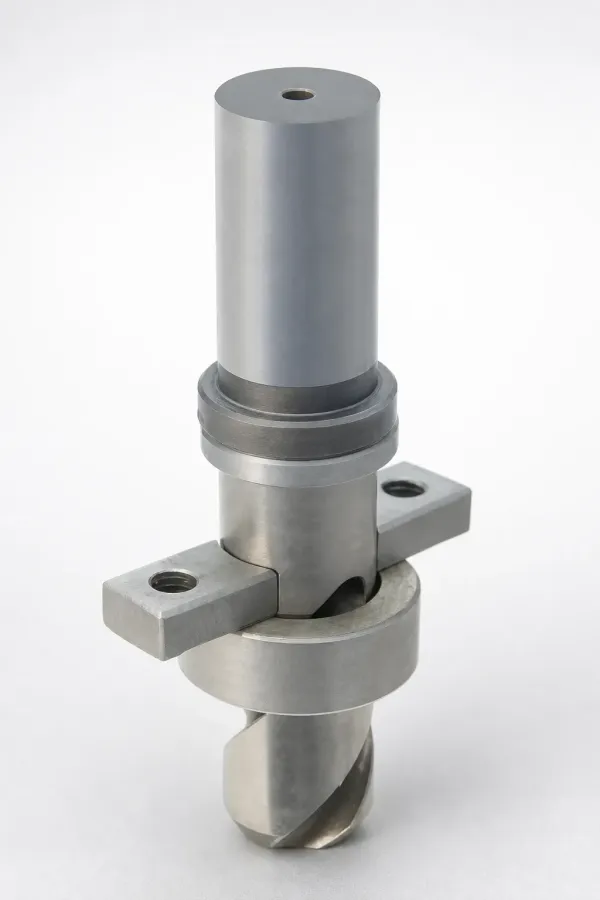
How In-Mold Rolling Gate Cut Works
Operating Principle
The MRGC rolling gate cut unit installs in the mold and operates during the mold opening sequence. A rotating cutter blade engages the gate as the mold opens, shearing the gate with a rolling action rather than a straight-line cut. This rolling motion produces a smoother cut surface with lower stress concentration at the gate vestige.
Cutting Sequence
- Fill & Pack — Normal injection cycle. Resin fills through the gate as usual.
- Cool — Gate and part solidify. The cutter is in the retracted position.
- Mold Open — As the mold opens, the cutter mechanism activates. The rolling blade engages and shears through the gate.
- Eject — Part ejects with a clean, finished gate surface. No post-mold trimming needed.
Cut Quality
The rolling action creates a shear surface rather than a fracture surface. Vestige height is typically 0.1–0.3 mm — significantly better than the 0.5–2.0 mm typical of manual trimming or standard gate break.
Engineering note: Gate thickness must be within the unit's cutting capacity (typically ≤ 2–3 mm). For a detailed mechanism explanation, see our Rolling Gate Cut Mechanism and Design Guide.
Cost-Benefit Analysis: In-Mold Cut vs. Manual Trimming
Rolling gate cut units add mold cost but eliminate post-mold operations. Here's the economics:
| Factor | Manual Post-Mold Trimming | In-Mold Rolling Cut |
|---|---|---|
| Gate Removal Method | Operator trims with nippers or fixture after ejection | Automated cut during mold opening — no operator needed |
| Vestige Quality | Inconsistent (0.5–2.0 mm, operator-dependent) | Consistent (0.1–0.3 mm, machine-controlled) |
| Cycle Time Impact | + 3–10 sec/part for trimming operation | Zero additional time — cutting happens during mold open |
| Labor Cost | 1 operator per press for trimming | Zero additional labor |
| Mold Cost Impact | None | + Rolling cut unit cost + mold modifications |
| Scrap Rate | Higher (operator errors, inconsistent cuts) | Lower (consistent, repeatable cuts) |
Cost comparison: For a detailed savings calculator and quality comparison, see our In-Mold Gate Cut vs. Post-Mold Trimming guide.
In-Mold Cut vs. Other Gate Separation Methods
✅ Rolling gate cut is right when:
- You need automated gate separation without hot runner valve gates
- Gate vestige must be consistent and small (< 0.3 mm)
- Manual trimming is a bottleneck in your production line
- Parts go directly to assembly without secondary finishing
🔀 Consider alternatives:
- Pin-point gates (three-plate mold) — If gate auto-separates during mold opening without a cutter
- Submarine gates — If automatic gate shearing in a two-plate mold is sufficient
- Hot runner valve gates — If zero vestige is required and budget allows
- Manual trimming — If volume is low (< 50K/year) and vestige quality is non-critical
About Rolling Gate Cut Units
The MRGC rolling gate cut unit is a self-contained mechanism that installs into the mold without external actuation. It uses the mold's own opening motion to drive the cutting action — no hydraulic cylinders, air lines, or electrical connections needed. The rolling cutter blade is replaceable and hardened for long service life.
Application Scenarios
In-mold gate cutting delivers the most value in these production environments:
Medical Device Housings
Medical devices requiring smooth, burr-free surfaces at gate locations for patient safety and regulatory compliance.
The rolling cut produces a consistent 0.1–0.3 mm vestige that meets FDA surface finish requirements without secondary operations. Eliminates operator-dependent quality variation.
High-Volume Packaging Components
Packaging parts (closures, containers) produced at 1M+ units/year where every second of cycle time matters.
Eliminating 5–8 seconds of manual trimming per part saves 1,400–2,200 hours of labor per million parts. The mold modification pays back within the first production run.
Electrical Connector Housings
Precision connectors where gate vestige interferes with assembly fit or electrical contact alignment.
The low, consistent vestige (0.1–0.3 mm) prevents assembly interference. Automated cutting ensures every part meets the same dimensional spec at the gate location.
Frequently Asked Questions
How does in-mold rolling gate cutting differ from slide gate cutting?+
What gate thicknesses can rolling gate cut units handle?+
Does rolling gate cut leave a vestige on the molded part?+
How much cycle time does in-mold gate cutting save vs manual trimming?+
Engineering Resources
How In-Mold Rolling Gate Cut Works: Mechanism and Design Guide
Detailed mechanism explanation, mold integration requirements, and design considerations.
In-Mold Gate Cut vs. Post-Mold Trimming: Cost and Quality Comparison
Cost analysis and quality comparison with ROI calculations.
Need a Custom Quote?
Specify your gate type, gate thickness, part material, and mold opening stroke. Our engineers will confirm MRGC compatibility and recommend the right unit configuration.