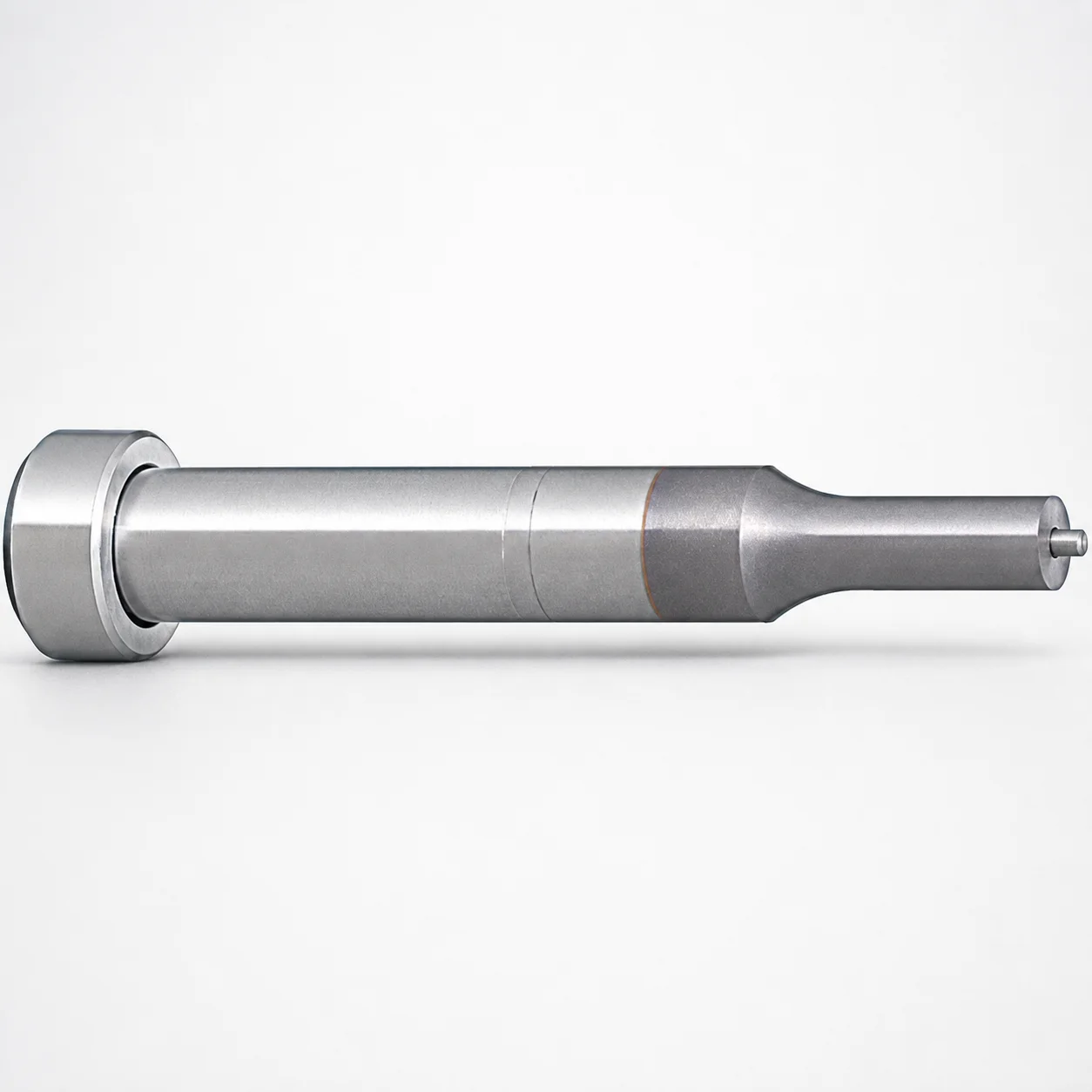
TiCN Coated Tapered Head Ejector Punches
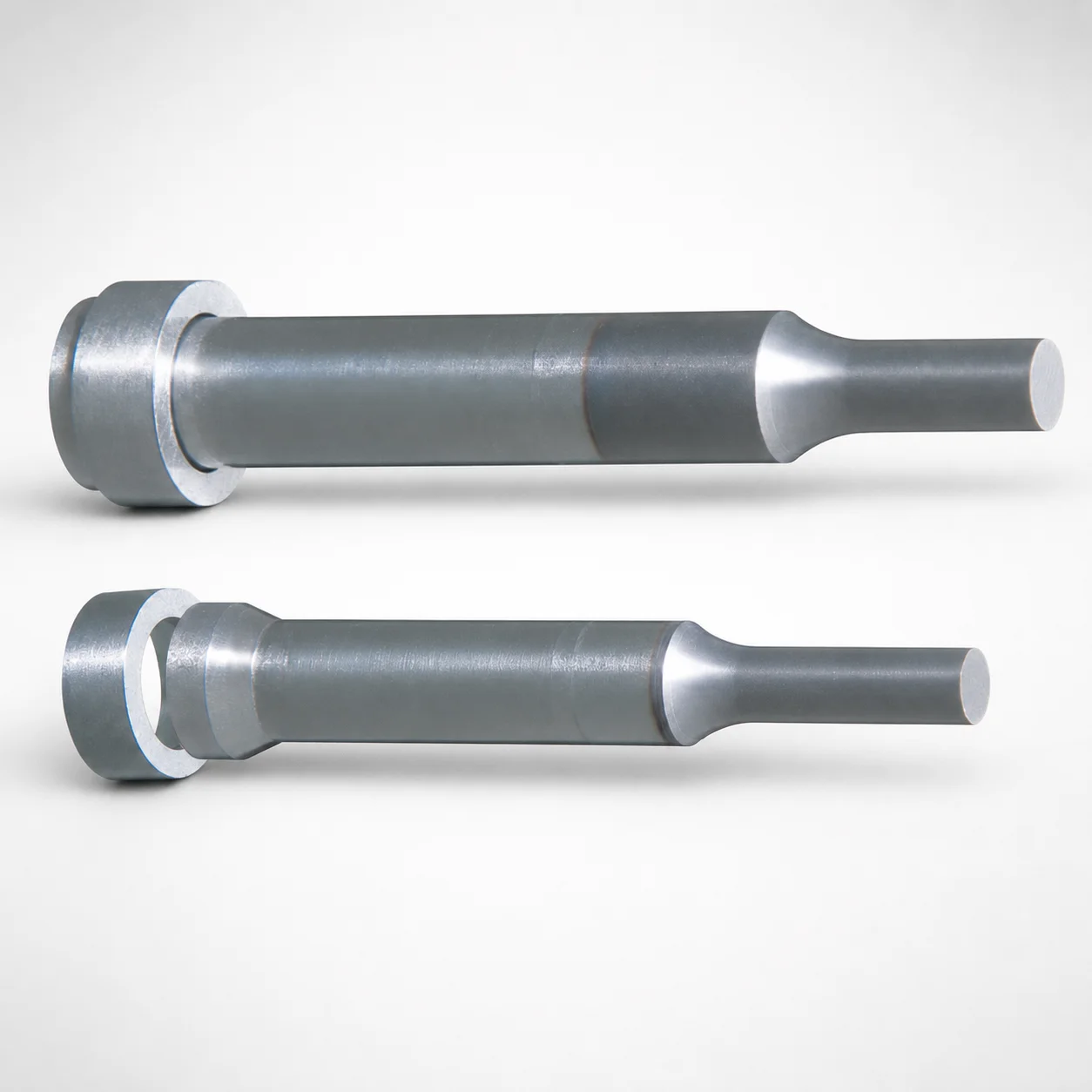
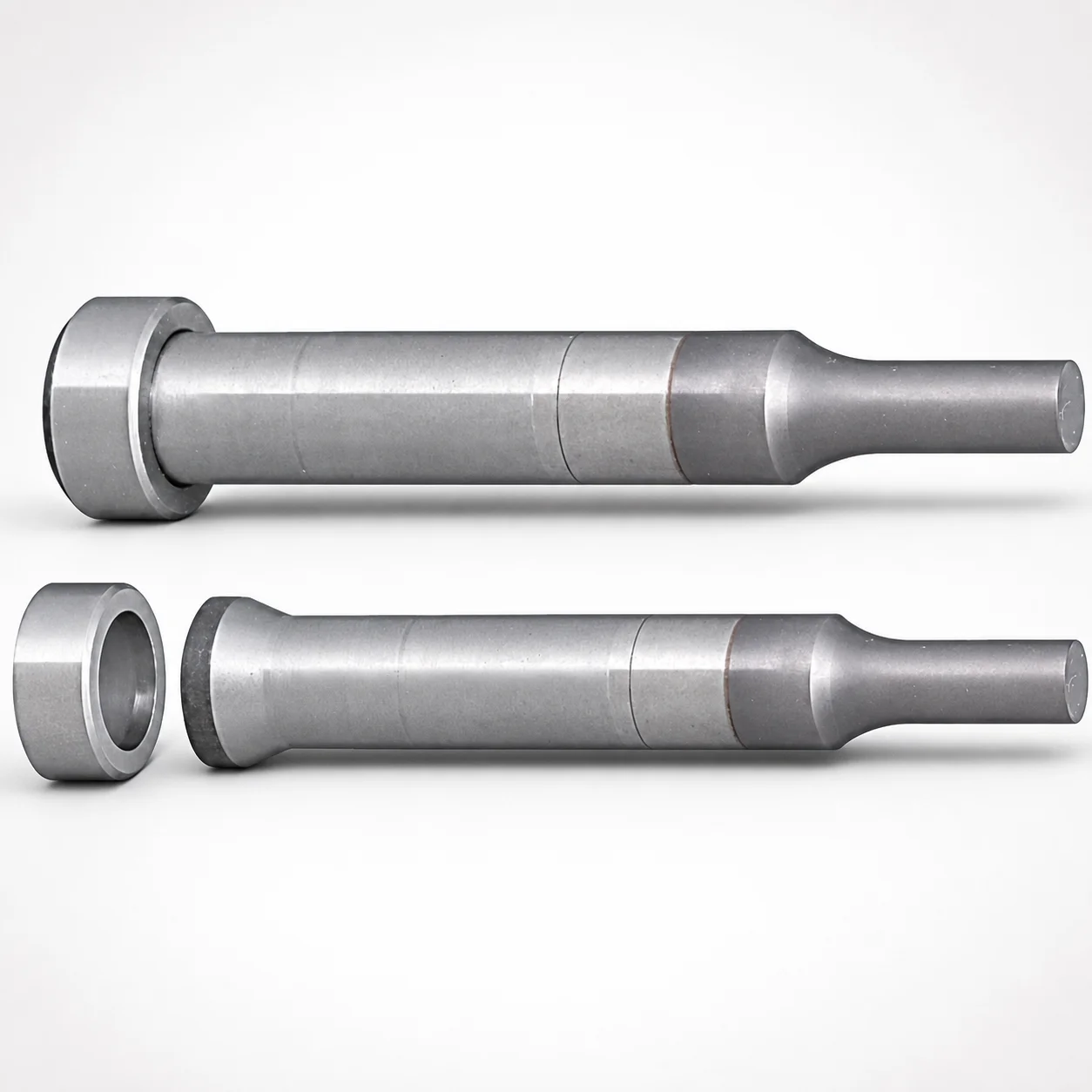
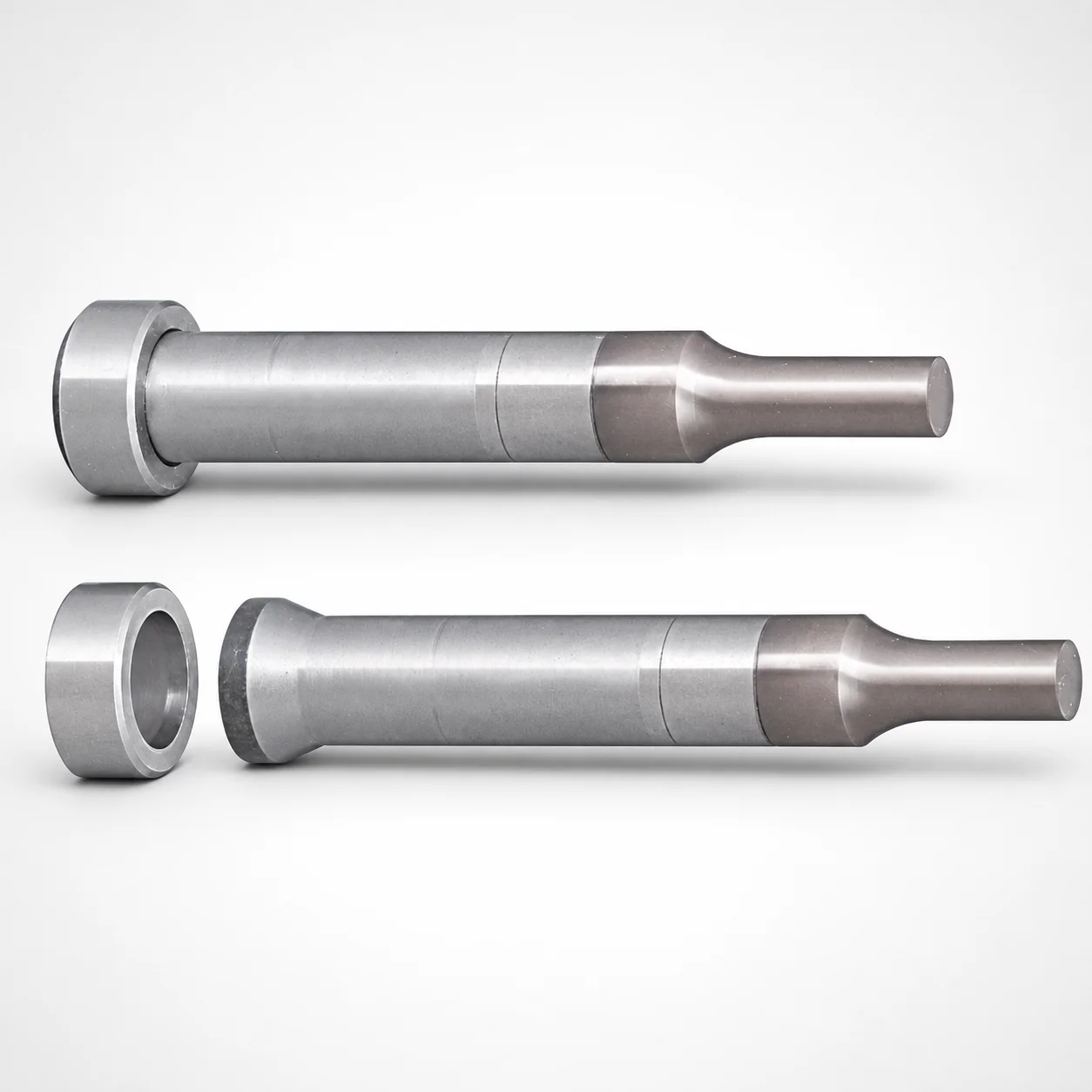
Tapered head ejector punches (TiCN coating) are engineered for heavy-load punching operations where stable guidance and reliable ejection are required in production molds. The single-stepped shank and standard tip geometry support consistent performance under load.
- Heavy-load tapered punch design with a single-stepped shank for controlled guidance
- TiCN surface treatment improves wear resistance for extended punch life
- Standard-type ejector geometry supports repeatable alignment during punching cycles
- Suitable for industrial die and mold work requiring durable ejector punches
Specifications
16 configurations available
| Material | B (Tip length) | D (Shank diameter) (mm) | P (Tip dimension) (mm) | L (L dimension) (mm) | type |
|---|---|---|---|---|---|
| Powdered high-speed steel | L | 8 | 4 ~ 7.99 | 60 ~ 80 | - |
| Powdered high-speed steel | L | 10 | 5 ~ 9.99 | 60 ~ 90 | - |
| Powdered high-speed steel | L | 13 | 6 ~ 12.99 | 70 ~ 100 | - |
| Powdered high-speed steel | L | 16 | 10 ~ 15.99 | 70 ~ 100 | - |
| Powdered high-speed steel | S | 8 | 4 ~ 7.99 | 50 ~ 80 | - |
| Powdered high-speed steel | S | 10 | 5 ~ 9.99 | 55 ~ 90 | - |
| Powdered high-speed steel | S | 13 | 6 ~ 12.99 | 65 ~ 100 | - |
| Powdered high-speed steel | S | 16 | 10 ~ 15.99 | 65 ~ 100 | - |
| SKH51 Equivalent | L | 8 | 4 ~ 7.99 | 60 ~ 80 | - |
| SKH51 Equivalent | L | 10 | 5 ~ 9.99 | 60 ~ 90 | - |
| SKH51 Equivalent | L | 13 | 6 ~ 12.99 | 70 ~ 100 | - |
| SKH51 Equivalent | L | 16 | 10 ~ 15.99 | 70 ~ 100 | - |
| SKH51 Equivalent | S | 8 | 4 ~ 7.99 | 50 ~ 80 | - |
| SKH51 Equivalent | S | 10 | 5 ~ 9.99 | 55 ~ 90 | - |
| SKH51 Equivalent | S | 13 | 6 ~ 12.99 | 65 ~ 100 | - |
| SKH51 Equivalent | S | 16 | 10 ~ 15.99 | 65 ~ 100 | - |
Product Guide
Application Scenarios+
These TiCN coated tapered-head ejector punches are used in injection mold tooling where the ejector needs stable guidance during high-cycle ejection. The tapered head and single-stepped shank help maintain alignment as loads fluctuate across repeated press cycles, improving reliability at the ejector-to-plate interface.
Common scenarios include:
- Automotive and industrial housings: for robust ejection in molds that produce parts with deep cavities or complex cores, where punch wear and dimensional drift can affect ejection consistency.
- Heavy-duty connector and bracket molds: where frequent ejection demands improved wear resistance; the TiCN surface treatment supports longer service life under abrasive and punching conditions.
- Appliance and appliance-component molds: suitable for durable die work requiring standard tip geometry for repeatable alignment during punching and ejection cycles.
This variant’s combination of SKH51-equivalent HSS and TiCN coating makes it well suited for heavy-load guidance and wear-critical ejector performance.
Material & Process Details+
The punches are made from powdered high-speed steel with an SKH51 equivalent grade. SKH51 is typically considered comparable to the AISI M2 family for high-redhardness, but the powder metallurgy route improves carbide uniformity and reduces segregation.
Key performance comes from a balance of:
- Wear resistance: enhanced by the TiCN coating, which reduces surface wear during heavy punching/ejection cycles.
- Toughness trade-off: HSS offers good toughness for its hardness class, but as hardness increases, impact resistance can decrease; adequate heat treatment and coating integrity are critical.
- Hardness (HRC): not provided in the input data, so selection should be based on your shop’s standard heat-treatment target for SKH51-equivalent tooling stock.
Manufacturing typically includes hardening/tempering for HSS followed by coating application (TiCN) to improve service life in abrasive contact zones.
Sizing & Selection Guide+
Select the punch based on the shank diameter (D), tip geometry, and overall L dimension to match the ejector travel and guidance requirements in the mold.
Use these available ranges:
- D (shank diameter, mm): 8, 10, 13, 16
- B (tip length): options labeled L and S
- P (tip dimension, mm): 4–7.99, 5–9.99, 6–12.99, 10–15.99
- L (overall L, mm): 50–80, 55–90, 60–80, 60–90, 65–100, 70–100
To size correctly, match D to the ejector bushing/guide bore ID and keep clearance within your standard guide-fit practice to ensure smooth movement under load. Choose L so the tapered head engages the part/core with the required stroke margin without bottoming. Select P and the B length option to fit the receiving feature geometry, ensuring consistent alignment during ejection and preventing uneven loading on the tip.
Frequently Asked Questions
Which shank diameter (D) options are available for these tapered head ejector punches?+
How do I select the correct tip dimension (P) and tip length (B) for the tapered head geometry?+
What overall length (L dimension) should I choose to avoid bottoming and ensure full ejection travel?+
Why is TiCN coating beneficial for heavy-load punching and ejection in these punches?+
What material grade is used and how does it affect selection versus other tool steels?+
Related Products
Need Custom Specifications?
Our engineering team can help with custom configurations, material selection, and volume pricing.