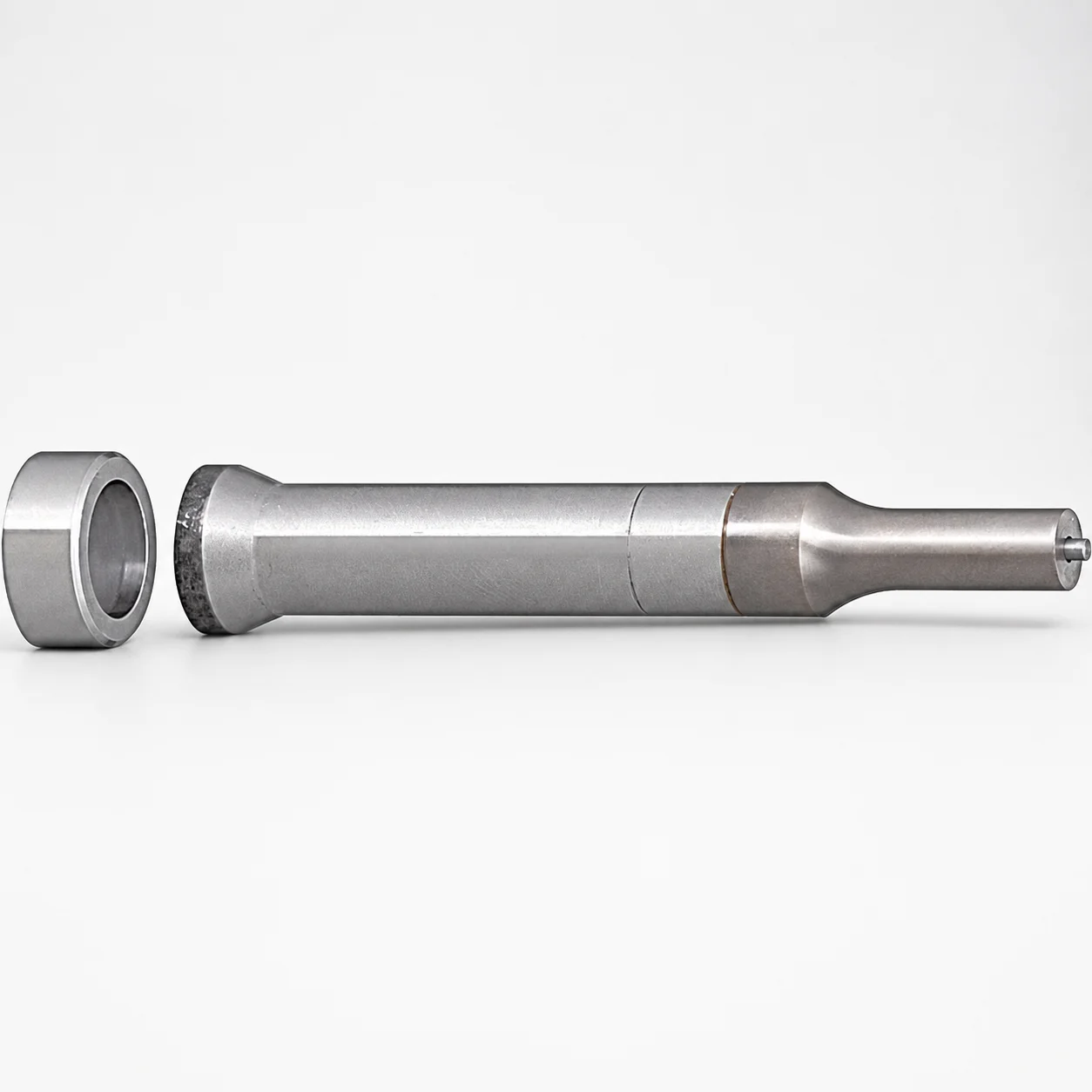
HX Coating Tapered Head Ejector Punches
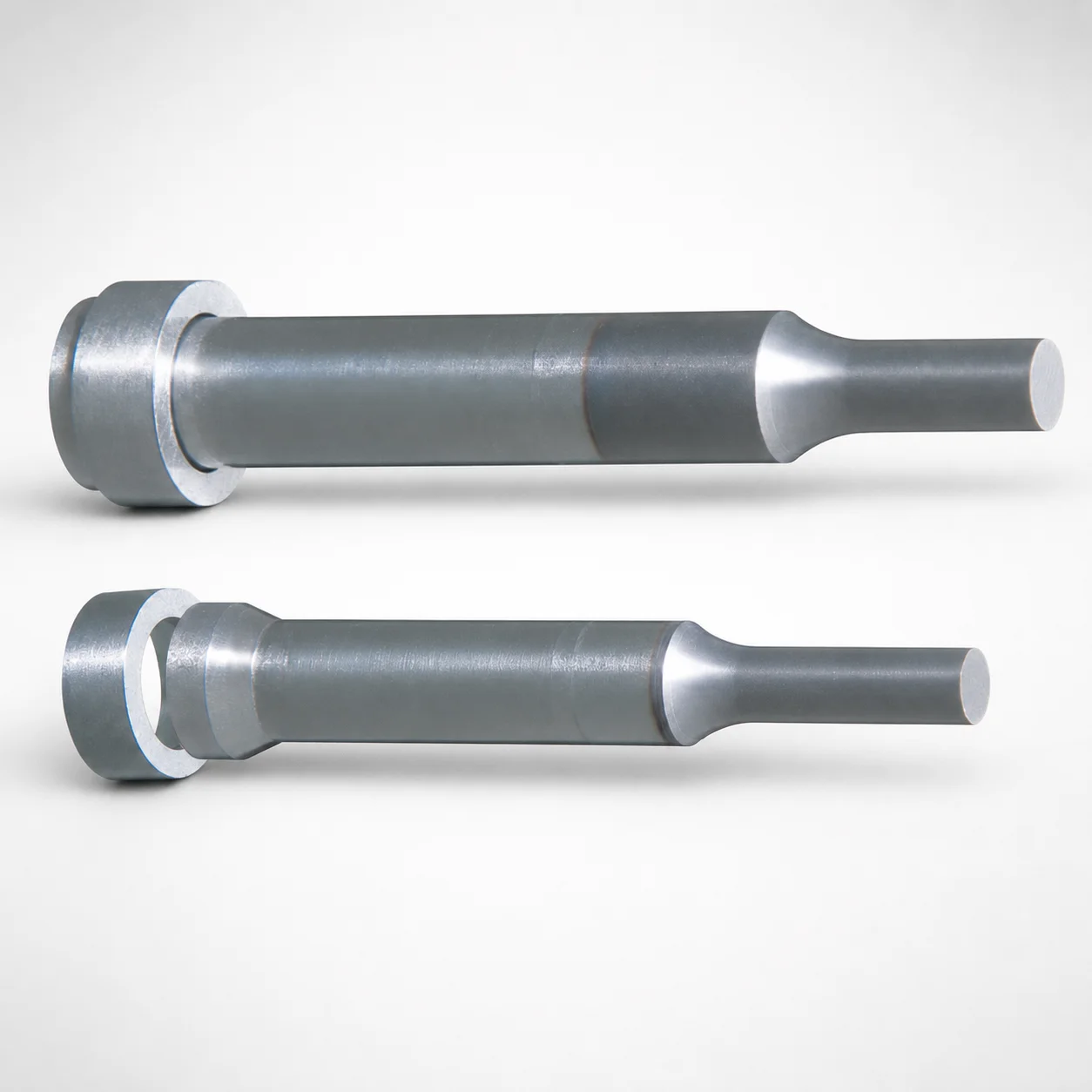
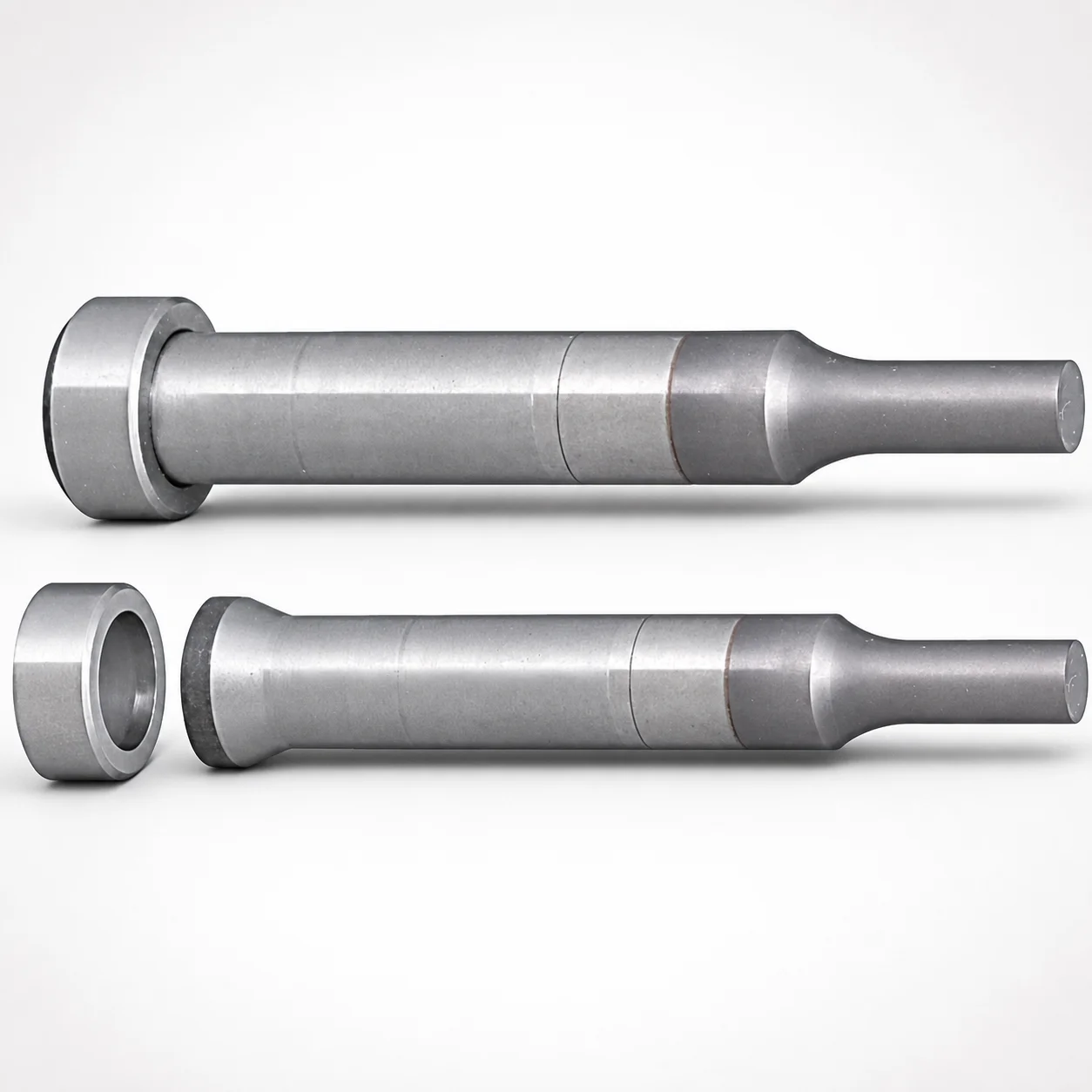
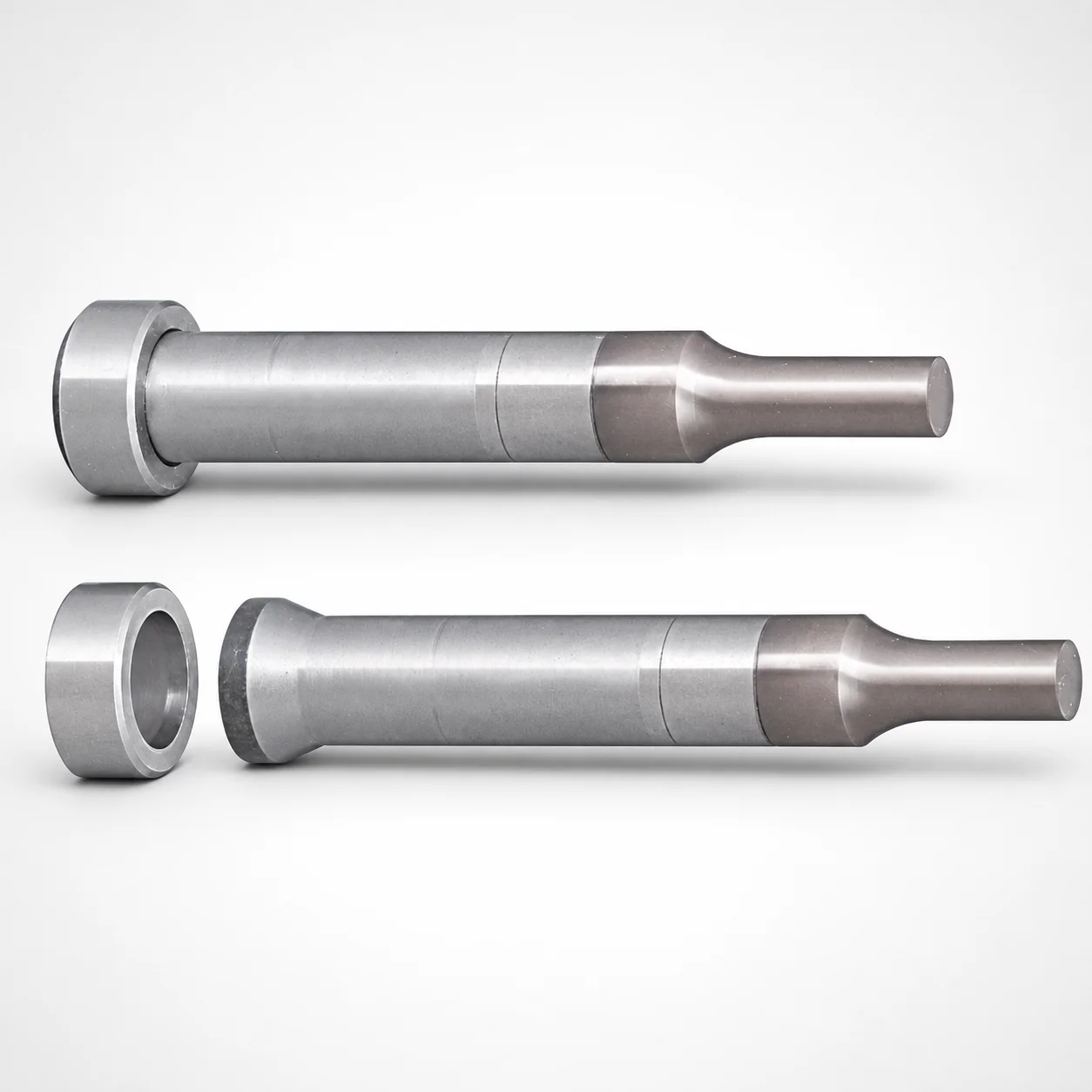
HX Coating tapered head ejector punches (powdered high-speed steel) deliver stable, precision punching performance for demanding production lines. The tapered head geometry supports controlled insertion while the HX coating improves wear resistance and tool durability.
- Tapered head design helps maintain consistent punch performance during repeated operations
- Powdered high-speed steel with HX coating supports enhanced durability and wear resistance
- Optimized manufacturing for reliable fit in standard press and punching assemblies
- Suitable for industrial punching applications where downtime and tool wear must be reduced
Specifications
16 configurations available
| Material | B (Tip length) | D (Shank diameter) (mm) | P (Tip dimension) (mm) | L (L dimension) (mm) | type |
|---|---|---|---|---|---|
| Powdered high-speed steel | L | 8 | 4 ~ 7.99 | 60 ~ 80 | - |
| Powdered high-speed steel | L | 10 | 5 ~ 9.99 | 60 ~ 90 | - |
| Powdered high-speed steel | L | 13 | 6 ~ 12.99 | 70 ~ 100 | - |
| Powdered high-speed steel | L | 16 | 10 ~ 15.99 | 70 ~ 100 | - |
| Powdered high-speed steel | S | 8 | 4 ~ 7.99 | 50 ~ 80 | - |
| Powdered high-speed steel | S | 10 | 5 ~ 9.99 | 55 ~ 90 | - |
| Powdered high-speed steel | S | 13 | 6 ~ 12.99 | 65 ~ 100 | - |
| Powdered high-speed steel | S | 16 | 10 ~ 15.99 | 65 ~ 100 | - |
| Equivalent to SKH51 | L | 8 | 4 ~ 7.99 | 60 ~ 80 | - |
| Equivalent to SKH51 | L | 10 | 5 ~ 9.99 | 60 ~ 90 | - |
| Equivalent to SKH51 | L | 13 | 6 ~ 12.99 | 70 ~ 100 | - |
| Equivalent to SKH51 | L | 16 | 10 ~ 15.99 | 70 ~ 100 | - |
| Equivalent to SKH51 | S | 8 | 4 ~ 7.99 | 50 ~ 80 | - |
| Equivalent to SKH51 | S | 10 | 5 ~ 9.99 | 55 ~ 90 | - |
| Equivalent to SKH51 | S | 13 | 6 ~ 12.99 | 65 ~ 100 | - |
| Equivalent to SKH51 | S | 16 | 10 ~ 15.99 | 65 ~ 100 | - |
Product Guide
Application Scenarios+
HX-coated tapered head ejector punches are used in injection mold tooling where reliable ejection and repeated punching are required, particularly in high-cycle production. The tapered head supports controlled insertion into mating features, helping maintain alignment and stable contact during repeated cycles.
- Automotive connector and sensor housings: Use these punches in ejector assemblies to improve consistency through long runs, where wear at the punch tip can drive ejection variability.
- Appliance and industrial housings: In molds with deeper ejector stroke demand, the tapered geometry helps guide the punch into the bore while the HX coating improves wear resistance for reduced maintenance downtime.
- General-purpose punching stations in mold presses: The powdered high-speed steel base supports precision punching performance, and the HX coating helps extend tool life under abrasive or high-friction conditions.
This variant is suited to these applications because the combination of a tapered head (stable insertion/control) and an HX wear-resistant coating (improved durability) targets the wear-driven failure modes common in high-volume tooling.
Material & Process Details+
The punches are made from powdered high-speed steel with an HX coating, identified as equivalent to SKH51. SKH51 is commonly associated with AISI M2-class high-speed steel tooling, providing a balance of hot hardness and wear resistance for punching-related functions.
- Wear resistance: The HX coating is intended to reduce abrasive wear at the punch tip and maintain stable punching/ejection behavior over repeated operations.
- Toughness trade-off: High-speed steels typically offer strong wear resistance but can be more sensitive to edge chipping than tougher tool steels if misaligned or if excessive loads are introduced.
- Manufacturing & heat treatment: As specified here, the core material is powdered HSS (SKH51-equivalent). Specific hardness (HRC) and heat-treatment state are not provided in the available data, so they should be confirmed with the as-supplied heat treatment specification for your exact part number.
When comparing options, SKH51-equivalent powdered HSS plus coating is typically selected over uncoated steels when maintaining tip geometry and reducing wear-driven downtime are primary priorities.
Sizing & Selection Guide+
Select the ejector punch dimensions by matching the shank diameter (D), tip geometry (P), and tapered head length (L) to the corresponding ejector bore/guide and the required working penetration.
- Choose shank diameter D: Available diameters are 8, 10, 13, 16 mm. Match this to the ejector bore/guide clearance requirements in your mold frame or punch holder.
- Match tip dimension P: Tip dimension ranges are 4–7.99, 5–9.99, 6–12.99, 10–15.99 mm. Use the P range that corresponds to the mating feature envelope so the tapered head seats correctly without excessive interference.
- Set length L for stroke/penetration: L is offered across multiple ranges depending on the configuration: 60–80, 60–90, 70–100, 50–80, 55–90, 65–100 mm. Verify required stroke and working engagement in the mold cycle.
Because tolerance/fit data is not listed here, confirm the as-supplied dimensional tolerances and intended clearance for your ejector system before final layout, especially where D guides constrain alignment.
Frequently Asked Questions
Which dimensions (D, P, L) should I verify against my ejector bore and guide before selecting this tapered head punch?+
You should verify the shank diameter D (available: 8, 10, 13, 16 mm) against the ejector bore/guide size, and confirm the tip dimension P range that matches the mating feature envelope (4–7.99, 5–9.99, 6–12.99, 10–15.99 mm). Finally, select the tapered head length L from the available ranges (50–80 to 70–100 mm depending on variant) to achieve the required working penetration without bottoming.
What is the material identification for this punch, and how does the SKH51-equivalent relate to wear performance?+
The punch core is powdered high-speed steel and is specified as equivalent to SKH51. With an HX coating, the selection is geared toward improving wear resistance at the tip under repeated contact. If you need hardness (HRC) targets or exact heat treatment state for your load case, you should confirm those values from the exact part’s supplied documentation, since they are not included in the provided specifications.
Does the tapered head geometry reduce the risk of misalignment or insertion issues in ejector assemblies?+
Yes—this model uses a tapered head design intended to support controlled insertion into the mating feature. In mold builds where repeated cycling can magnify alignment issues, the taper helps guide the punch during engagement, supporting more stable operation over time.
For high-cycle punching/ejection, is the HX coating intended to address abrasive wear at the tip?+
The design explicitly combines a powdered high-speed steel base with an HX wear-resistant coating. The coating is intended to extend tool durability by reducing wear at the punch working area during repeated operations. For coating performance validation, align the selected D and P to your mating geometry to avoid concentrated loads that can accelerate edge damage.
How do I choose the correct L range when my required stroke changes between products?+
Use the required stroke and working engagement to pick an L range from the available options (60–80, 60–90, 70–100, 50–80, 55–90, 65–100 mm). Recalculate engagement for each product variation to ensure the punch reaches the intended working depth without exceeding the travel that could cause bottoming or increased side loading. Confirm clearance and tolerance compatibility in your ejector system before finalizing.
Related Products
Need Custom Specifications?
Our engineering team can help with custom configurations, material selection, and volume pricing.