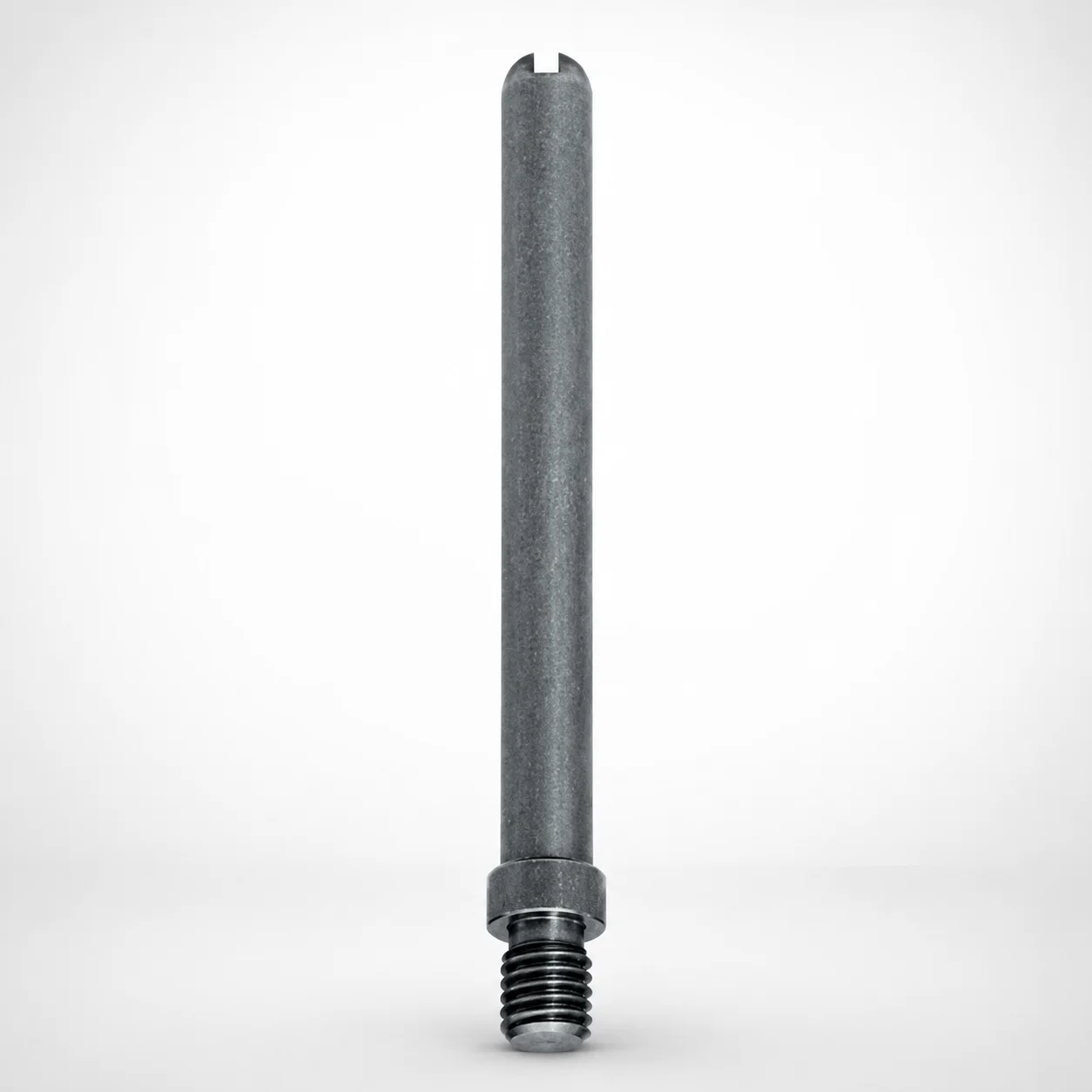
SGAMK Series Spring Guide Pins
SGAMK Series spring guide pins are engineered to deliver stable alignment and smooth movement in automated mechanisms. They help maintain accurate positioning while reducing shock and vibration effects during frequent cycling.
- Spring guide design supports reliable alignment and controlled motion
- Configurable guide diameter and length options fit diverse assemblies
- Durable construction helps absorb vibration and protect mating parts
- Suitable for precision manufacturing, tooling, and assembly systems
Specifications
4 configurations available
| D (Guide diameter) (mm) | L (Guide length) (mm) | type |
|---|---|---|
| 8 | 20 ~ 60 | - |
| 10 | 20 ~ 80 | - |
| 12 | 20 ~ 80 | - |
| 15 | 20 ~ 100 | - |
Product Guide
Application Scenarios+
These spring guide pins are used inside injection mold auxiliary mechanisms and automated tooling systems where repeatable alignment and controlled motion are critical. In runner or lifter sub-assemblies, they help keep moving components centered through frequent cycling, supporting stable positioning and reducing the effects of shock and vibration.
They are also suited to automotive connector and sensor housing molds that require consistent parting-line behavior and smooth actuator movement. The configurable guide diameter (D = 8, 10, 12, 15 mm) and selectable guide length (L = 20–60, 20–80, 20–100 mm) allow engineers to match the pin’s bearing area and engagement depth to the specific travel and load path.
- Use for moving mold components needing smooth, guided motion during rapid cycles
- Select D to control fit with mating guide bushings and prevent misalignment
- Select L to ensure sufficient guiding length over the full stroke
Material & Process Details+
The provided specification set focuses on dimensional selection (D and L), and does not include a steel grade, heat-treatment state, or hardness rating. Therefore, this page content treats the material characteristics as “factory-selected” for the SGAMK series and avoids asserting HRC, wear-resistance values, or quench/temper or nitriding conditions that are not given in the data.
In general application, spring guide pins for automated alignment are chosen to balance wear resistance (for long guide life) with toughness (to tolerate shock during cycling). If your project requires a specific steel grade, hardness (e.g., HRC target), or surface treatment (e.g., nitriding), confirm those attributes with the supplier against the exact variant.
- Dimensional variants: D = 8/10/12/15 mm; L ranges include 20–60, 20–80, 20–100 mm
- Material/heat treatment details: not specified in the provided dataset
- Verify steel grade and surface treatment for wear-critical or high-cycle environments
Sizing & Selection Guide+
Correct sizing for SGAMK spring guide pins is mainly driven by matching the guide diameter (D) and guide length (L) to the mating components and the required guiding engagement across stroke.
- Choose D: select one of the available guide diameters D = 8, 10, 12, or 15 mm based on the required clearance/fit with the mating guide bushing or hole system.
- Choose L: select a variant with the needed length range: L = 20–60 mm, 20–80 mm, or 20–100 mm. Use the longest engagement you can while staying compatible with the assembly envelope.
To ensure alignment over the full motion cycle, confirm that the effective guiding length remains sufficient at both extremes of travel. Tolerance expectations depend on your bushing/hole design; therefore, lock the D choice to the mating bore/counterbore specification and validate fit (clearance vs. snug) for smooth motion under cycling loads.
Frequently Asked Questions
Which SGAMK guide diameter (D) should I select for my mold guide bushings when aligning moving components?+
How do I determine the correct SGAMK guide length (L) for the full stroke in a lifter or moving sub-assembly?+
Are the SGAMK spring guide pins intended for high-cycle automated mold actuation, and how does the spring guide design help?+
What material grade or hardness (HRC) is used for the SGAMK spring guide pins?+
Can I use the SGAMK pins across different mold accessory designs by swapping only D and L?+
Need Custom Specifications?
Our engineering team can help with custom configurations, material selection, and volume pricing.