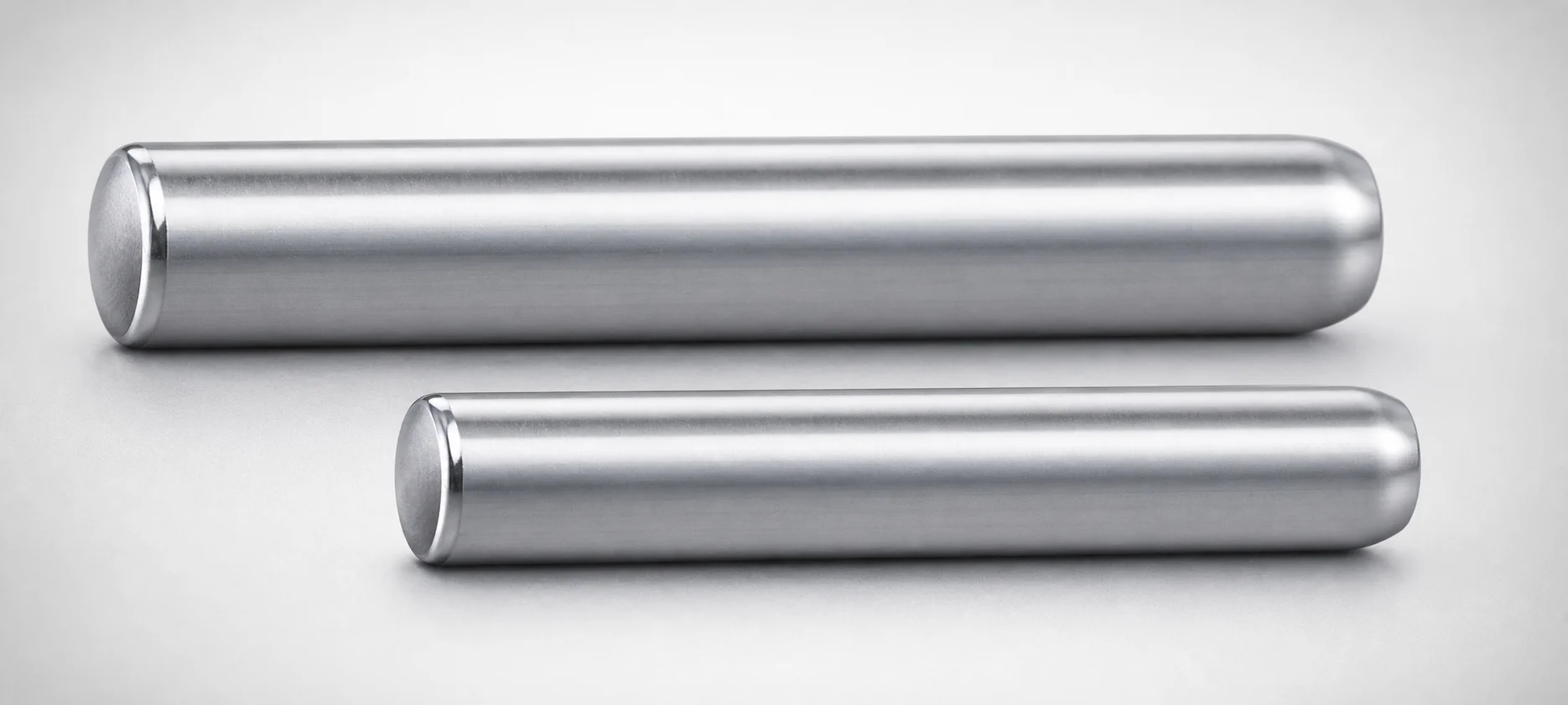
Undersized h7 Tolerance 52100 Bearing Steel Tapped Straight Dowel Pins
Undersized h7 tolerance dowel pins (52100 bearing steel) are designed for accurate alignment where tight fit matters. The tapped shaft end supports secure assembly in fixtures, dies, and jigs.
- Tapped shaft end enables reliable installation and stable positioning
- 52100 bearing steel construction supports wear resistance in repeated use
- Undersized fit with h7 tolerance helps achieve consistent assembly accuracy
- Suitable for locating applications in precision tooling and industrial workholding
Specifications
76 configurations available
| Shaft Diameter Tolerance | D (Shaft Diameter) (mm) | Length L (mm) | Tapped Type | type |
|---|---|---|---|---|
| 0/-0.010 | 2 | 6 | No | - |
| 0/-0.010 | 2 | 8 | No | - |
| 0/-0.010 | 2 | 10 | No | - |
| 0/-0.010 | 2 | 15 | No | - |
| 0/-0.010 | 3 | 8 | No | - |
| 0/-0.010 | 3 | 10 | No | - |
| 0/-0.010 | 3 | 15 | No | - |
| 0/-0.010 | 3 | 20 | No | - |
| 0/-0.012 | 4 | 10 | No | - |
| 0/-0.012 | 4 | 15 | No | - |
| 0/-0.012 | 4 | 20 | No | - |
| 0/-0.012 | 5 | 10 | Yes | - |
| 0/-0.012 | 5 | 15 | Yes | - |
| 0/-0.012 | 5 | 20 | Yes | - |
| 0/-0.012 | 5 | 25 | Yes | - |
| 0/-0.012 | 5 | 30 | Yes | - |
| 0/-0.012 | 6 | 10 | Yes | - |
| 0/-0.012 | 6 | 15 | Yes | - |
| 0/-0.012 | 6 | 20 | Yes | - |
| 0/-0.012 | 6 | 25 | Yes | - |
| 0/-0.012 | 6 | 30 | Yes | - |
| 0/-0.012 | 6 | 35 | Yes | - |
| 0/-0.012 | 6 | 40 | Yes | - |
| 0/-0.012 | 6 | 50 | Yes | - |
| 0/-0.015 | 8 | 15 | Yes | - |
| 0/-0.015 | 8 | 20 | Yes | - |
| 0/-0.015 | 8 | 25 | Yes | - |
| 0/-0.015 | 8 | 30 | Yes | - |
| 0/-0.015 | 8 | 35 | Yes | - |
| 0/-0.015 | 8 | 40 | Yes | - |
| 0/-0.015 | 8 | 45 | Yes | - |
| 0/-0.015 | 8 | 50 | Yes | - |
| 0/-0.015 | 8 | 60 | Yes | - |
| 0/-0.015 | 8 | 70 | Yes | - |
| 0/-0.015 | 8 | 80 | Yes | - |
| 0/-0.015 | 10 | 15 | Yes | - |
| 0/-0.015 | 10 | 20 | Yes | - |
| 0/-0.015 | 10 | 25 | Yes | - |
| 0/-0.015 | 10 | 30 | Yes | - |
| 0/-0.015 | 10 | 35 | Yes | - |
| 0/-0.015 | 10 | 40 | Yes | - |
| 0/-0.015 | 10 | 45 | Yes | - |
| 0/-0.015 | 10 | 50 | Yes | - |
| 0/-0.015 | 10 | 60 | Yes | - |
| 0/-0.015 | 10 | 70 | Yes | - |
| 0/-0.015 | 10 | 80 | Yes | - |
| 0/-0.015 | 10 | 100 | Yes | - |
| 0/-0.015 | 10 | 120 | Yes | - |
| 0/-0.018 | 12 | 20 | Yes | - |
| 0/-0.018 | 12 | 30 | Yes | - |
Product Guide
Application Scenarios+
These undersized h7 tolerance dowel pins are used in injection mold tooling to provide repeatable positioning between plates, bases, and guide assemblies. The tapped shaft end option (available as “Yes” for tapped type) allows fast, secure installation in jigs, dies, and fixtures where consistent alignment reduces setup variation.
- Automotive connector and electrical insert molds: Pair pins with mating bushings/holes to maintain cavity/core alignment through repeated press cycles; the undersized h7 fit helps achieve stable assembly accuracy.
- Medical device housing and cap molds: Use in precision workholding stacks to control lateral location of mold components; the 52100-based wear resistance supports long-term use in frequently handled toolsets.
- General high-mix production fixtures: Install in modular die tryout fixtures to ensure quick repeat alignment; choose the tapped variant to speed clamping/retention during setup.
The selectable shaft diameter tolerance grades make this variant suited for applications that require tight, predictable location in tooling interfaces.
Material & Process Details+
The pins are made from 52100 bearing steel, a high-carbon chromium steel commonly selected for rolling-contact wear resistance. In mold accessory applications, this material supports good wear resistance during repeated assembly and disassembly of alignment components.
- Heat treatment: Supplied as precision dowel pins intended for close-fit locating use; select the appropriate tolerance grade to match your hole system.
- Hardness / performance trade-off: Bearing steels are typically quenched and tempered or otherwise heat treated to balance hardness (for wear) with toughness (for resistance to minor chipping or damage during installation).
- Suitability: Compared with lower-alloy or annealed steels, 52100 generally provides higher resistance to surface wear where pins rub lightly against corresponding bores.
When designing, prioritize correct h7-based fit selection and installation forces to avoid stressing the hardened locating surfaces.
Sizing & Selection Guide+
To select the correct pin size, match the shaft diameter D and length L to your mold cavity/core or fixture plate hole features, then select the undersized h7 tolerance option that corresponds to the required location accuracy.
- Shaft diameter D range: 2 ~ 20 mm. Choose the pin with the same nominal diameter as the mating bore system.
- Length L range: 6 ~ 150 mm. Select a length that provides sufficient engagement through the stack-up while avoiding bottoming in blind holes.
- Shaft diameter tolerance options (undersized): 0/-0.010, 0/-0.012, 0/-0.015, 0/-0.018, 0/-0.021. Use tighter undersized values for higher location repeatability, and increase undersize when your hole tolerances or assembly clearances require it.
- Tapped type: Choose No or Yes depending on whether you need a tapped shaft end for retention/installation.
Confirm fit strategy with your hole tolerance (h7 interface intent) and assembly loading to maintain consistent alignment without overstressing the locating surfaces.
Frequently Asked Questions
How do the undersized h7 tolerance grades (0/-0.010 to 0/-0.021) affect assembly location in a mold?+
When should I choose the tapped shaft end option (Tapped Type: Yes) in die and fixture builds?+
What are the allowable shaft diameter and length ranges for selecting this dowel pin?+
Is 52100 bearing steel suitable for repeated mold alignment and wear-prone applications?+
How should I match pin length to mold plate stack-ups and blind hole depth?+
Related Products
Need Custom Specifications?
Our engineering team can help with custom configurations, material selection, and volume pricing.