Stepped Leader Pins
Guide pins with diameter transitions for multi-plate molds — each step engages a different plate thickness for sequential alignment.
Stepped Leader Pins Products
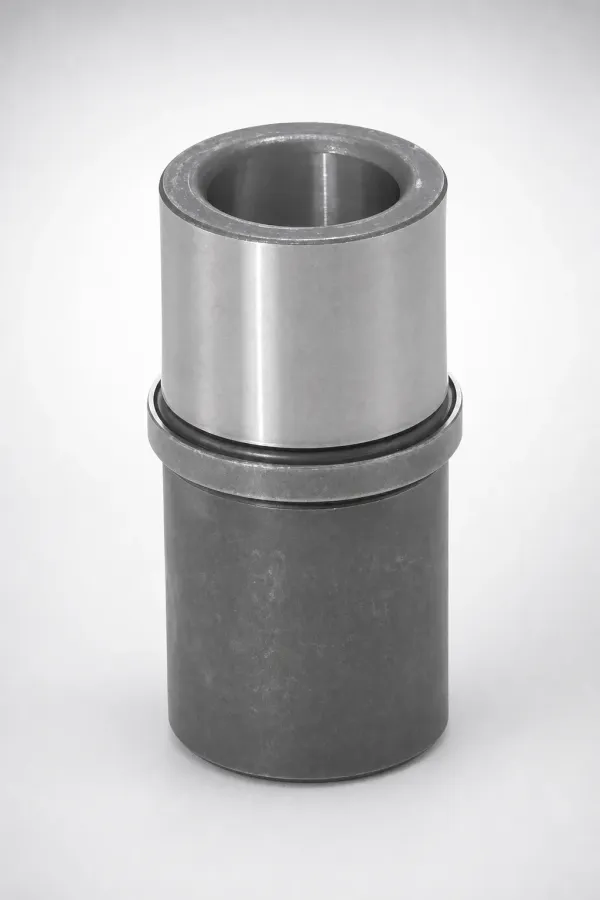
One-Step Leader Pin
SUJ2 | HRC 58-62 | 1-2 step transitions
View DetailsTwo-Step Leader Pin
SUJ2 | HRC 58-62 | 1-2 step transitions
View DetailsStepped Pin — Long Series
SUJ2 | HRC 58-62 | 1-2 step transitions
View DetailsStepped Pin — DIN Standard
SUJ2 | HRC 58-62 | 1-2 step transitions
View DetailsStepped Pin — Custom Step Ratio
SUJ2 | HRC 58-62 | 1-2 step transitions
View DetailsStepped Pin — Nitrided
SUJ2 | HRC 58-62 | 1-2 step transitions
View DetailsWhy Stepped Instead of Straight?
In three-plate molds and multi-plate stacks, different plates have different thicknesses and alignment requirements. A straight leader pin can only guide two plates (the ones it passes through). A stepped leader pin provides a larger diameter at the base for primary plate alignment and a smaller diameter above the step for secondary plate engagement — allowing a single pin to align three or more plates.
The step transition creates a positive stop that prevents over-insertion. Each diameter section has its own g6 tolerance fit with a corresponding stepped bushing bore, ensuring independent alignment precision at each plate level.
Step ratio (D₁/D₂) typically ranges from 1.2:1 to 1.5:1. Ratios above 1.5:1 create stress concentrations at the step transition that reduce fatigue life.
When NOT to Use Stepped Leader Pins
✅ Use stepped leader pins when:
- Your mold has 3 or more plates requiring independent alignment
- Plate thicknesses vary and need different engagement diameters
- Three-plate molds with runner plate separation
🔄 Use straight leader pins instead when:
- Standard two-plate mold — stepped adds unnecessary cost
- All plates have the same thickness — no benefit from stepping
- Pin length/diameter ratio > 8:1 — stepped reduces effective cross-section
Deep dive: For a detailed comparison, read When to Use Stepped vs Straight Leader Pins — Decision Guide.
About Stepped Leader Pins
Stepped leader pins feature one or two diameter transitions along the shaft, allowing a single pin to guide multiple plates in three-plate molds and multi-plate stacks. Each diameter section maintains independent g6 tolerance fit with its corresponding bushing bore. Manufactured from SUJ2 bearing steel (HRC 58-62) with precision-ground step transitions.
Application Scenarios
Three-Plate Molds
Three-plate molds separate at two parting lines — the runner plate and the cavity plate. Both separations need independent alignment.
Why it fits: The larger diameter aligns the cavity plates, while the smaller diameter above the step aligns the runner plate. Each step provides independent g6 guidance.
Stack Molds
Stack molds with two or more parting levels need alignment across all levels from a single pin set.
Why it fits: Two-step leader pins can guide three plate levels independently. The step creates positive stops that prevent over-travel during mold open.
Frequently Asked Questions
Why use a stepped leader pin instead of a straight one?+
What is the maximum step ratio for stepped leader pins?+
Can stepped leader pins be used in three-plate molds?+
Engineering Resources
Why Stepped Leader Pins Are Preferred in Three-Plate Molds
Engineering analysis of how step transitions provide independent alignment at multiple parting levels.
When to Use Stepped vs Straight Leader Pins — Decision Guide
Clear criteria for choosing between stepped and straight leader pins based on mold configuration.
Need Custom Stepped Leader Pins?
Precision stepped leader pins manufactured to JIS and DIN standards. Custom dimensions available. MOQ 1 piece.