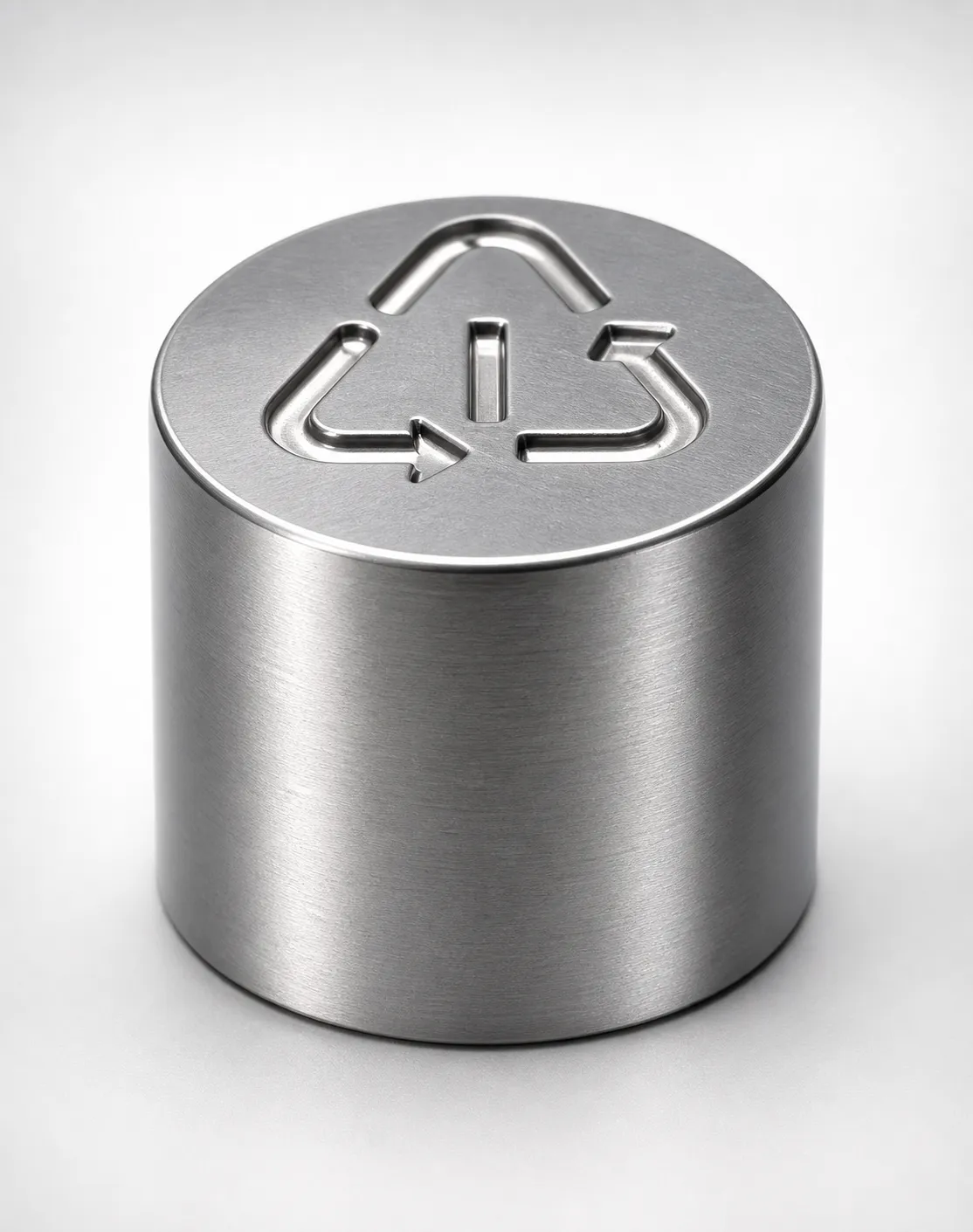
US SPI Comparable Recycle Mark Pins for Plastic Packaging
Recycle Mark Pins for Plastic Packaging provide a consistent way to create recycle-marked identification points in plastic packaging tooling. They help simplify material sorting workflows while maintaining stable mark formation during production.
- Recycle marked pin design supports clear identification on molded parts
- Compatible with US SPI and comparable German/French standards
- Selectable plastics support common resin families including PE, PVC, PP, and PS
- Available pin sizes for flexible tool and packaging line integration
Specifications
52 configurations available
| Recycle Mark Standard | Plastic/Resin Name | D (Diameter) (mm) | type |
|---|---|---|---|
| German and French standards comparable to US SPI standard | Polyethylene terephthalate | 8 | - |
| German and French standards comparable to US SPI standard | Polyethylene terephthalate | 10 | - |
| German and French standards comparable to US SPI standard | Polyethylene terephthalate | 16 | - |
| German and French standards comparable to US SPI standard | Polyethylene terephthalate | 20 | - |
| US SPI standard | Polyethylene terephthalate | 8 | - |
| US SPI standard | Polyethylene terephthalate | 10 | - |
| US SPI standard | Polyethylene terephthalate | 16 | - |
| US SPI standard | Polyethylene terephthalate | 20 | - |
| German and French standards comparable to US SPI standard | High density polyethylene | 8 | - |
| German and French standards comparable to US SPI standard | High density polyethylene | 10 | - |
| German and French standards comparable to US SPI standard | High density polyethylene | 16 | - |
| German and French standards comparable to US SPI standard | High density polyethylene | 20 | - |
| US SPI standard | High density polyethylene | 8 | - |
| US SPI standard | High density polyethylene | 10 | - |
| US SPI standard | High density polyethylene | 16 | - |
| US SPI standard | High density polyethylene | 20 | - |
| German and French standards comparable to US SPI standard | Polyvinyl chloride | 8 | - |
| German and French standards comparable to US SPI standard | Polyvinyl chloride | 10 | - |
| German and French standards comparable to US SPI standard | Polyvinyl chloride | 16 | - |
| German and French standards comparable to US SPI standard | Polyvinyl chloride | 20 | - |
| US SPI standard | Polyvinyl chloride | 8 | - |
| US SPI standard | Polyvinyl chloride | 10 | - |
| US SPI standard | Polyvinyl chloride | 16 | - |
| US SPI standard | Polyvinyl chloride | 20 | - |
| French standard | Low density polyethylene | 8 | - |
| French standard | Low density polyethylene | 10 | - |
| French standard | Low density polyethylene | 16 | - |
| French standard | Low density polyethylene | 20 | - |
| German standard | Low density polyethylene | 8 | - |
| German standard | Low density polyethylene | 10 | - |
| German standard | Low density polyethylene | 16 | - |
| German standard | Low density polyethylene | 20 | - |
| US SPI standard | Low density polyethylene | 8 | - |
| US SPI standard | Low density polyethylene | 10 | - |
| US SPI standard | Low density polyethylene | 16 | - |
| US SPI standard | Low density polyethylene | 20 | - |
| US SPI standard | Polypropylene | 8 | - |
| US SPI standard | Polypropylene | 10 | - |
| US SPI standard | Polypropylene | 16 | - |
| US SPI standard | Polypropylene | 20 | - |
| US SPI standard | Polystyrene | 8 | - |
| US SPI standard | Polystyrene | 10 | - |
| US SPI standard | Polystyrene | 16 | - |
| US SPI standard | Polystyrene | 20 | - |
| German and French standards comparable to US SPI standard | Others (Including multi-layered plastics) | 8 | - |
| German and French standards comparable to US SPI standard | Others (Including multi-layered plastics) | 10 | - |
| German and French standards comparable to US SPI standard | Others (Including multi-layered plastics) | 16 | - |
| German and French standards comparable to US SPI standard | Others (Including multi-layered plastics) | 20 | - |
| US SPI standard | Others (Including multi-layered plastics) | 8 | - |
| US SPI standard | Others (Including multi-layered plastics) | 10 | - |
Product Guide
Application Scenarios+
These recycle mark pins are used in injection mold tooling to form durable identification features directly on plastic packaging components. In high-throughput packaging lines, the pins create consistent recycle-mark points that assist downstream sorting and traceability for PE, PP, PVC, and PS based articles.
- Automated packaging housings & closures: Use the appropriate pin diameter to ensure the mark is clearly formed without smearing, supporting reliable scanner/visual verification during handling.
- Multi-standard recycling workflows: Select the recycle mark standard variant (US SPI, German, or French comparable) so the molded mark aligns with the region’s labeling requirements.
- Thin-wall or flexible resin parts: When molding packaging films or light-weight components, the selected diameter helps balance mark definition with minimal intrusion into thin sections.
This variant is suited because it is explicitly configured for US SPI and comparable German/French standards and supports multiple resin families, improving marking stability across packaging line conditions.
Material & Process Details+
The provided specifications for this item focus on recycle mark standard, resin compatibility, and pin diameter, but no specific steel grade, heat treatment state, or hardness (HRC) values are listed in the input data. Therefore, material-property statements (e.g., “H13 equivalent,” nitriding, or quench-and-temper) cannot be stated reliably for this specific series.
In general practice, mark-forming pins are selected based on wear resistance versus toughness trade-offs, because the pin tip repeatedly contacts resin and experiences friction during ejection. Where multiple material options exist for similar pin products, harder grades improve dimensional stability and wear life, while tougher grades reduce chipping risk under shock loads from fast mold cycling.
- Heat treatment: Not specified in the provided data.
- Hardness (HRC): Not specified in the provided data.
Sizing & Selection Guide+
To select the correct recycle mark pin for your mold, match the pin diameter D to the required mark geometry and the molding surface area where the recycle symbol/point must appear. Available diameters are 8, 10, 16, and 20 mm.
- Choose D by feature visibility: Smaller diameters (8–10 mm) are typically used when the mark area is limited or the packaging part has tighter surface constraints.
- Use larger diameters (16–20 mm) when robustness is needed: Larger pins can help maintain consistent mark formation on parts with more complex surfaces or where ejection stability is critical.
Then align the Recycle Mark Standard option to your target region: US SPI, French standard, or German standard (including comparable variants to US SPI). The plastic/resin variant should also match the molding resin family listed—e.g., HDPE, LDPE, PP, PVC, PS, or PET (including multi-layered plastics)—to ensure the pin’s marking behavior is compatible with the expected material flow.
Tolerance/fit: No tolerance values or length/shaft dimensions are provided in the input data, so fit-by-tolerance guidance cannot be specified here.
Frequently Asked Questions
Which recycle mark standard variant should I select for a packaging program targeting the US?+
How do I choose the pin diameter (D) for reliable recycle marking on plastic packaging parts?+
Can the same recycle mark pin be used across multiple resin families like PP, HDPE, and PVC?+
What happens if my packaging program uses a multi-layered plastic structure?+
Are there material-property differences (steel grade, HRC, heat treatment) between pin variants in this series?+
Related Products
Need Custom Specifications?
Our engineering team can help with custom configurations, material selection, and volume pricing.