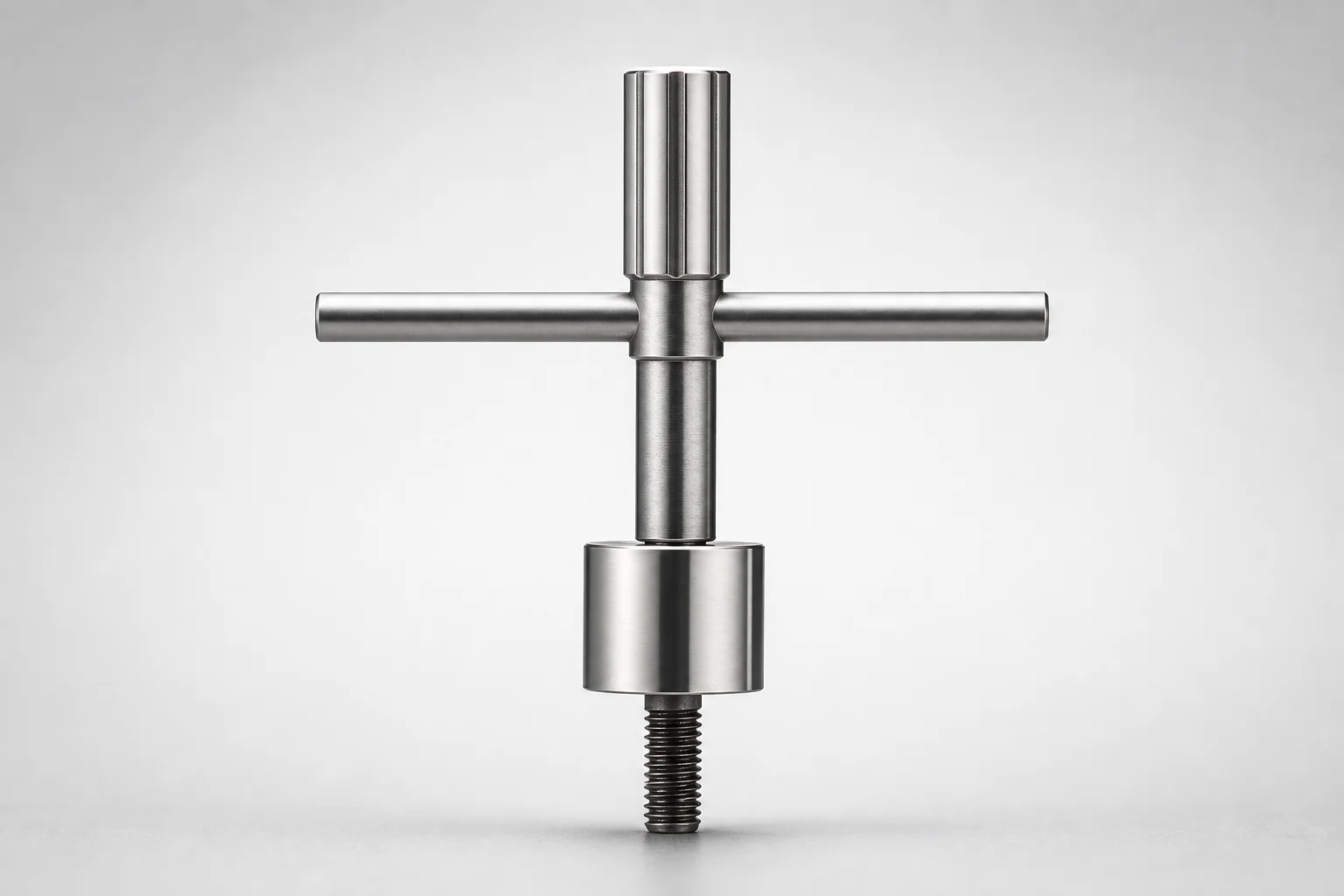
DTNK Date Mark Pin Removal Jigs
DTNK date mark pin removal jigs (with removal tap) are designed for heat-resistant date marked pin sets, enabling quick extraction and safe maintenance. They help reduce disassembly time while supporting stable handling in industrial operations.
- DTNK jig type supports controlled removal of date mark pins
- Integrated removal tap improves extraction efficiency during maintenance
- Heat-resistant construction helps protect sensitive systems in service
- Compatible with date mark pin sets across D-Dimension 4–20 mm
Specifications
8 configurations available
| Applicable D-Dimension (mm) | type |
|---|---|
| 4 | - |
| 5 | - |
| 6 | - |
| 8 | - |
| 10 | - |
| 12 | - |
| 16 | - |
| 20 | - |
Product Guide
Application Scenarios+
These jigs are used in injection mold tooling to service date-recycle / date-mark pin sets installed in gas vent and date-mark insert areas. During routine maintenance, the DTNK fixture provides a controlled way to extract heat-exposed date marked pins, minimizing damage risk to surrounding features and reducing downtime.
Scenario 1: automotive and appliance sub-assemblies that use date-marking—engineers can use the integrated removal tap to improve extraction consistency when pins are exposed to repeated thermal cycles.
Scenario 2: packaging and labeling-related molded parts with frequent line changeovers—jigs support fast pin removal so the date-mark function can be verified or reset without prolonged disassembly.
Scenario 3: production lines requiring reliable maintenance intervals—this variant is suited because it is specifically built for heat-resistant date marked pin sets and is compatible across D-Dimension 4–20 mm, helping standardize service tooling across multiple cavity designs.
Material & Process Details+
The provided product data specifies this jig is built for heat-resistant date marked pin sets, but it does not list an exact steel grade, hardness (HRC), or heat-treatment condition (e.g., quenched & tempered, nitrided, or pre-hardened).
- Heat resistance requirement: suited to environments where date-mark pins experience elevated temperatures during molding and subsequent maintenance extraction.
- Wear vs. toughness trade-off: extraction tools benefit from stable surface hardness to resist galling while retaining sufficient toughness to handle repetitive maintenance cycles.
- Manufacturing process (data-limited): the fixture includes an integrated removal tap, implying precision machining of functional threads and controlled fit to the pin set interface.
If you need a specific grade comparison (e.g., SKD61 vs. H13 class) or target hardness, provide the pin set material/heat treat spec and we can map the correct jig material strategy.
Sizing & Selection Guide+
Selection is primarily based on the Applicable D-Dimension (mm) range: 4 ~ 20. Match the jig to the date mark pin set you intend to remove so the fixture engages the pin geometry correctly during controlled extraction.
- D-Dimension match: choose a DTNK jig version that covers the pin set’s measured D (diameter) within 4–20 mm.
- Interface and fit: because the jig includes a removal tap, proper thread engagement depends on accurate pin set dimensions and the pin’s alignment in the date-mark insert.
- Tolerance considerations: in production molds, dimensional variation can affect engagement depth; confirm the pin set tolerances and allow for normal assembly clearances to prevent binding.
Keep the jig size consistent across stations when the same cavity family uses multiple date-mark pin diameters within the 4–20 mm window, reducing setup time and improving maintenance repeatability.
Frequently Asked Questions
Which date mark pin set diameter can this DTNK removal jig handle?+
How does the integrated removal tap improve maintenance vs. manual extraction?+
Is this jig suitable for heat-exposed date marked pins in production molds?+
What should I verify for correct engagement with the date mark insert interface?+
Related Products
Need Custom Specifications?
Our engineering team can help with custom configurations, material selection, and volume pricing.