Early Return Units
Spring-loaded mechanisms that retract the ejector plate before the mold closes — eliminating the risk of ejector pin collision with the cavity surface.
Early Return Units Products
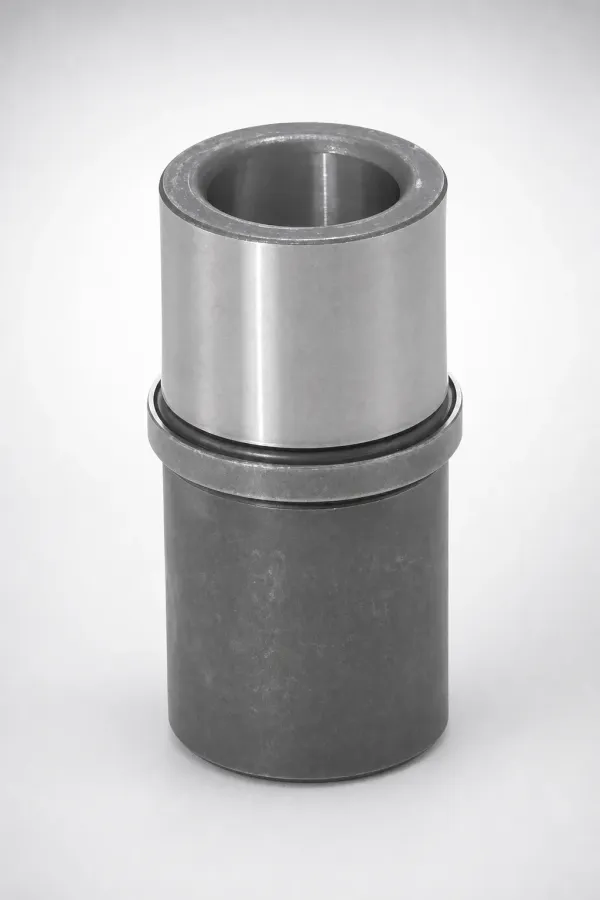
Early Return Unit — Standard
Spring steel + SUJ2 guide | Pre-assembled
View DetailsEarly Return Unit — Heavy Spring
Spring steel + SUJ2 guide | Pre-assembled
View DetailsEarly Return Unit — Compact
Spring steel + SUJ2 guide | Pre-assembled
View DetailsEarly Return Unit — Adjustable Stroke
Spring steel + SUJ2 guide | Pre-assembled
View DetailsHow Early Return Mechanisms Work
Standard return pins only push the ejector plate back during the final stage of mold close — when the pin head contacts the fixed half. This means ejector pins remain extended until the mold is almost fully closed, creating a collision window.
Early return units solve this by adding a compression spring that begins retracting the ejector plate immediately after ejection completes, well before the mold starts to close. The mechanism consists of:
- Guide rod: SUJ2 steel shaft that slides through the ejector plate
- Compression spring: Coil spring that stores energy during ejection and releases it to pull the plate back
- Housing: Mounting body pressed into the mold base
Spring force must overcome ejector plate weight + friction but must not exceed the ejection force of the machine's KO mechanism. Typical spring force range: 100-500 N per unit, with 2-4 units per mold.
Learn more: For detailed technical guidance, see How Early Return Mechanisms Work in Injection Molds.
Preventing Spring Breakage
| Failure Mode | Cause | Prevention |
|---|---|---|
| Spring fatigue fracture | Exceeding rated cycle life (typically 500K cycles) | Replace springs at 80% of rated life (400K cycles) |
| Spring set (permanent compression) | Operating beyond rated deflection | Verify stroke ≤ 75% of spring free length |
| Corrosion-induced fracture | Coolant ingress into spring housing | Add ejector space covers, use stainless springs |
Troubleshooting: If you're experiencing issues, refer to How to Prevent Spring Breakage in Early Return Units.
About Early Return Units
Early return units are spring-loaded mechanisms that automatically retract the ejector plate to its home position immediately after ejection — before the mold begins to close. This eliminates the collision window that exists with standard return pins, preventing ejector pin damage to cavity surfaces. Essential for molds with long ejector pins, angular lifters, slide cores, or any configuration where pins extend beyond the parting line during ejection.
Application Scenarios
Molds with Angular Lifters
Angular lifters follow a cam path during ejection, extending laterally beyond the parting line. If not retracted before mold close, they collide with the cavity surface.
Why it fits: Early return units retract the plate (and the lifter) within 200-500 ms of ejection completion — well before the mold close cycle begins.
Long-Pin Ejection Molds
Molds with ejector pins longer than 3× their diameter risk pin tip collision with the cavity during mold close.
Why it fits: Spring-loaded pre-return retracts all pins fully before the mold halves approach each other.
Frequently Asked Questions
How does the early return spring mechanism work?+
What is the expected spring life in cycles for early return units?+
Which mold designs absolutely require early return mechanisms?+
Engineering Resources
Need Custom Early Return Units?
Precision early return units manufactured to JIS and DIN standards. Custom dimensions available. MOQ 1 piece.