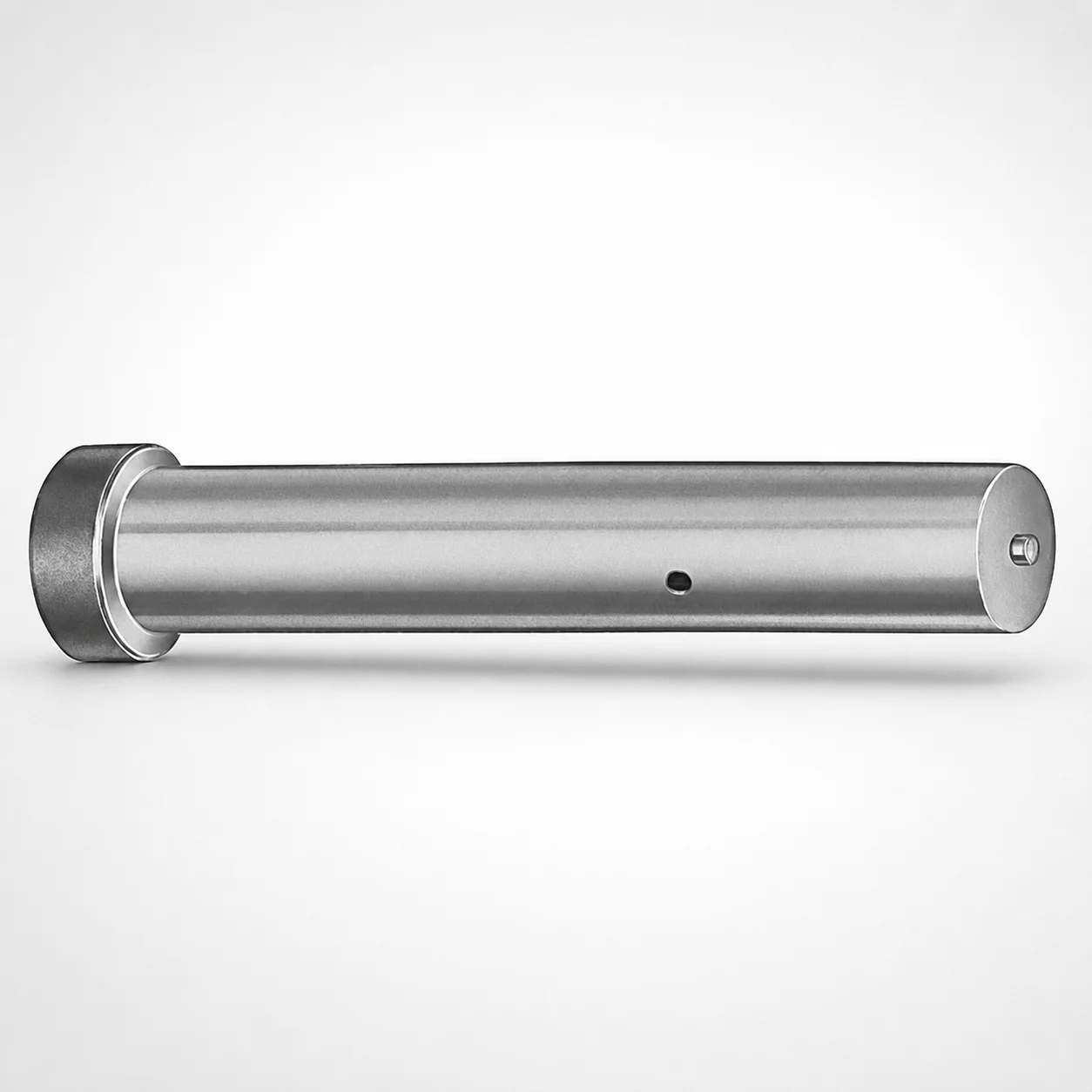
Metric Close Space Straight Ejector Punches XAN DayTAN™ Coating
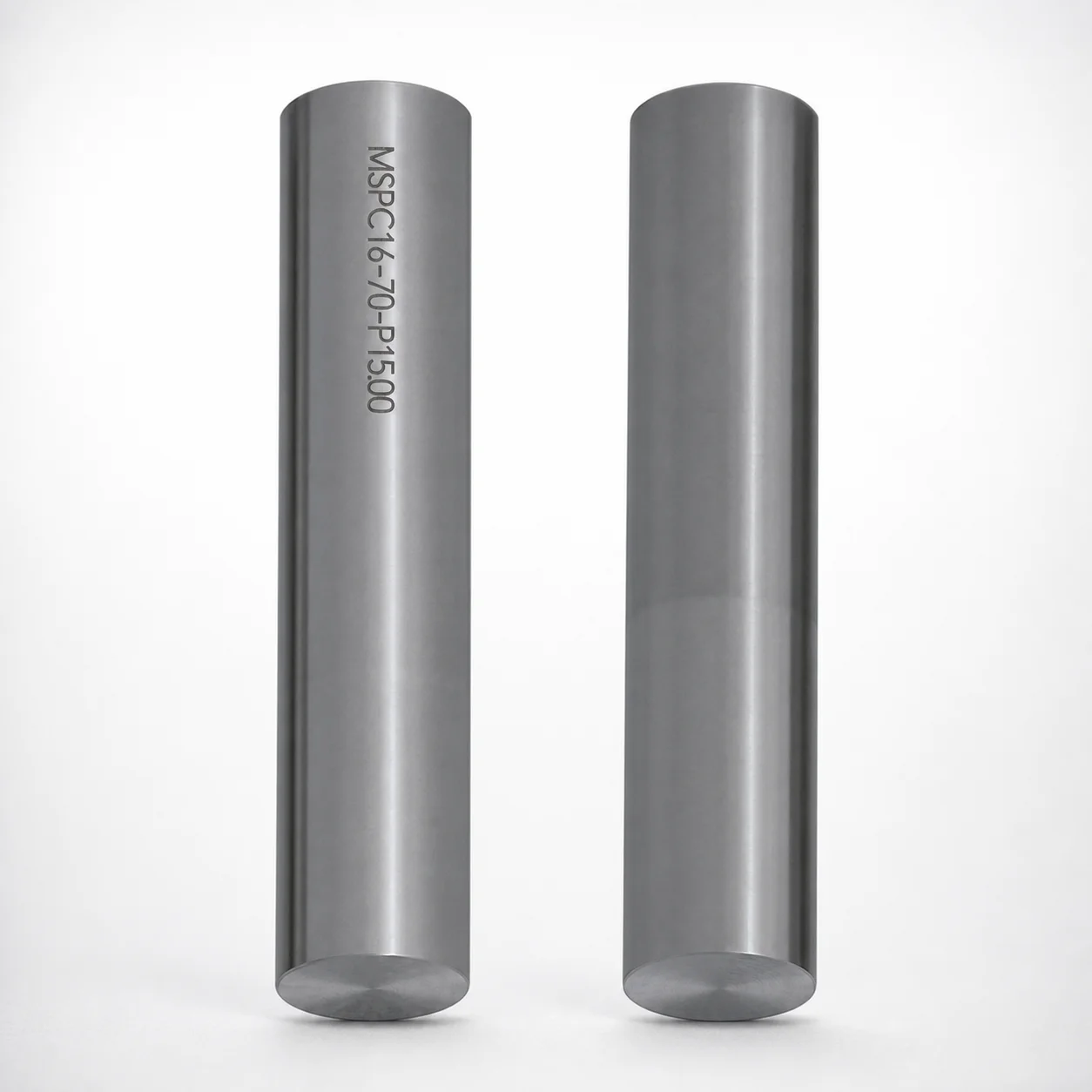
Close Space straight ejector punches (Metric) with XAN DayTAN™ coating are designed for reliable part ejection in tight die space. The coating supports stable sliding behavior and improved tool durability during production.
- Close space straight punch form supports consistent ejection alignment in compact dies
- XAN DayTAN™ coating enhances wear resistance and reduces adhesive effects
- Metric range supports flexible L dimension selection from 50 to 90 mm
- Built for die and mold applications where controlled ejection performance is critical
Specifications
1 configurations available
| L (Length) (mm) | P Dimension (mm) |
|---|---|
| 50 ~ 90 | 5 ~ 16 |
Product Guide
Application Scenarios+
Close-space straight ejector punches are used in injection die tooling where parts must be released from a core or cavity with minimal clearance. They are especially effective in compact layouts such as precision connectors and automotive housings, where tight die space requires an ejector that maintains straight alignment during the ejection stroke.
In electronics and appliance housings, these punches help support smooth, repeatable ejection to reduce the risk of surface marking on thin-wall features. The XAN DayTAN™ coating is suited to these applications because it promotes stable sliding and improves wear resistance, helping preserve dimensional and motion consistency over long production runs.
- Use when die space is limited and alignment must remain controlled throughout cycling.
- Select based on the fixed length (L) 50–90 mm and P 5–16 mm to match the tool’s ejector stack geometry.
- Choose for die and mold systems where reduced adhesive effects and longer punch life are critical.
Material & Process Details+
The provided metadata does not specify a steel grade or hardness value for this punch series, so the exact alloy, HRC, and heat-treatment state cannot be confirmed from the available data. What is supported is the functional benefit of the XAN DayTAN™ coating, which is engineered to improve sliding stability and wear performance in repeated ejection cycles.
From a process standpoint, close-space ejector punches are typically machined to straightness and then surface-coated to control friction and adhesive tendencies at the moving interface. When selecting materials for tooling, engineers often balance wear resistance (to resist abrasive and adhesive wear) against toughness (to prevent chipping under shock loads). Without a specified base steel, the coating is the key differentiator for durability under production contact.
- Coating: XAN DayTAN™ for improved wear resistance and reduced adhesive effects.
- Heat treatment: not specified in the provided data.
- Hardness (HRC): not specified in the provided data.
Sizing & Selection Guide+
Selection is primarily dimension-driven because this is a metric close-space straight punch designed to fit within tight die clearance. Match the punch L (Length) = 50–90 mm to the required ejector reach for your mold’s ejector stroke and stack-up. Choose the P dimension = 5–16 mm to align with the local guidance/engagement geometry of the ejector system in your tool.
For core/cavity ejection design, ensure that the selected length provides full part release without excessive over-travel that can increase contact loading and wear. In compact dies, straightness and alignment are critical—using the correct fixed dimensions helps maintain controlled ejection behavior.
- Start from cavity/core layout and determine required ejector travel and reach; then select L within 50–90 mm.
- Verify that your interface geometry accommodates P within 5–16 mm.
- Tolerance/fit: no tolerance values are provided in the data, so confirm fit against your ejector bore/guide specification during detailed design.
Frequently Asked Questions
How do I choose the correct ejector punch length (L) for a tight die space?+
What does the P dimension range (5–16 mm) control in the ejector assembly?+
Why is XAN DayTAN™ coating relevant for precision die ejection?+
Is this series intended for automotive or electronics-style ejection applications?+
What base steel grade and hardness (HRC) are used for 250301354048?+
Related Products
Need Custom Specifications?
Our engineering team can help with custom configurations, material selection, and volume pricing.