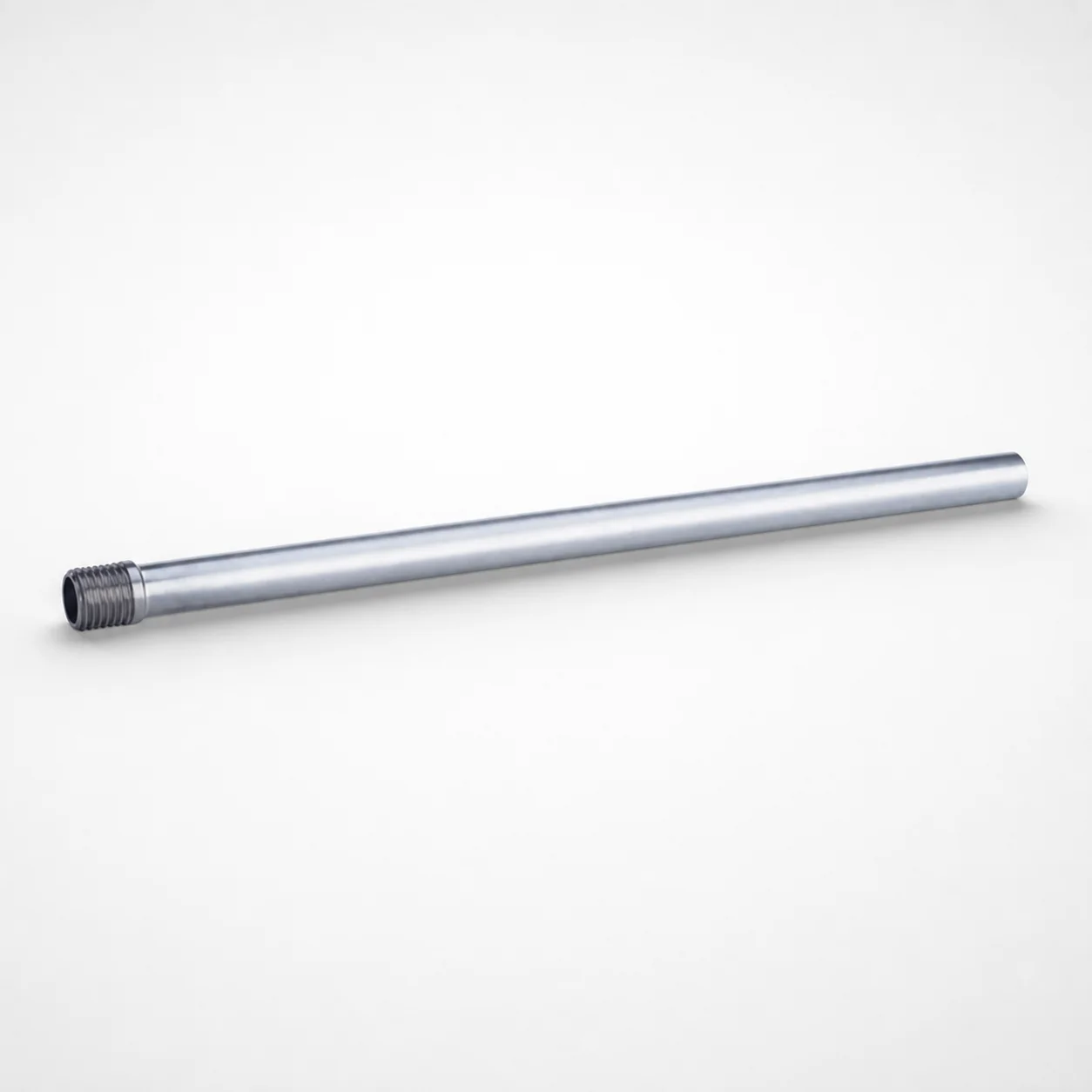
High-Flow Stainless Steel Cascade Tubes - Inch
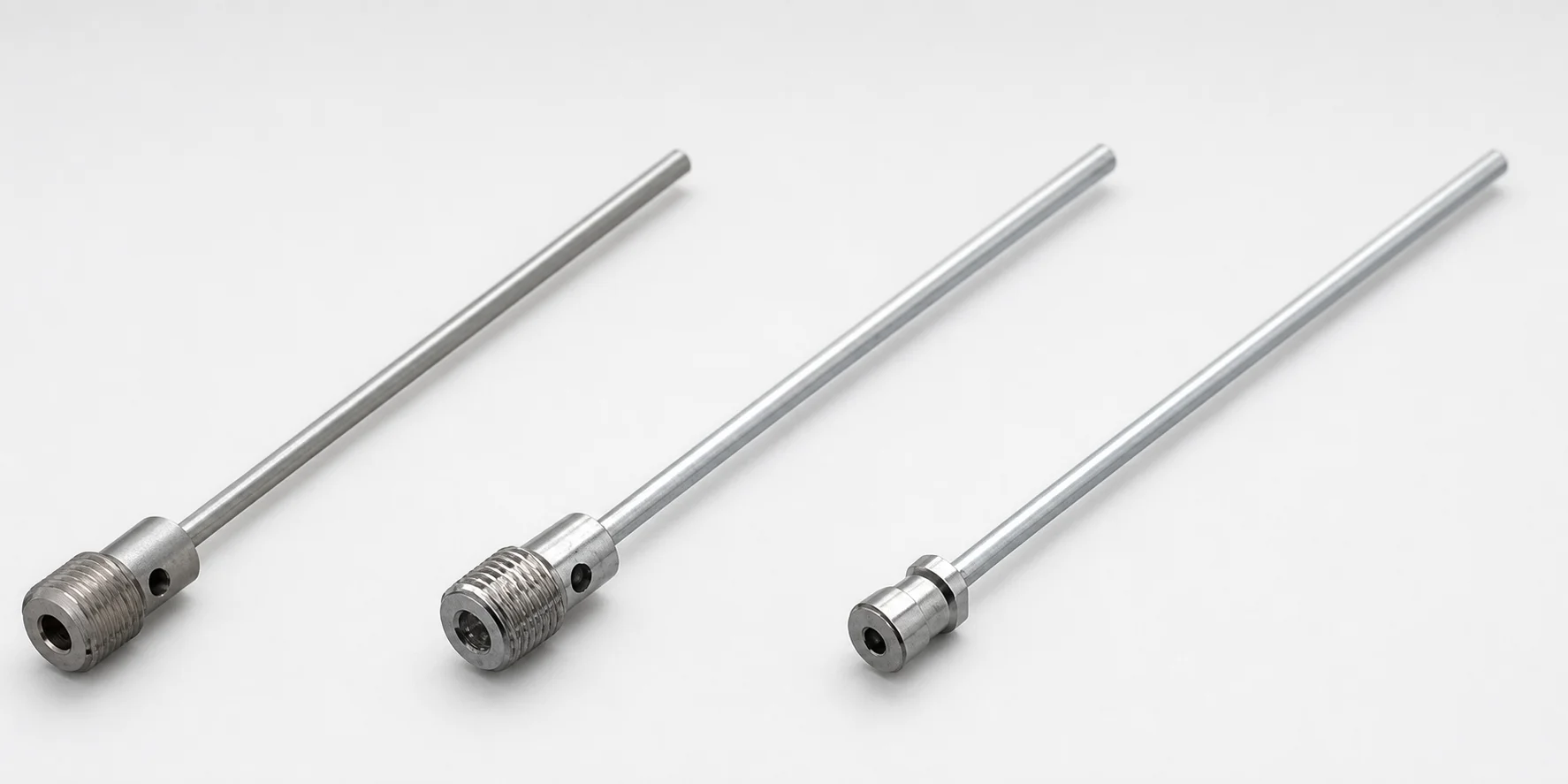
High-Flow Stainless Steel Cascade Tubes - Inch provide highstrength stainless construction with durability for efficient cascade cooling. Compared with standard tubes, the flow rate increases by up to 300% to support demanding thermal management.
- Optimized cascade tube design boosts flow capacity up to 300% versus standard
- Inch unit sizing with stainless construction for long-term strength and corrosion resistance
- Threaded compatibility indicated by a “J” item prefix for the next largest thread size
- Available in standard 12", 18", 24", 36" lengths for common assembly layouts
Specifications
12 configurations available
| Tube O.D. (in) | Tube Thread Size (in) | Tube I.D. (in) | L Length (in) |
|---|---|---|---|
| 0.072" | #10-32 | 0.060" | 18" |
| 0.09" | #10-32 | 0.076" | 12" |
| 0.09" | #10-32 | 0.076" | 36" |
| 0.125" | 1/4"-28 | 0.109" | 12" |
| 0.125" | 1/4"-28 | 0.109" | 18" |
| 0.125" | 1/4"-28 | 0.109" | 24" |
| 0.125" | 1/4"-28 | 0.109" | 36" |
| 0.187" | 5/16"-24 | 0.167" | 12" |
| 0.187" | 5/16"-24 | 0.167" | 18" |
| 0.187" | 5/16"-24 | 0.167" | 24" |
| 0.25" | 3/8"-24 | 0.23" | 12" |
| 0.365" | 1/2"-20 | 0.34" | 12" |
Product Guide
Application Scenarios+
These inch-sized cascade cooling tubes are used inside injection molds to improve heat extraction efficiency along long or heavily packed flow paths. In practice, they are ideal for automotive connector and sensor housing molds where multiple cavities or inserts require uniform thermal control to reduce cycle time and warpage.
They are also well-suited for consumer electronics enclosure and battery-dock shells, supporting multi-lane cooling layouts thanks to the available 12", 18", 24", and 36" lengths. The high-flow cascade geometry is designed to deliver up to 300% higher flow versus standard tubes, helping maintain coolant velocity where straight-tube approaches underperform.
- For medical device housings and critical dimensional parts, stainless construction supports corrosion resistance in cleaning/maintenance cycles.
- Threaded compatibility (indicated by a “J” item prefix for the next largest thread size) makes it easier to integrate into common manifold and interconnect patterns.
Material & Process Details+
High-flow cascade cooling tubes are built from stainless steel to provide strong corrosion resistance for long-term mold maintenance. Stainless construction is particularly beneficial in water-based cooling systems that experience repeated washdowns and exposure to cleaning agents.
For manufacturing, these tubes are typically formed to the cascade geometry and then finished to maintain consistent outer diameter and threading features for proper sealing and flow distribution. The material’s heat-treatment level is not specified in the provided data, so hardness and any post-formation hardening step should be confirmed from the supplier’s material certificate for exact HRC targets.
- Property balance: Stainless offers high corrosion resistance and good toughness, with wear resistance mainly driven by surface finish and flow conditions rather than extreme hardness.
- Trade-off vs. tool steels: Compared with hardened tool steels, stainless is generally selected for corrosion durability, while tool steels may be chosen where maximum wear resistance is critical.
Sizing & Selection Guide+
To select the correct cascade tube, match the tube O.D., I.D., and the thread size to your mold manifold and internal channel routing. Available tube O.D. values are 0.072", 0.09", 0.125", 0.187", 0.25", and 0.365", with corresponding I.D. options of 0.060", 0.076", 0.109", 0.167", 0.23", and 0.34".
Choose the length L from 12", 18", 24", or 36" to fit the cavity layout and routing constraints. For assembly, ensure the tube thread size matches your interconnects: #10-32, 1/4"-28, 5/16"-24, 3/8"-24, or 1/2"-20.
- Maintain functional clearance around the O.D. while preventing interference with mold steel.
- Use the indicated threaded compatibility (including the “J” prefix note for the next largest thread size) to avoid mismatched fittings.
- Tolerance guidance isn’t provided; treat tube-to-manifold fits as threaded assembly requirements and verify sealing method (gasket/washer/thread sealant) in your design.
Frequently Asked Questions
How do I choose the correct tube O.D. and I.D. for my cooling channel design?+
Select the tube O.D. and I.D. that match your internal space and target coolant passage size. Options are O.D. of 0.072" / 0.09" / 0.125" / 0.187" / 0.25" / 0.365" with I.D. of 0.060" / 0.076" / 0.109" / 0.167" / 0.23" / 0.34".
For best integration, confirm that the O.D. will clear surrounding mold steel while the I.D. aligns with the intended flow resistance and velocity for your thermal management plan.
Which thread size variants are available, and how do I ensure compatibility with my manifold connectors?+
This series is offered in multiple inch thread sizes: #10-32, 1/4"-28, 5/16"-24, 3/8"-24, and 1/2"-20.
Check that your manifold and fittings use the same thread standard and pitch. The product data also notes a “J” item prefix behavior for the next largest thread size—verify your specific interconnect selection to avoid mismatch.
What lengths can I select for a cascade layout, and how should I plan routing in the mold?+
Available L lengths are 12", 18", 24", and 36".
Use the length that fits the cavity/inserts spacing and avoids interference with other cooling lines or ejector components. When planning routing, ensure the tube length allows proper thread engagement and seating at each connection point.
What makes this cascade tube suitable for high-demand thermal management compared with standard tubes?+
The cascade geometry is specified to deliver up to 300% higher flow versus standard tubes, which supports improved heat transfer where straight cooling tubes underperform.
This makes it particularly useful for molds with longer thermal paths, multiple cavities, or areas that require stronger coolant distribution to meet cycle-time and uniformity targets.
Is the stainless material optimized for corrosion resistance in typical mold maintenance conditions?+
The tubes use stainless steel construction, which is selected for durability and corrosion resistance in mold cooling environments.
For applications with frequent cleaning or exposure to maintenance chemicals, stainless construction helps maintain long service life. Exact hardness (HRC) and heat-treatment state are not provided in the current data; request the material certificate if you need verified mechanical property targets.
Related Products
Need Custom Specifications?
Our engineering team can help with custom configurations, material selection, and volume pricing.