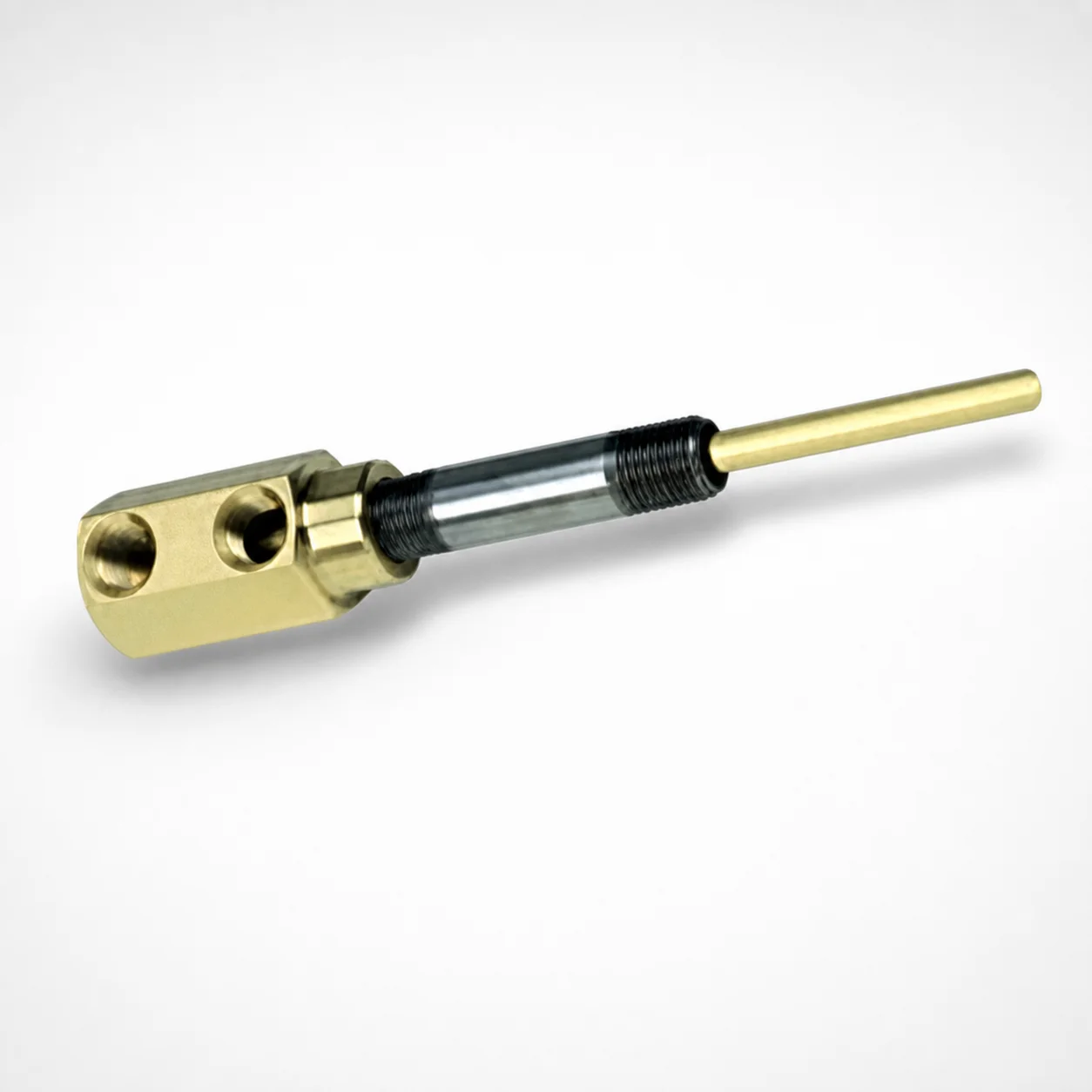
High-Flow Cascade Assemblies - Inch
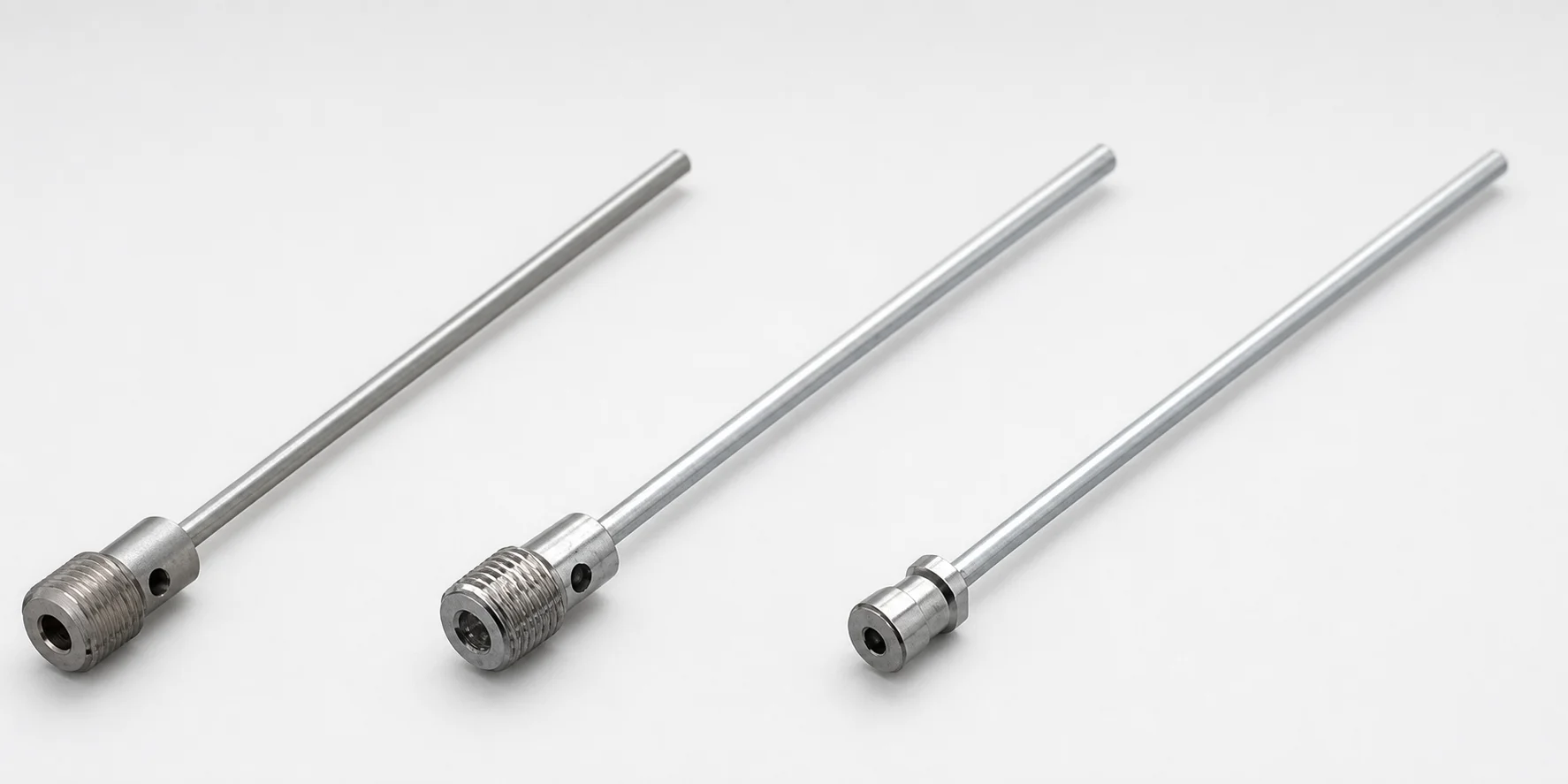
High-Flow Cascade Assemblies - Inch deliver higher cooling performance through an increased inlet area and a leak-resistant offset design that helps prevent flow restriction. Built with thin-wall stainless steel tubing for efficient cascade operation.
- Increased inlet area supports 35%–65% higher flow rates than standard nipple-type cascades
- Offset sealing design improves thread engagement and helps avoid pipe interference
- Thin-wall stainless steel tubes maintain efficient transfer while reducing assembly bulk
- Typical use in industrial cooling manifolds where stable flow and dependable sealing are required
Specifications
2 configurations available
| Tube O.D. (in) | Tube I.D. (in) |
|---|---|
| 0.250" | 0.230" |
| 0.365" | 0.340" |
Product Guide
Application Scenarios+
High-flow cascade assemblies are used inside injection mold cooling channels to distribute coolant efficiently from a common manifold into multiple tool sections. The increased inlet area of this increased-flow cascade variant is suited for molds where faster heat removal reduces cycle time and improves part-to-part temperature stability.
- Industrial cooling manifolds: Install the assembly as a nipple-to-cascade transition to achieve 35%–65% higher flow, helping maintain uniform cooling across long or densely packed core/cavity regions.
- High-rejection production tooling: The thin-wall stainless tubing supports efficient cascade operation while keeping assembly bulk lower, which is helpful when space is limited around mold interiors.
- Leak-prone or vibration-exposed layouts: Use the offset sealing design to support leak-resistant sealing and reduce the risk of flow restriction from poor alignment or interference.
Choose the specific tube OD/ID combination to match existing plumbing and cooling-bore geometry for reliable sealing and smooth coolant transfer.
Material & Process Details+
This product uses thin-wall stainless steel tubing to support corrosion resistance and stable coolant transfer in mold environments. The thin-wall design improves thermal efficiency by reducing mass and improving heat exchange across the cascade passages.
While the exact stainless grade and hardness are not specified in the provided data, engineers should treat stainless tubing cascades as a formability and corrosion-focused option rather than a wear-optimized tool steel. For seals, the leak-resistant offset design prioritizes alignment and thread engagement over bulk material hardness.
Heat treatment is not specified for the tubing in the provided information. In practice, stainless tubing components are commonly delivered in a manufactured condition suitable for forming and joining; any final stress relief or surface finishing should follow the supplier’s process.
- Trade-off: stainless tubing emphasizes corrosion resistance and clean coolant flow, typically with lower hardness than tool steels.
- Compatibility: select stainless tubing dimensions (OD/ID) to ensure leak-resistant sealing with your mold plumbing interfaces.
Sizing & Selection Guide+
Select the cascade assembly based on your mold’s internal cooling layout and the required flow path from manifold to cavity/core. Start by matching the available interface size to the provided tube O.D. and ensure the tube I.D. aligns with the desired internal flow area.
- Tube O.D. options (in): 0.250 or 0.365
- Tube I.D. options (in): 0.230 or 0.340
To size the cascade for a specific tool section, choose the larger inlet configuration when higher throughput is needed; this variant is designed to support 35%–65% higher flow rates versus standard nipple-type cascades. Confirm that your receiving bores/ports accommodate the selected tube O.D. without forcing misalignment that could compromise the offset sealing interface.
Because tolerances are not provided in the data, verify dimensional compatibility in your CAD by applying your standard mold plumbing tolerances for threaded/offset sealing interfaces and performing a dry-fit check before assembly.
Frequently Asked Questions
Which tube OD/ID sizes are available for the 251304705096 high-flow cascade assembly?+
Two tube O.D. sizes are available: 0.250 in and 0.365 in. The corresponding tube I.D. options are 0.230 in and 0.340 in. Select the pair that matches your mold plumbing interface and desired internal flow area.
How much additional flow can this cascade assembly provide compared with standard nipple-type cascades?+
This high-flow cascade design is specified to support 35%–65% higher flow rates than standard nipple-type cascades. The increased performance is attributed to the increased inlet area and the cascade geometry that reduces flow restriction.
What design feature helps prevent leakage and flow restriction in the offset sealing area?+
The assembly uses a leak-resistant offset sealing design intended to improve thread engagement and reduce the likelihood of improper alignment. This helps minimize pipe interference and supports consistent coolant transfer through the cascade.
How should I select between the 0.250 in and 0.365 in tube OD versions for my mold interior cooling layout?+
Use the 0.250 in OD option when space and interface constraints require smaller exterior dimensions. Use the 0.365 in OD option when you need a larger inlet cross-section to support higher throughput and when your manifold/cavity plumbing can accommodate the larger OD. Always verify that the receiving bores/ports allow proper seating without forcing misalignment.
Is stainless tubing appropriate for corrosion-prone cooling channels in injection molds?+
The assembly is built with thin-wall stainless steel tubing, which is selected for reliable coolant transfer and corrosion resistance in typical mold cooling environments. If your process uses aggressive coolants, confirm chemical compatibility with your coolant chemistry and finishing/cleaning requirements, since the exact stainless grade is not specified in the provided data.
Related Products
Need Custom Specifications?
Our engineering team can help with custom configurations, material selection, and volume pricing.