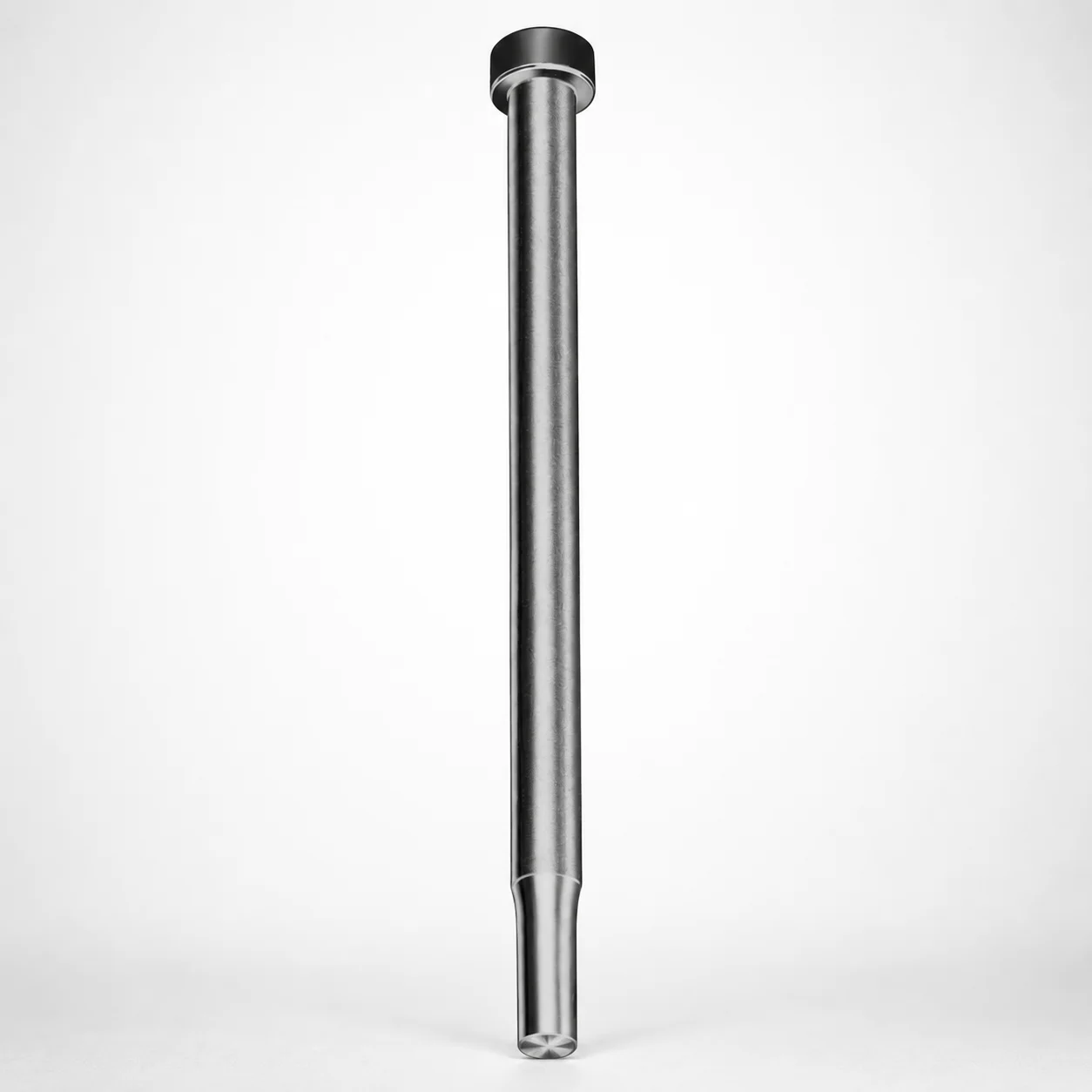
Metric Close Space Punches XNP Coating
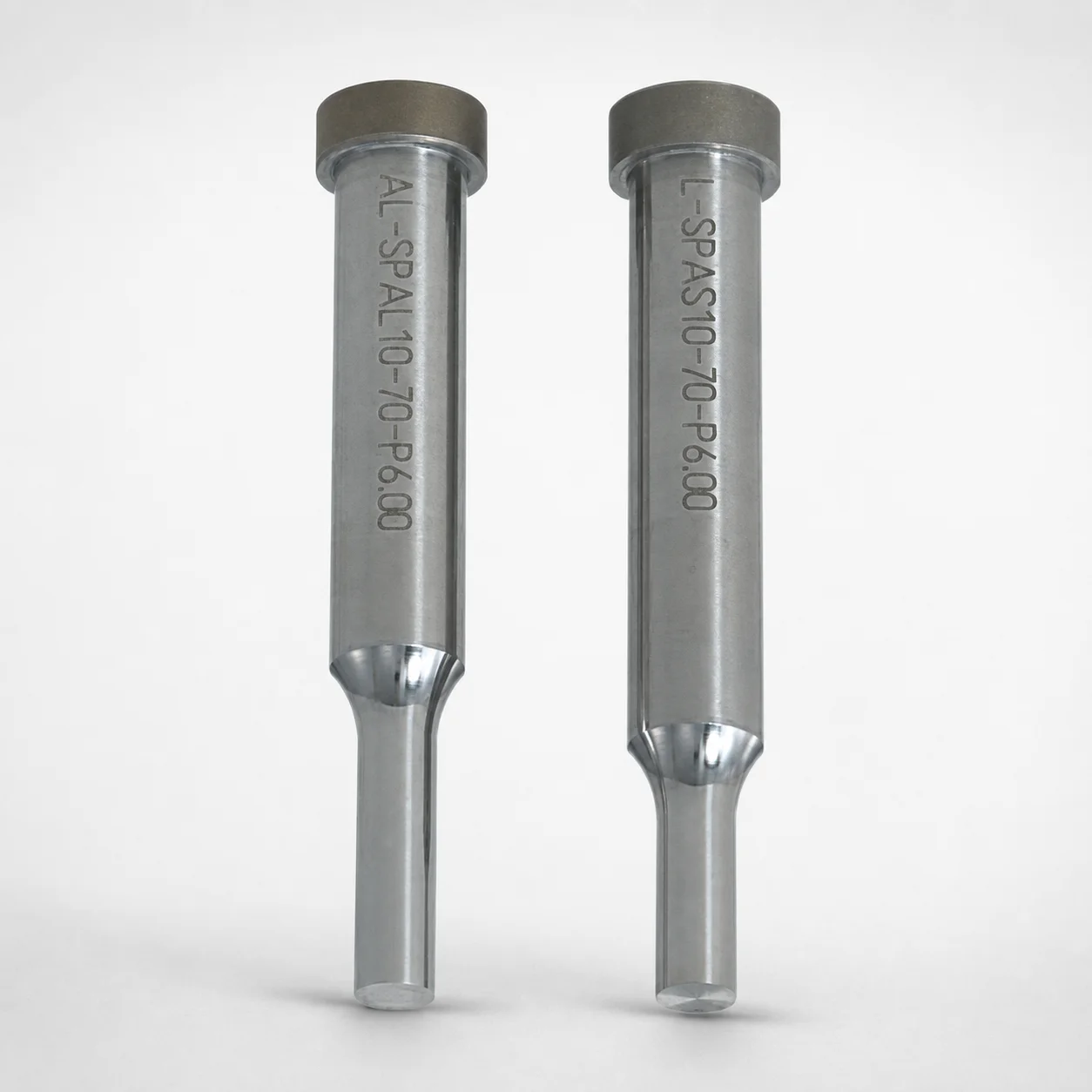
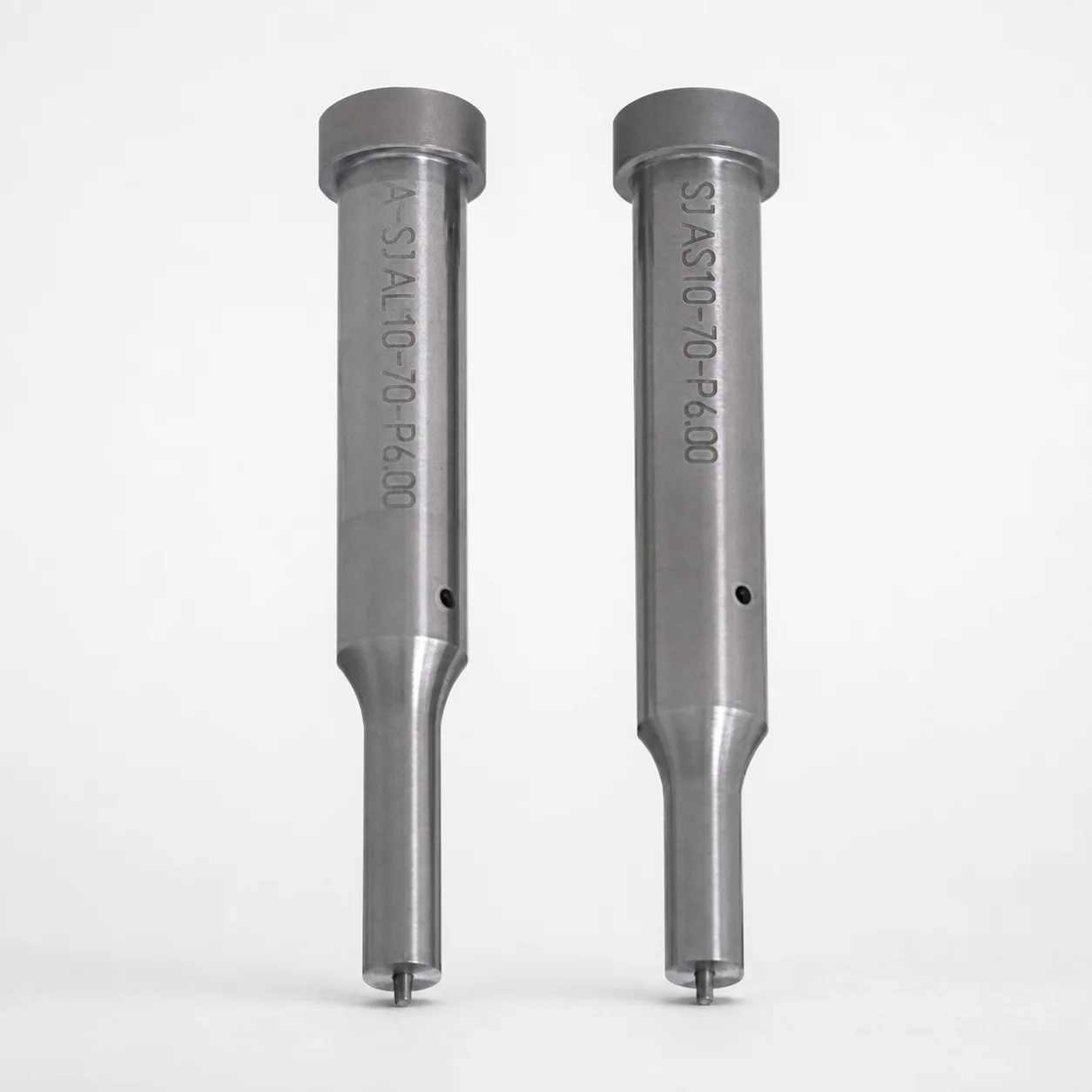
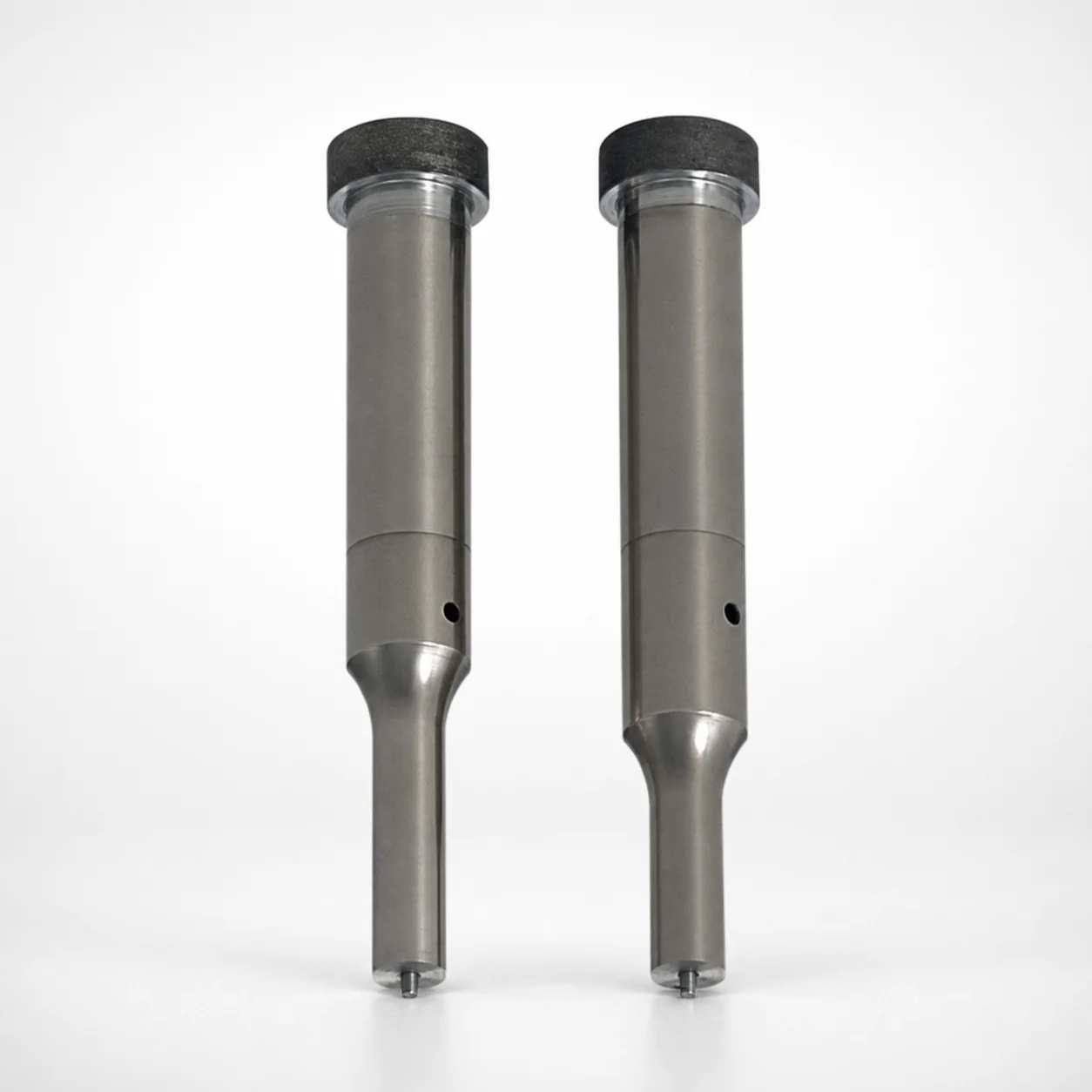
Metric Close space punches XNP coating are designed for punching operations in tight die spaces, helping maintain consistent material flow and reliable forming results. The close clearance geometry improves control during repeated cycles while the XNP coating supports wear resistance.
- Close clearance punch design for controlled forming in compact die areas
- XNP coating helps reduce wear and stabilize tool life
- Standardized metric shank sizes support easy selection across tooling programs
- Commonly used in precision stamping and die set applications requiring tight clearance
Specifications
12 configurations available
| D (Shank dia.) (mm) | L (Length) (mm) | P Dimension (mm) |
|---|---|---|
| 02 | 40 ~ 100 | 0.8 |
| 02 | 40 ~ 100 | 0.81 ~ 2 |
| 03 | 40 ~ 100 | 1.1 ~ 2 |
| 03 | 40 ~ 100 | 2.01 ~ 3 |
| 04 | 40 ~ 100 | 1.3 ~ 3 |
| 04 | 40 ~ 100 | 3.01 ~ 4 |
| 05 | 40 ~ 100 | 1.3 ~ 4 |
| 05 | 40 ~ 100 | 4.01 ~ 5 |
| 06 | 40 ~ 100 | 1.3 ~ 5 |
| 06 | 40 ~ 100 | 5.01 ~ 6 |
| 07 | 40 ~ 100 | 1.3 ~ 6 |
| 07 | 40 ~ 100 | 6.01 ~ 7 |
Product Guide
Application Scenarios+
Close-clearance punches like this are used in injection-mold adjacent tooling—specifically in precision stamping and transfer operations where material flow must be controlled inside very limited die space. The close clearance geometry helps keep the formed edge consistent over repeated press cycles, reducing the chance of flash growth or drift in tight cavities.
- Automotive and appliance bracket stamping dies: select these punches to stabilize forming in compact die sections where the punch-to-die clearance is limited and alignment repeatability is critical.
- Electronics enclosure cut/form work: use the controlled flow behavior to maintain edge quality on thin sheet features that require predictable material shearing.
- Long production runs in progressive die sets: the XNP coating supports stable punch wear, helping maintain dimension and surface finish across high cycle counts.
This variant is suited because it combines metric shank sizing for straightforward tool selection with XNP coating for improved wear behavior under tight-clearance conditions.
Material & Process Details+
The provided metadata specifies this as an XNP-coated close-space punch variant, intended to improve punch wear stability in tight-clearance operations. Because a specific steel grade and exact heat-treatment target are not included in the input data, material performance should be treated as coating-led for wear resistance, rather than relying on unverified base-steel hardness figures.
In practice, XNP coatings are selected to reduce friction and enhance wear resistance during repetitive punching/sheer cycles. The trade-off typically targeted is a balance between wear reduction (longer tool life, more stable edge condition) and the base tool’s toughness for resisting chipping in intermittent loading.
- Heat treatment: not specified in provided data; qualification should follow the manufacturer’s tooling steel + heat-treatment process for the chosen shank size.
- Wear resistance: primarily improved by the XNP surface coating for controlled tooling wear.
If you need a hardness (HRC) comparison between alternative base materials, share the steel grade used for this series and we can map it to the correct heat-treatment state and target hardness.
Sizing & Selection Guide+
To select the correct punch for your die set, match the shank diameter (D) and the working length (L) to your tooling layout and available space in the die block. This series offers D = 2, 3, 4, 5, 6, or 7 mm, and a fixed L range from 40 to 100 mm.
Next, confirm the P dimension (as defined by your tooling drawing or the series reference) falls within 0.8 to 6.01 mm. P is typically used to define a critical clearance/geometry-related dimension in close-space tooling—selecting it correctly is essential for controlled material flow in tight die spaces.
- Core/cavity matching (application geometry): verify that the close-space feature will fit within your die opening while keeping the intended clearance behavior.
- Tolerance & fit: confirm your die block and punch guide tolerances in the same drawing set; with close-clearance designs, small misalignment can affect edge quality and wear rate.
- Configurable vs fixed: D and P are variable options; L is offered across 40–100 mm (fixed as provided per catalog length choice), so choose the required working projection for your die stack height.
Frequently Asked Questions
Which shank diameter options (D) are available for this metric close space punch series?+
This series provides D (shank dia.) options: 02, 03, 04, 05, 06, and 07 mm. Choose the diameter that matches the punch holder and guide system in your die set to maintain alignment and stable close-clearance performance.
How do I select the correct length (L) for a tight-clearance die stack?+
The catalog specifies L = 40 to 100 mm. Select a length that provides the required working projection through your die set while allowing safe clearance to the upper and lower shut heights. Confirm your die stack height and guide engagement to avoid binding in repeated cycles.
What is the allowable P dimension range for this close space punch?+
The provided specification lists P = 0.8 to 6.01 mm. Use the value indicated by your die design for the close-space geometry/clearance-related feature; incorrect P selection can lead to poor material flow control and accelerated wear.
Does the XNP coating change how I should manage clearance in a close-space die?+
XNP is intended to improve wear stability and help maintain controlled punch condition across long runs. However, the coating does not replace correct mechanical setup—your close clearance design (and alignment) still governs flow behavior and edge quality.
What steel grade and hardness target are included with this punch series?+
The provided metadata confirms the punch is an XNP-coated close-space design, but it does not specify the base steel grade, hardness (HRC), or heat-treatment state. For hardness and material qualification, request the steel/heat-treatment spec for series 250301828000 so the tooling can be verified against your load and wear requirements.
Related Products
Need Custom Specifications?
Our engineering team can help with custom configurations, material selection, and volume pricing.