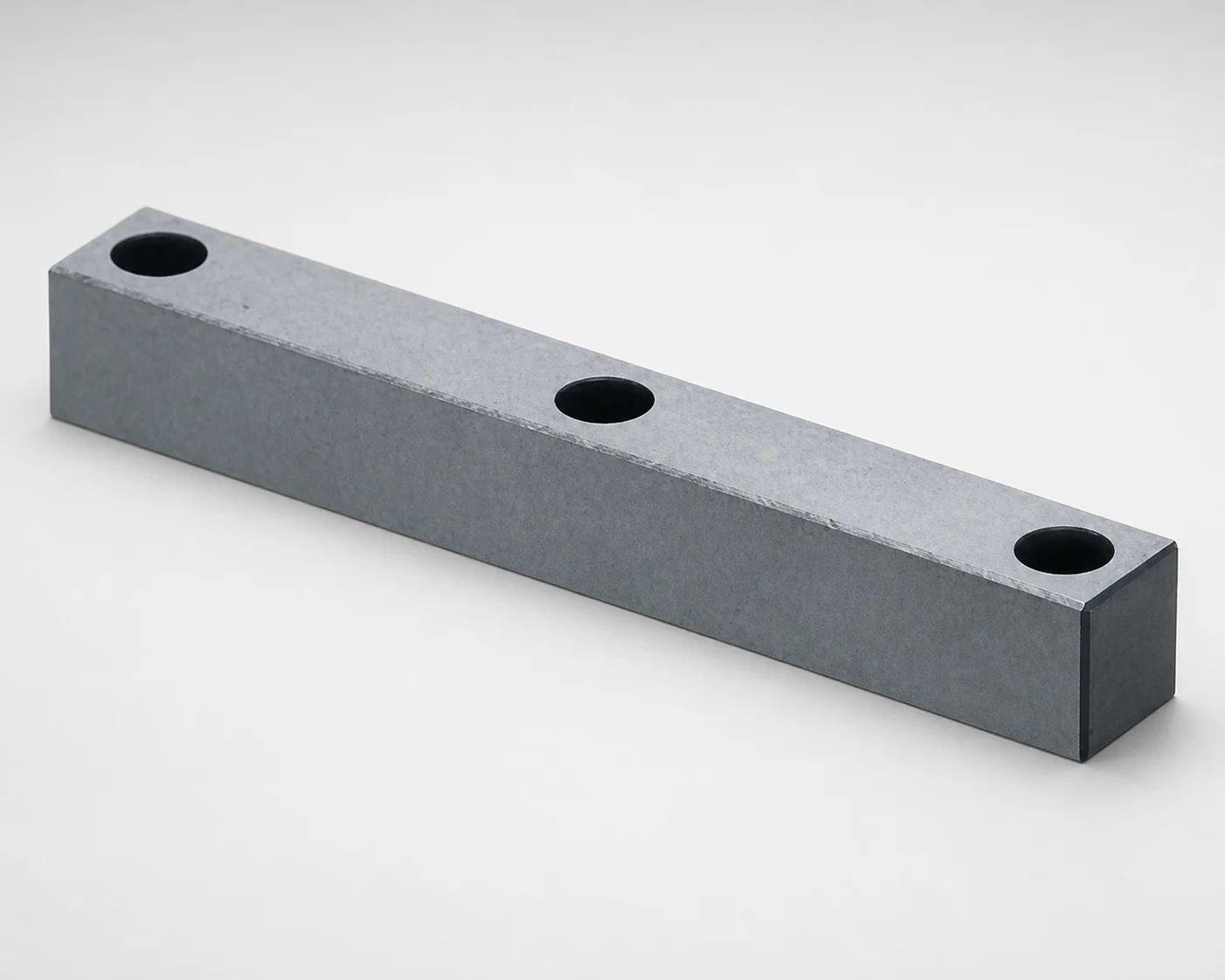
Center Rails - Heel No Groove Oil Groove Option
Center Rails - Heel No Groove Oil Groove Option provide stable guidance for machine tool linear motion, with selectable oil groove setups to support consistent lubrication performance. The heel is designed without a groove to match specific rail mounting requirements and reduce unwanted oiling paths.
- Heel without groove for controlled lubricant flow and predictable rail behavior
- Selectable oil groove configuration for optimized sliding lubrication conditions
- Manufactured from SKS3 or HPM2T tool steels with wear-focused performance
- Rail length fixed at L=100 mm for repeatable center rail assembly
Specifications
31 configurations available
| Material | Oil Groove | Rail Thickness T (mm) | Rail Width W (mm) | Rail Length L (mm) | A (Bolt hole pitch) (mm) | type |
|---|---|---|---|---|---|---|
| HPM2T | Non-oil groove | 10 | 12 | 100 | 6 ~ 19 | - |
| HPM2T | Non-oil groove | 10 | 12 | 40 ~ 95 | 6 ~ 19 | - |
| HPM2T | Non-oil groove | 15 | 12 | 100 | 6 ~ 19 | - |
| HPM2T | Non-oil groove | 15 | 12 | 40 ~ 95 | 6 ~ 19 | - |
| HPM2T | Non-oil groove | 15 | 15 | 100 | 6 ~ 19 | - |
| HPM2T | Non-oil groove | 15 | 15 | 40 ~ 95 | 6 ~ 19 | - |
| HPM2T | Non-oil groove | 20 | 15 | 100 | 6 ~ 19 | - |
| HPM2T | Non-oil groove | 20 | 15 | 40 ~ 95 | 6 ~ 19 | - |
| HPM2T | Non-oil groove | 15 | 20 | 100 | 8 ~ 42 | - |
| HPM2T | Non-oil groove | 15 | 20 | 40 ~ 150 | 8 ~ 42 | - |
| HPM2T | Non-oil groove | 20 | 20 | 40 ~ 150 | 8 ~ 42 | - |
| HPM2T | Non-oil groove | 25 | 20 | 40 ~ 150 | 8 ~ 42 | - |
| SKS3 | Non-oil groove | 10 | 12 | 100 | 6 ~ 19 | - |
| SKS3 | Non-oil groove | 10 | 12 | 40 ~ 95 | 6 ~ 19 | - |
| SKS3 | Non-oil groove | 15 | 12 | 100 | 6 ~ 19 | - |
| SKS3 | Non-oil groove | 15 | 12 | 40 ~ 95 | 6 ~ 19 | - |
| SKS3 | Non-oil groove | 15 | 15 | 100 | 6 ~ 19 | - |
| SKS3 | Non-oil groove | 15 | 15 | 40 ~ 95 | 6 ~ 19 | - |
| SKS3 | Non-oil groove | 20 | 15 | 100 | 6 ~ 19 | - |
| SKS3 | Non-oil groove | 20 | 15 | 40 ~ 95 | 6 ~ 19 | - |
| SKS3 | Non-oil groove | 15 | 20 | 100 | 8 ~ 42 | - |
| SKS3 | Non-oil groove | 15 | 20 | 40 ~ 150 | 8 ~ 42 | - |
| SKS3 | Non-oil groove | 20 | 20 | 40 ~ 150 | 8 ~ 42 | - |
| SKS3 | Non-oil groove | 25 | 20 | 40 ~ 150 | 8 ~ 42 | - |
| SKS3 | Oil groove | 10 | 12 | 40 ~ 100 | 6 ~ 19 | - |
| SKS3 | Oil groove | 15 | 12 | 40 ~ 100 | 6 ~ 19 | - |
| SKS3 | Oil groove | 15 | 15 | 40 ~ 100 | 6 ~ 19 | - |
| SKS3 | Oil groove | 20 | 15 | 40 ~ 100 | 6 ~ 19 | - |
| SKS3 | Oil groove | 15 | 20 | 40 ~ 150 | 8 ~ 42 | - |
| SKS3 | Oil groove | 20 | 20 | 40 ~ 150 | 8 ~ 42 | - |
| SKS3 | Oil groove | 25 | 20 | 40 ~ 150 | 8 ~ 42 | - |
Product Guide
Application Scenarios+
This center rail design is used inside injection mold tooling where long, straight linear motion is required for consistent movement of slide plates and undercut control components. The heel is built as a no-groove option, helping match specific mounting interfaces and limiting unintended lubricant routing between mating parts.
In automotive connector and terminal molds, these rails support smooth cycling and stable alignment under repetitive load. The availability of an oil groove setup allows engineers to tune lubrication behavior to the plant’s maintenance interval and expected wear rate.
For appliance and consumer electronics housings, rail thickness and width options (T = 10, 15, 20, 25 mm; W = 12, 15, 20 mm) help integrate guidance without redesigning the slide plate envelope. In medical device mold applications, predictable lubrication and wear-focused steels help maintain dimensional stability over high shot counts.
- No-groove heel supports controlled lubricant flow and predictable rail behavior
- Oil groove option enables lubrication tuning for stable sliding
Material & Process Details+
This product is manufactured from selectable tool steels: SKS3 or HPM2T, both chosen to balance wear resistance with sufficient toughness for guided motion parts. The best-fit choice depends on your expected sliding duty, lubrication quality, and allowable risk of chipping under shock loads.
SKS3 is a low-alloy, wear-oriented steel typically used in applications where dimensional stability and machinability matter. For higher surface durability under lubrication, HPM2T is often preferred due to its design intent for sliding wear performance.
- Hardness (HRC): This page does not provide an HRC value in the supplied specifications, so select based on your supplier’s heat-treatment schedule for the chosen grade.
- Heat treatment state: Not specified in the provided data; plan on a standard tool-steel hardening route (quench & temper) appropriate to SKS3 or HPM2T.
- Trade-off: Higher hardness improves wear resistance but can reduce toughness; confirm shock-load requirements for your slide system.
Sizing & Selection Guide+
Selection starts with matching the rail envelope to the slide plate and guidance block geometry. Choose the rail thickness T from 10, 15, 20, or 25 mm and the rail width W from 12, 15, or 20 mm to fit the designed contact surface and mounting clearance.
Then select the rail length L. Available length options include L = 100 mm, 40 ~ 95 mm, 40 ~ 150 mm, and 40 ~ 100 mm. Use the longest length that still satisfies your end-stop and slide stroke constraints, since length directly affects the supported guidance span.
- For bolt integration, match the bolt hole pitch A range: 6 ~ 19 mm or 8 ~ 42 mm, based on the mounting layout of your mold base.
- Heel without groove vs oil groove: keep the heel interface configuration consistent with the mating rail seat to avoid lubricant misrouting.
Tolerances are not provided in the input data; validate fit using your assembly drawing and the machine surface finish requirements for slide rails.
Frequently Asked Questions
When should I choose the oil groove vs non-oil groove configuration for center rails in a slide plate system?+
The oil groove option is intended for sliding lubrication support, helping deliver lubricant more consistently to the contact zone. Use the non-oil (no groove) heel configuration when the mounting interface requires limiting lubricant paths or when mating geometry would otherwise promote unwanted oil migration. The correct choice should reflect your lubrication method and maintenance interval, since both options are designed for stable rail behavior but manage lubricant routing differently.
How do I select rail length (L) for a given mold stroke and guidance span?+
Use the available length ranges listed for this series: L = 100 mm, 40 ~ 95 mm, 40 ~ 150 mm, or 40 ~ 100 mm. Pick the length that covers the functional guidance span across the slide’s working travel while maintaining clearance near end stops. If your design needs a longer supported span, select from the widest range (40 ~ 150 mm) provided in the specification.
What rail thickness and width combinations are supported, and how do they affect assembly fit?+
Supported dimensions are T = 10, 15, 20, 25 mm for rail thickness and W = 12, 15, 20 mm for rail width. These values must match the slide plate envelope and leave adequate clearance for lubrication flow (especially when using the oil groove option). Choose T and W based on the designed contact area and any constraints from the guide block or insert cavity.
How do I match bolt hole pitch (A) when integrating these center rails into a mold base?+
This series provides A (bolt hole pitch) options in the ranges 6 ~ 19 mm and 8 ~ 42 mm. Select the pitch that aligns with your mounting layout on the slide plate or backing plate. Because exact tolerance values are not included in the provided data, confirm alignment using your assembly drawing to ensure the rail seats fully without forcing.
What differences should I expect between SKS3 and HPM2T steel for rail wear performance?+
The product supports SKS3 or HPM2T steel choices, both intended for wear-focused performance in guided motion applications. In general practice, higher-performance sliding wear behavior is often associated with steels selected specifically for contact durability (commonly HPM2T in similar product families), while SKS3 is selected for a proven balance of tool-steel attributes. Since specific hardness (HRC) and heat-treatment state are not stated in the supplied specifications, validate the final properties against your expected duty cycle after hardening and tempering.
Related Products
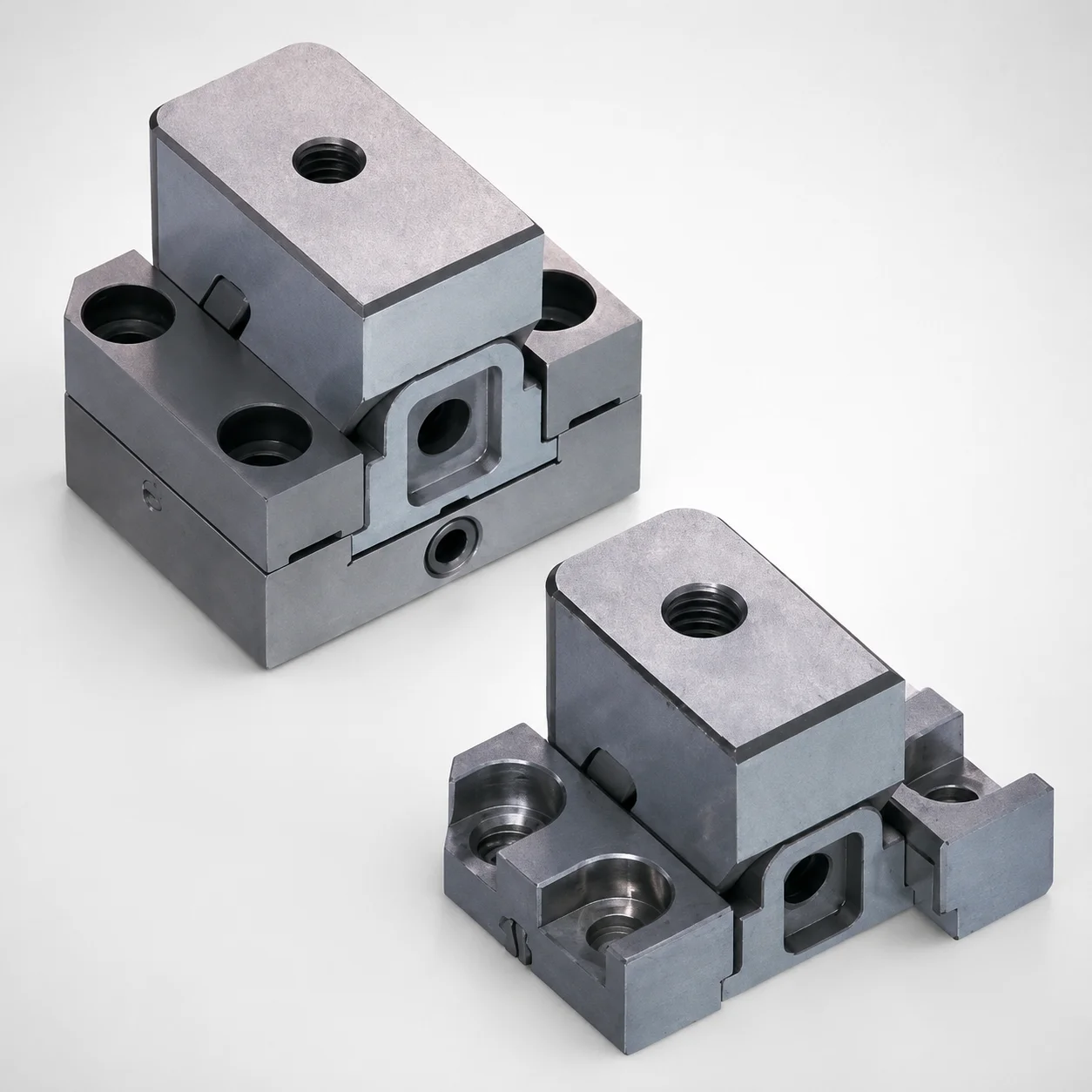
Standard Type Mini Slide Core Units
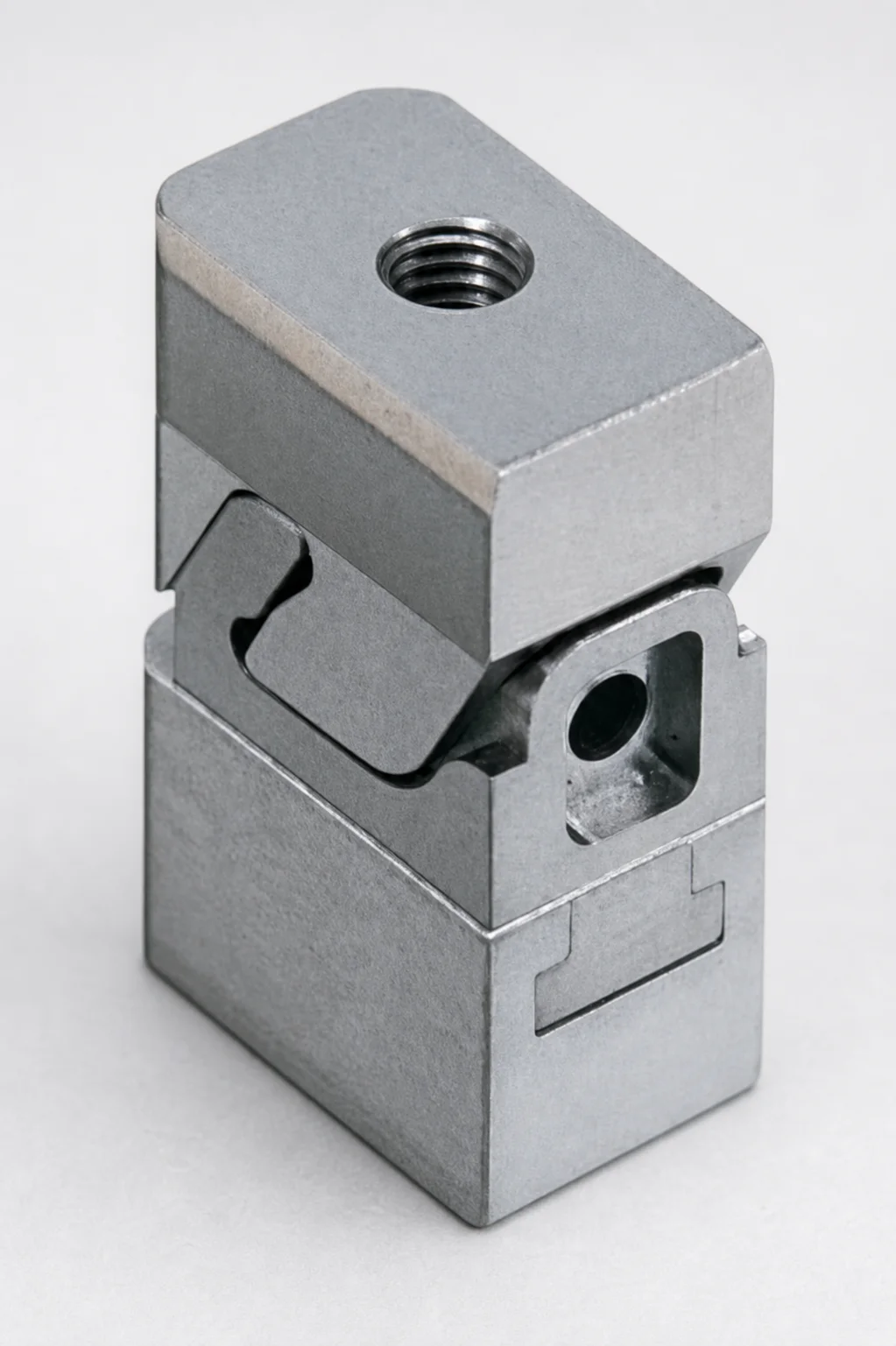
Mini Slide Core Units Slim Type (3 mm Stroke) for Inlay Tapped MSCS-Type
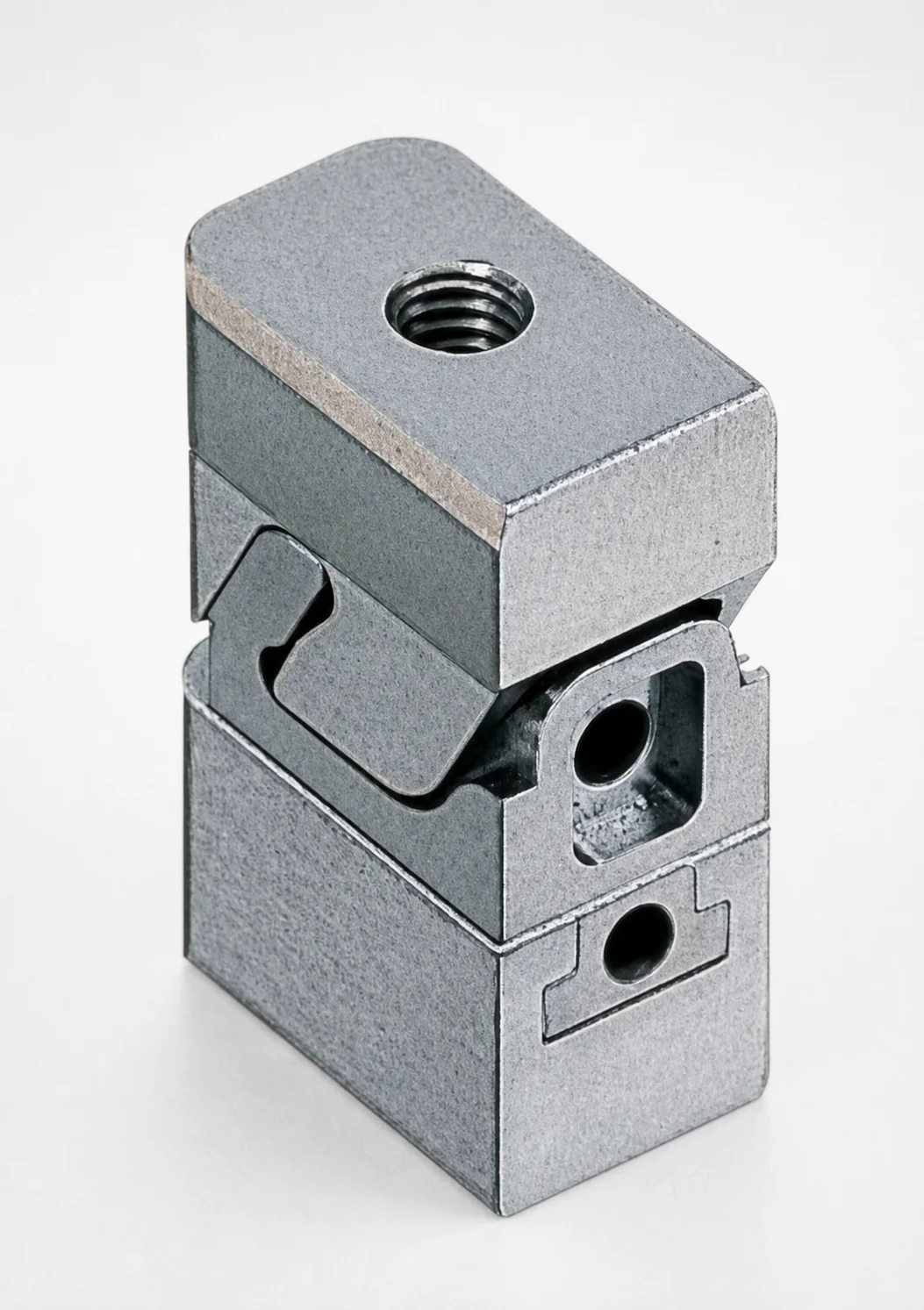
Mini Slide Core Units Slim Slide Stroke 3 mm Retractor Mechanism
Mini Slide Core Units Slim Slide Stroke 10 mm Retracting Mechanism
Mini Slide Core Units Slim Slide Core Retractor 6 mm Stroke
SCTM Two-Color Slide Core Units
Need Custom Specifications?
Our engineering team can help with custom configurations, material selection, and volume pricing.