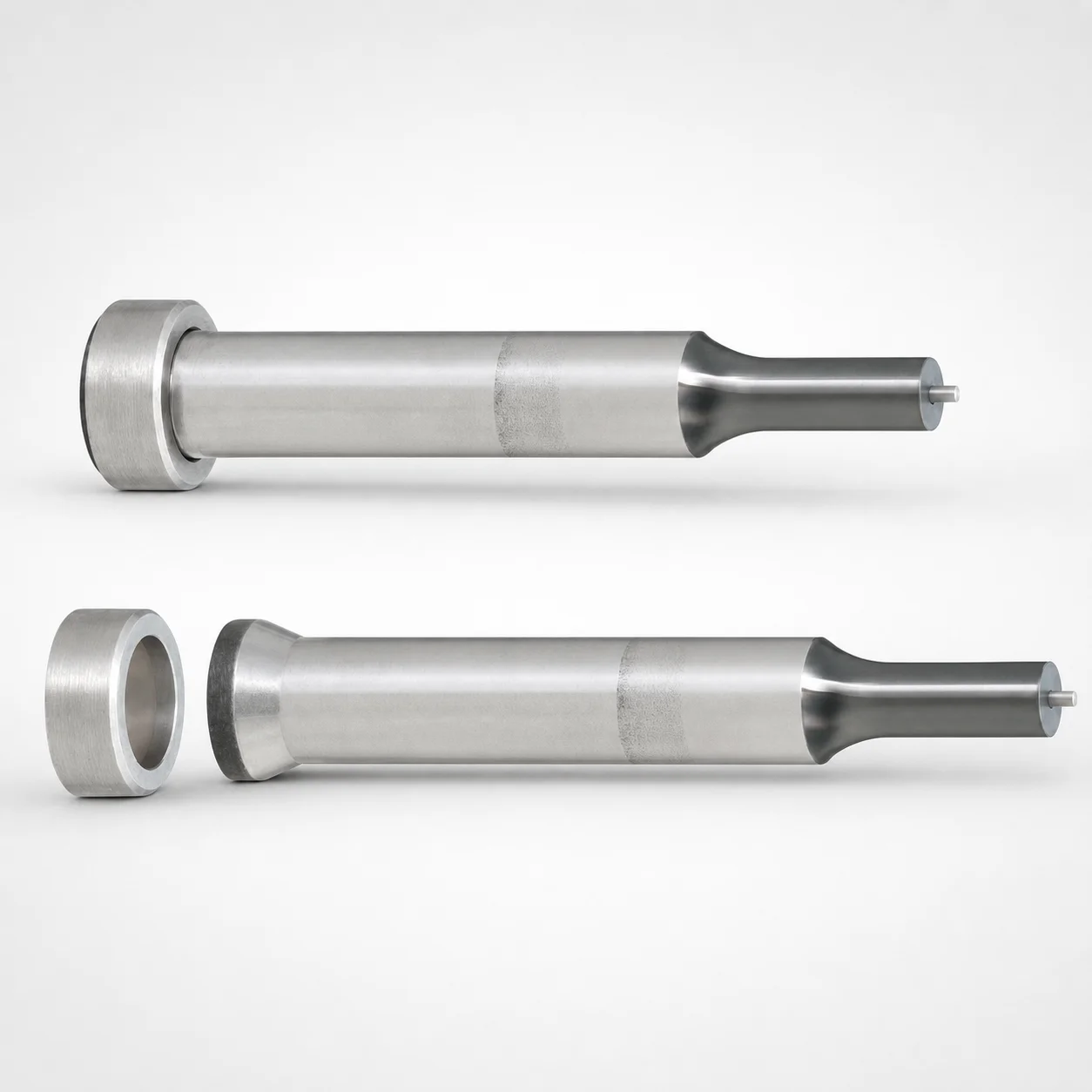
RX Coating Tapered Head Ejector Punches
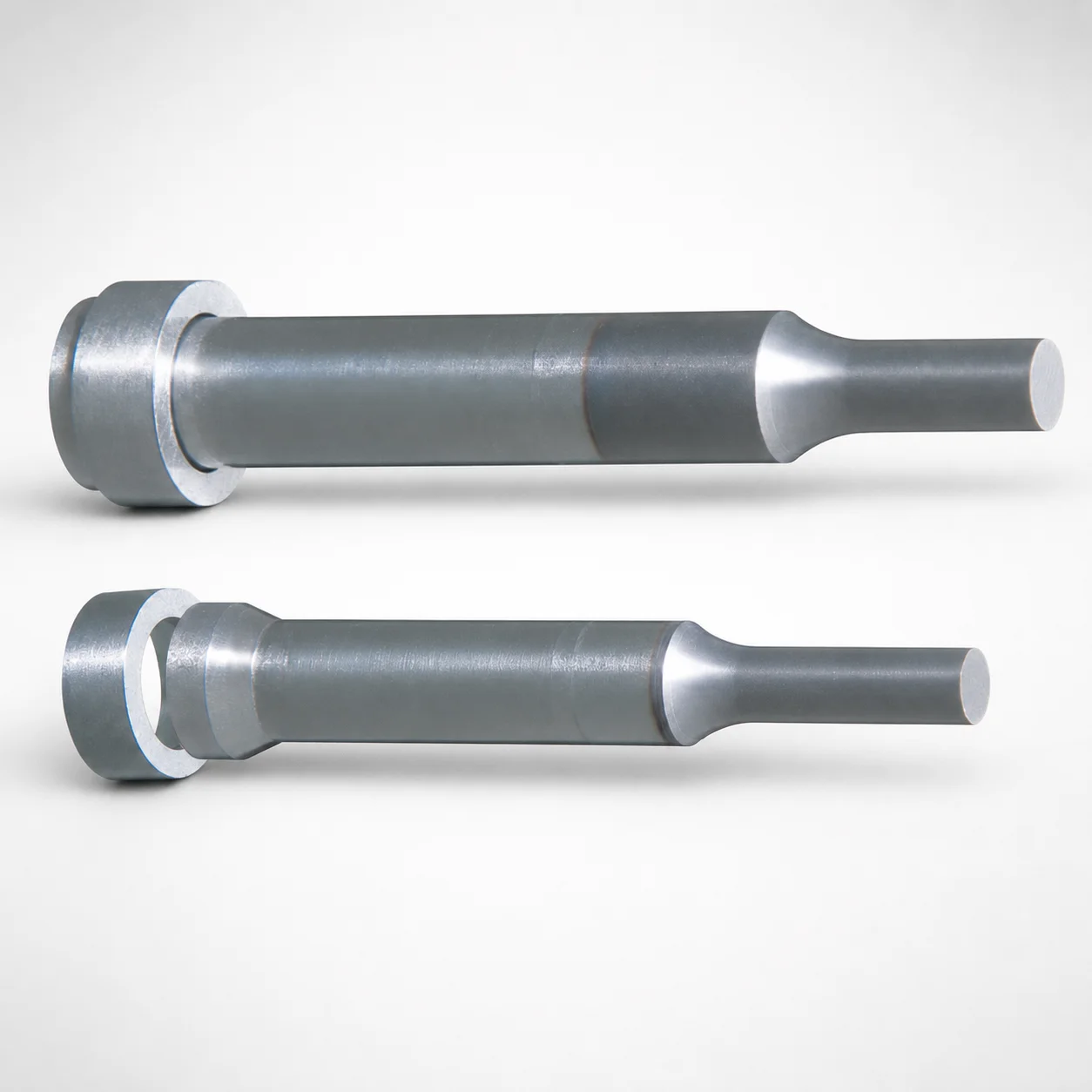
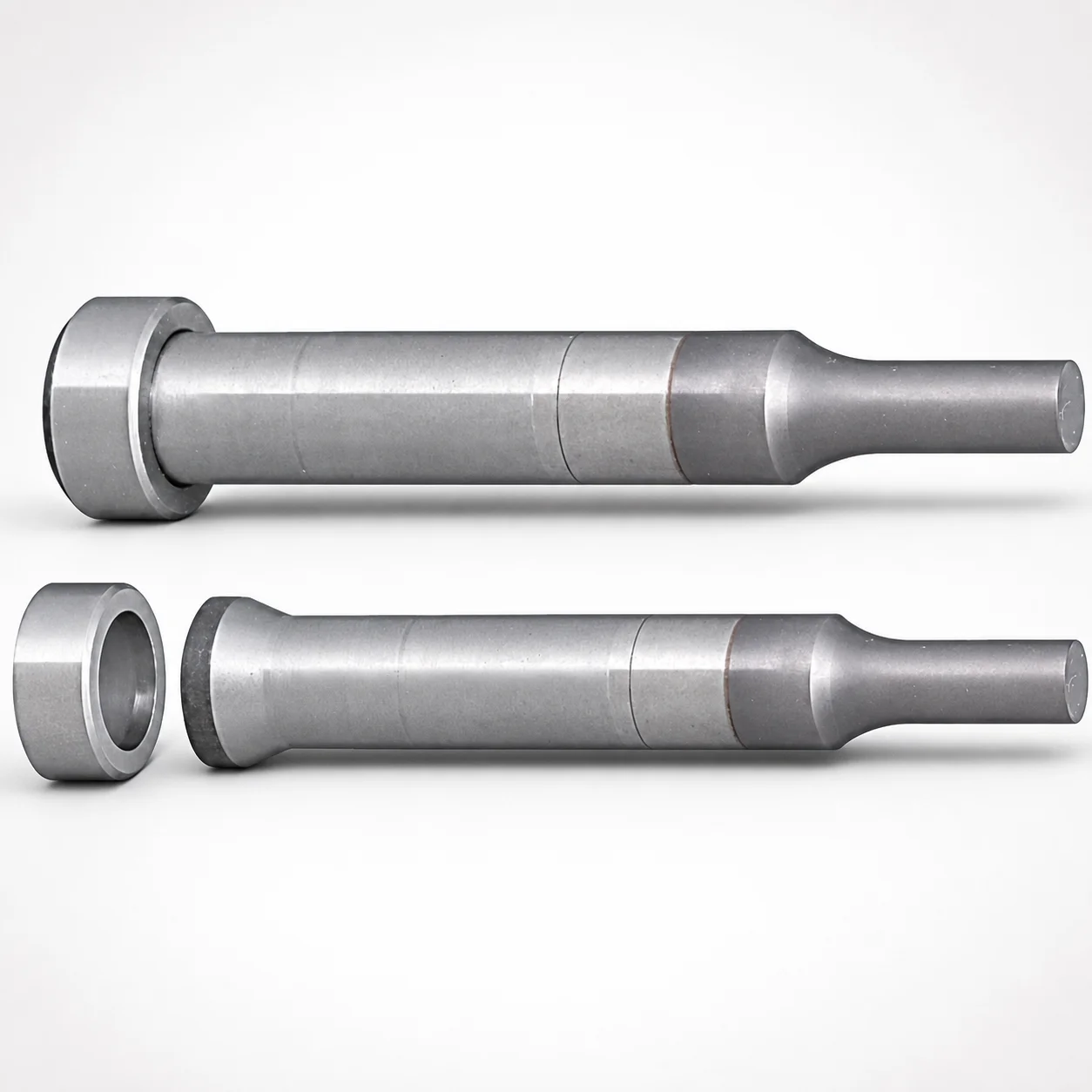
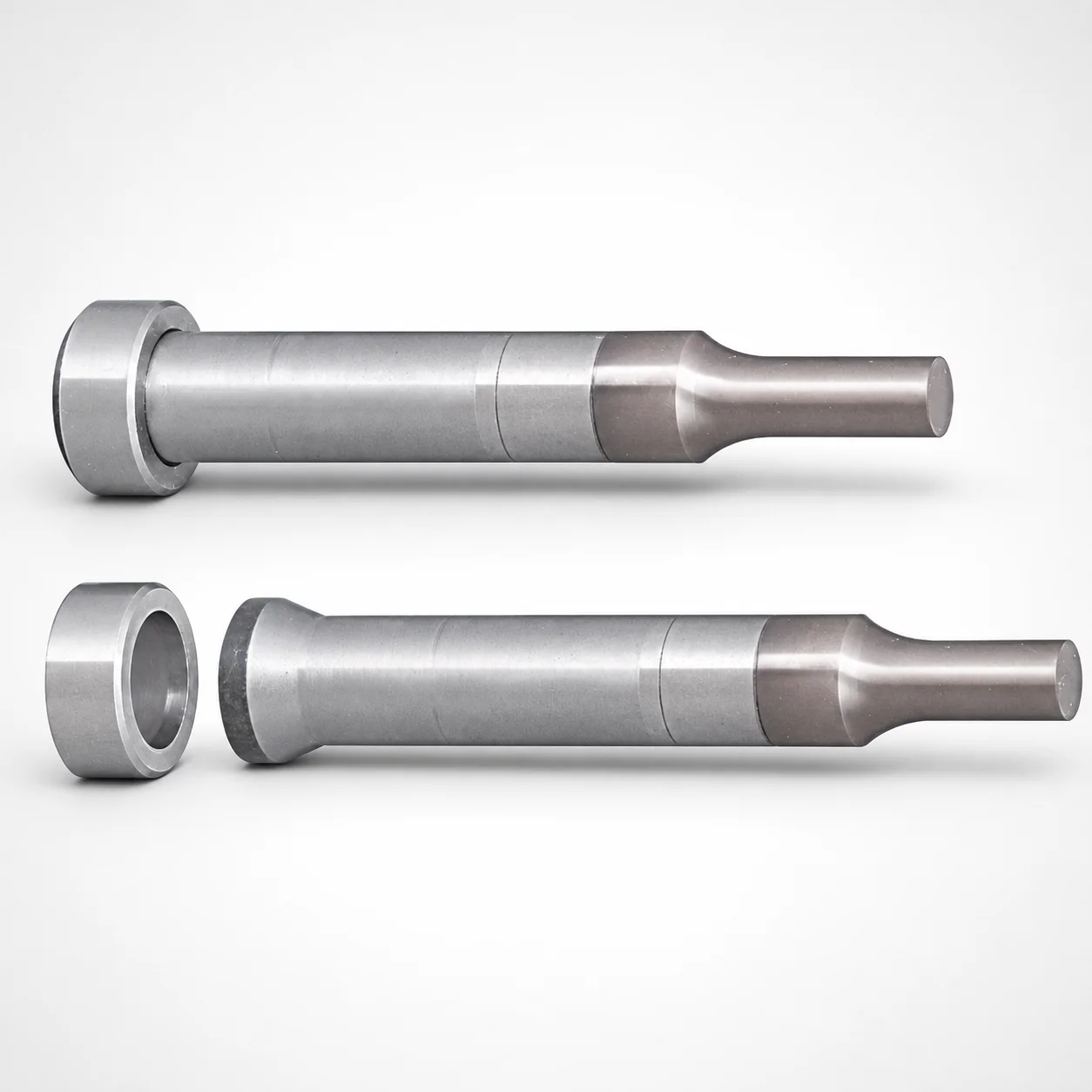
RX coating tapered head ejector punches (powdered high-speed steel equivalent to SKH51) are engineered to reduce wear under high-stress forming. The tapered head design supports controlled ejection for stable cycle performance and longer tooling life.
- RX coating improves abrasion resistance for reliable ejection in demanding operations
- Powder high-speed steel construction (equivalent to SKH51) supports durable performance
- Tapered head punch geometry helps maintain consistent contact and controlled ejection
- Suitable for precision mold and die applications where wear reduction is critical
Specifications
16 configurations available
| Material | B (Tip length) | D (Shank diameter) (mm) | P (Tip dimension) (mm) | L (L dimension) (mm) | type |
|---|---|---|---|---|---|
| Powdered high-speed steel | L | 8 | 4 ~ 7.99 | 60 ~ 80 | - |
| Powdered high-speed steel | L | 10 | 5 ~ 9.99 | 60 ~ 90 | - |
| Powdered high-speed steel | L | 13 | 6 ~ 12.99 | 70 ~ 100 | - |
| Powdered high-speed steel | L | 16 | 10 ~ 15.99 | 70 ~ 100 | - |
| Powdered high-speed steel | S | 8 | 4 ~ 7.99 | 50 ~ 80 | - |
| Powdered high-speed steel | S | 10 | 5 ~ 9.99 | 55 ~ 90 | - |
| Powdered high-speed steel | S | 13 | 6 ~ 12.99 | 65 ~ 100 | - |
| Powdered high-speed steel | S | 16 | 10 ~ 15.99 | 65 ~ 100 | - |
| Equivalent to SKH51 | L | 8 | 4 ~ 7.99 | 60 ~ 80 | - |
| Equivalent to SKH51 | L | 10 | 5 ~ 9.99 | 60 ~ 90 | - |
| Equivalent to SKH51 | L | 13 | 6 ~ 12.99 | 70 ~ 100 | - |
| Equivalent to SKH51 | L | 16 | 10 ~ 15.99 | 70 ~ 100 | - |
| Equivalent to SKH51 | S | 8 | 4 ~ 7.99 | 50 ~ 80 | - |
| Equivalent to SKH51 | S | 10 | 5 ~ 9.99 | 55 ~ 90 | - |
| Equivalent to SKH51 | S | 13 | 6 ~ 12.99 | 65 ~ 100 | - |
| Equivalent to SKH51 | S | 16 | 10 ~ 15.99 | 65 ~ 100 | - |
Product Guide
Application Scenarios+
RX coating tapered head ejector punches are used in injection molding and precision forming toolsets where reliable ejection depends on consistent contact under repeated load. The tapered head geometry supports controlled engagement with the molded part, helping stabilize ejection timing and reducing the risk of sticking during high-cycle production.
- Automotive connector and housing molds: ideal for ejector systems exposed to abrasive runner or gate residue, where the RX coating variant helps improve abrasion resistance for more consistent punch performance.
- Electronic/consumer device component molds: suitable for compact cavities that require precise ejection alignment; the shank diameter options (D = 8, 10, 13, 16 mm) enable matching to existing ejector plate layouts.
- High-wear die-cutting and forming inserts: the powdered high-speed steel construction provides durable wear performance when the punch face sees frequent sliding contact.
Overall, this variant is suited when tooling uptime and stable ejection behavior matter most, especially under abrasive or high-stress forming conditions.
Material & Process Details+
This punch uses powdered high-speed steel with an equivalency to SKH51 (AISI M2 equivalent family). Powdered metallurgy improves carbide distribution compared with conventional casting/forging routes, supporting wear resistance in ejector applications with abrasive contact.
- Hardness & wear/toughness balance: high-speed steels typically achieve high hardness (commonly in the HRC ~60–65 range after heat treatment), delivering strong resistance to abrasion while maintaining adequate toughness for intermittent shock loads.
- Heat treatment state: supplied as a finished hardened punch intended for service; final hardness depends on the toolmaker’s heat treatment cycle and post-processing.
- Coating effect (RX): the RX coating further enhances surface abrasion resistance to reduce wear progression at the tapered head contact area.
Compared with simpler tool steels, SKH51-class PM HSS provides better wear capability, while demanding careful heat treatment to control toughness trade-offs.
Sizing & Selection Guide+
Selection starts with matching the punch geometry to the ejector system and the part/runner interface. Use D (shank diameter)—available at 8, 10, 13, 16 mm—to align with your ejector plate bore size and guide features. Then confirm the L (length) falls within your available stroke and mounting space; the catalog ranges are 60–80, 60–90, 70–100, 50–80, 55–90, 65–100 mm, depending on the specific variant.
- Tip control: select B (tip length) and P (tip dimension) within the provided ranges: P = 4–7.99, 5–9.99, 6–12.99, or 10–15.99 mm.
- Tapered contact area: ensure the selected P/B combination creates stable contact with the molded surface during ejection.
- Tolerance/fit: for D matching, use close tolerances between ejector plate bore and shank to prevent side play that can alter ejection alignment. Coating thickness can slightly affect effective fit at the tip region.
Once D and L are fixed, choose the smallest P/B that still guarantees reliable ejection without over-penetration or stress concentration at the tapered head.
Frequently Asked Questions
What does “powdered high-speed steel equivalent to SKH51” mean for ejector punch wear performance?+
Which dimensions should I verify first to ensure the punch fits my ejector plate guide and maintains alignment?+
How do I choose the tapered tip geometry (B and P) for stable controlled ejection?+
Does the RX coating change how I should size the punch tip for cavity/core clearance?+
What are the typical hardness expectations for SKH51-class powdered HSS ejector punches after heat treatment?+
Related Products
Need Custom Specifications?
Our engineering team can help with custom configurations, material selection, and volume pricing.