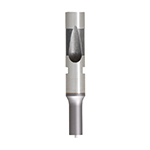
JIS Standard SKH51 Equivalent M2 Ball Lock Ejector Punches with Wrench Flat
Ball lock ejector punches (SKH51 equivalent M2) with a wrench flat and HW coating deliver reliable retention under heavy die loads. The ball-lock geometry helps stabilize punch alignment for consistent ejection during production.
- Wrench flat head for secure handling and assembly alignment
- HW-coated SKH51-equivalent M2 construction resists wear in cyclic use
- Supports precise punch fit with tight machining for stable locking
- Used in die sets for locating and ejecting components in molding lines
Specifications
360 configurations available
| Tip Shape | B (Tip length) (mm) | D (Shank diameter) (mm) | L (L Dimension) (mm) | LC (Full length alteration) (mm) | P (Tip dimension) (mm) | PC (Tip dimension alteration) (mm) | W (Tip dimension) (mm) | WC (Tip dimension alteration) (mm) | R (Tip dimension) (mm) | type |
|---|---|---|---|---|---|---|---|---|---|---|
| Round | L | 10 | 80 ~ 100 | - | 3 ~ 9.97 | - | - | - | - | - |
| Round | L | 10 | 80 ~ 100 | - | - | 2.8 ~ 2.99 | - | - | - | - |
| Round | L | 10 | - | 63 ~ 99.9 | 3 ~ 9.97 | - | - | - | - | - |
| Round | L | 10 | - | 63 ~ 99.9 | - | 2.8 ~ 2.99 | - | - | - | - |
| Round | L | 13 | 80 ~ 100 | - | 6 ~ 12.97 | - | - | - | - | - |
| Round | L | 13 | 80 ~ 100 | - | - | 5 ~ 5.99 | - | - | - | - |
| Round | L | 13 | - | 63 ~ 99.9 | 6 ~ 12.97 | - | - | - | - | - |
| Round | L | 13 | - | 63 ~ 99.9 | - | 5 ~ 5.99 | - | - | - | - |
| Round | L | 16 | 80 ~ 100 | - | 10 ~ 15.97 | - | - | - | - | - |
| Round | L | 16 | 80 ~ 100 | - | - | 8 ~ 9.99 | - | - | - | - |
| Round | L | 16 | - | 57 ~ 99.9 | 10 ~ 15.97 | - | - | - | - | - |
| Round | L | 16 | - | 57 ~ 99.9 | - | 8 ~ 9.99 | - | - | - | - |
| Round | L | 20 | 80 ~ 100 | - | 13 ~ 19.97 | - | - | - | - | - |
| Round | L | 20 | 80 ~ 100 | - | - | 9 ~ 12.99 | - | - | - | - |
| Round | L | 20 | - | 57 ~ 99.9 | 13 ~ 19.97 | - | - | - | - | - |
| Round | L | 20 | - | 57 ~ 99.9 | - | 9 ~ 12.99 | - | - | - | - |
| Round | L | 25 | 80 ~ 100 | - | 18 ~ 24.97 | - | - | - | - | - |
| Round | L | 25 | 80 ~ 100 | - | - | 9 ~ 17.99 | - | - | - | - |
| Round | L | 25 | - | 57 ~ 99.9 | 18 ~ 24.97 | - | - | - | - | - |
| Round | L | 25 | - | 57 ~ 99.9 | - | 9 ~ 17.99 | - | - | - | - |
| Round | S | 10 | 71 ~ 100 | - | 3 ~ 9.97 | - | - | - | - | - |
| Round | S | 10 | 71 ~ 100 | - | - | 2.8 ~ 2.99 | - | - | - | - |
| Round | S | 10 | - | 60 ~ 99.9 | 3 ~ 9.97 | - | - | - | - | - |
| Round | S | 10 | - | 60 ~ 99.9 | - | 2.8 ~ 2.99 | - | - | - | - |
| Round | S | 13 | 71 ~ 100 | - | 6 ~ 12.97 | - | - | - | - | - |
| Round | S | 13 | 71 ~ 100 | - | - | 5 ~ 5.99 | - | - | - | - |
| Round | S | 13 | - | 60 ~ 99.9 | 6 ~ 12.97 | - | - | - | - | - |
| Round | S | 13 | - | 60 ~ 99.9 | - | 5 ~ 5.99 | - | - | - | - |
| Round | S | 16 | 71 ~ 100 | - | 10 ~ 15.97 | - | - | - | - | - |
| Round | S | 16 | 71 ~ 100 | - | - | 8 ~ 9.99 | - | - | - | - |
| Round | S | 16 | - | 54 ~ 99.9 | 10 ~ 15.97 | - | - | - | - | - |
| Round | S | 16 | - | 54 ~ 99.9 | - | 8 ~ 9.99 | - | - | - | - |
| Round | S | 20 | 71 ~ 100 | - | 13 ~ 19.97 | - | - | - | - | - |
| Round | S | 20 | 71 ~ 100 | - | - | 9 ~ 12.99 | - | - | - | - |
| Round | S | 20 | - | 54 ~ 99.9 | 13 ~ 19.97 | - | - | - | - | - |
| Round | S | 20 | - | 54 ~ 99.9 | - | 9 ~ 12.99 | - | - | - | - |
| Round | S | 25 | 71 ~ 100 | - | 18 ~ 24.97 | - | - | - | - | - |
| Round | S | 25 | 71 ~ 100 | - | - | 9 ~ 17.99 | - | - | - | - |
| Round | S | 25 | - | 54 ~ 99.9 | 18 ~ 24.97 | - | - | - | - | - |
| Round | S | 25 | - | 54 ~ 99.9 | - | 9 ~ 17.99 | - | - | - | - |
| Rectangle | L | 10 | 80 ~ 100 | - | 3 ~ 9.9 | - | 3 ~ 9.9 | - | - | - |
| Rectangle | L | 10 | 80 ~ 100 | - | 3 ~ 9.9 | - | - | 2.8 ~ 2.99 | - | - |
| Rectangle | L | 10 | 80 ~ 100 | - | - | 2.8 ~ 2.99 | 3 ~ 9.9 | - | - | - |
| Rectangle | L | 10 | 80 ~ 100 | - | - | 2.8 ~ 2.99 | - | 2.8 ~ 2.99 | - | - |
| Rectangle | L | 10 | - | 63 ~ 99.9 | 3 ~ 9.9 | - | 3 ~ 9.9 | - | - | - |
| Rectangle | L | 10 | - | 63 ~ 99.9 | 3 ~ 9.9 | - | - | 2.8 ~ 2.99 | - | - |
| Rectangle | L | 10 | - | 63 ~ 99.9 | - | 2.8 ~ 2.99 | 3 ~ 9.9 | - | - | - |
| Rectangle | L | 10 | - | 63 ~ 99.9 | - | 2.8 ~ 2.99 | - | 2.8 ~ 2.99 | - | - |
| Rectangle | L | 13 | 80 ~ 100 | - | 6 ~ 12.9 | - | 6 ~ 12.9 | - | - | - |
| Rectangle | L | 13 | 80 ~ 100 | - | 6 ~ 12.9 | - | - | 5 ~ 5.99 | - | - |
Product Guide
Application Scenarios+
These ball-lock ejector punches are designed for use in injection molding and die-casting tooling where repeatable retention and ejection stability are critical. The SKH51-equivalent (AISI M2 class) steel combined with an HW coating supports long cyclic runs under higher contact pressure, while the ball-lock geometry improves alignment so the punch tracks consistently through the molding cycle.
Typical scenarios include:
- Heavy-load die casting die sets: use in ejector areas to resist wear and maintain locking under frequent mechanical impact.
- Automotive and electronics connector tooling: the wrench flat enables controlled handling/assembly alignment and helps maintain consistent punch positioning for reliable part ejection.
- Precision mold assemblies: round, rectangle, oblong, and radius tip options (with defined tip dimensions) allow the ejector to be matched to cavity geometry and localized contact requirements.
Choose this variant when stable locking plus wear resistance are needed during high-volume production.
Material & Process Details+
This product uses JIS Standard SKH51-equivalent construction, aligned with the AISI M2 class of high-speed steel behavior. SKH51/M2 offers a strong balance of wear resistance for sliding/contact surfaces and toughness sufficient for cyclic tooling, though very aggressive shock loading can still demand careful design of engagement area and support.
The surface is finished with an HW (hard wear) coating, selected to improve wear life during repetitive ejection and reduce polishing/rounding of the tip under contact cycles.
- Hardness (HRC): not specified in the provided data; hardness should be verified against the manufacturer’s material/heat-treatment certificate for your exact configuration.
- Heat treatment state: not specified in the provided data; SKH51/M2 is commonly supplied after quench and temper or equivalent hardening to achieve tool-grade hardness.
Compared to uncoated tool steels, the HW coating typically extends service life in abrasive or high-contact applications while retaining the M2-grade bulk toughness.
Sizing & Selection Guide+
Select the punch by matching its shank diameter (D) and length to the guide/bush and the required stroke clearance in the mold. From the available ranges, choose D = 10, 13, 16, 20, or 25 mm and then pick a compatible L dimension: 80–100 mm or 71–100 mm (depending on the configuration).
Confirm the assembly geometry using LC (full length alteration), which is offered in ranges such as 63–99.9, 57–99.9, 60–99.9, or 54–99.9 mm. For the contact interface, choose the tip shape (Round, Rectangle, Oblong, Double Flatted Round, Radius Rectangle) and set P (tip dimension) within 3–18 mm.
- For retention and alignment, verify that PC and WC (tip dimension alterations) fall within the offered bands (e.g., 2.8–2.99 or 5–5.99, etc.).
- Radius R options span 0.15–4.94 up to 0.15–12.44 mm; match R to the part surface to control contact stress.
Tolerance/fit levels are not specified in the provided data; rely on the punch’s listed dimension bands and your mold designer’s standard fit strategy for the ball-lock pocket.
Frequently Asked Questions
Which tip shapes are available for this M2 ball-lock ejector punch, and how do they affect contact with the molded part?+
How do I choose the correct shank diameter (D) for the ball-lock ejector punch?+
What do the length parameters L and LC mean, and which range should I verify against my mold cavity depth?+
How does the HW coating improve performance for heavy-load die casting and cyclic ejection?+
Are the tip dimension alteration values (PC and WC) critical to locking stability?+
Related Products


Need Custom Specifications?
Our engineering team can help with custom configurations, material selection, and volume pricing.