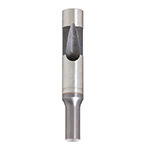
M2 Steel Ball Lock Ejector Punches - Heavy Load
Ball Lock ejector punches (M2 steel) for heavy load applications are engineered with a TiCN (XCN) coating to improve surface durability and reduce tool wear in repetitive molding cycles. The shoulder (regular) form supports stable, consistent ejection.
- Heavy-duty shoulder (regular) design for reliable blank positioning
- TiCN (XCN) coated M2 steel for enhanced abrasion resistance
- Round, rectangle, radius rectangle, oblong, or double-flatted tip options
- Use in progressive dies and mold insert assemblies requiring secure ejection
Specifications
360 configurations available
| Tip Shape | B (Tip length) (mm) | D (Shank diameter) (mm) | L (L Dimension) (mm) | LC (Full length alteration) (mm) | P (Tip dimension) (mm) | PC (Tip dimension alteration) (mm) | W (Tip dimension) (mm) | WC (Tip dimension alteration) (mm) | R (Tip dimension) (mm) | type |
|---|---|---|---|---|---|---|---|---|---|---|
| Round | L | 10 | 80 ~ 100 | - | 3 ~ 9.97 | - | - | - | - | - |
| Round | L | 10 | 80 ~ 100 | - | - | 1.5 ~ 2.99 | - | - | - | - |
| Round | L | 10 | - | 52 ~ 99.9 | 3 ~ 9.97 | - | - | - | - | - |
| Round | L | 10 | - | 52 ~ 99.9 | - | 1.5 ~ 2.99 | - | - | - | - |
| Round | L | 13 | 80 ~ 100 | - | 6 ~ 12.97 | - | - | - | - | - |
| Round | L | 13 | 80 ~ 100 | - | - | 3 ~ 5.99 | - | - | - | - |
| Round | L | 13 | - | 52 ~ 99.9 | 6 ~ 12.97 | - | - | - | - | - |
| Round | L | 13 | - | 52 ~ 99.9 | - | 3 ~ 5.99 | - | - | - | - |
| Round | L | 16 | 80 ~ 100 | - | 10 ~ 15.97 | - | - | - | - | - |
| Round | L | 16 | 80 ~ 100 | - | - | 5 ~ 9.99 | - | - | - | - |
| Round | L | 16 | - | 52 ~ 99.9 | 10 ~ 15.97 | - | - | - | - | - |
| Round | L | 16 | - | 52 ~ 99.9 | - | 5 ~ 9.99 | - | - | - | - |
| Round | L | 20 | 80 ~ 100 | - | 13 ~ 19.97 | - | - | - | - | - |
| Round | L | 20 | 80 ~ 100 | - | - | 6.5 ~ 12.99 | - | - | - | - |
| Round | L | 20 | - | 52 ~ 99.9 | 13 ~ 19.97 | - | - | - | - | - |
| Round | L | 20 | - | 52 ~ 99.9 | - | 6.5 ~ 12.99 | - | - | - | - |
| Round | L | 25 | 80 ~ 100 | - | 18 ~ 24.97 | - | - | - | - | - |
| Round | L | 25 | 80 ~ 100 | - | - | 9 ~ 17.99 | - | - | - | - |
| Round | L | 25 | - | 52 ~ 99.9 | 18 ~ 24.97 | - | - | - | - | - |
| Round | L | 25 | - | 52 ~ 99.9 | - | 9 ~ 17.99 | - | - | - | - |
| Round | S | 10 | 71 ~ 100 | - | 3 ~ 9.97 | - | - | - | - | - |
| Round | S | 10 | 71 ~ 100 | - | - | 1.5 ~ 2.99 | - | - | - | - |
| Round | S | 10 | - | 52 ~ 99.9 | 3 ~ 9.97 | - | - | - | - | - |
| Round | S | 10 | - | 52 ~ 99.9 | - | 1.5 ~ 2.99 | - | - | - | - |
| Round | S | 13 | 71 ~ 100 | - | 6 ~ 12.97 | - | - | - | - | - |
| Round | S | 13 | 71 ~ 100 | - | - | 3 ~ 5.99 | - | - | - | - |
| Round | S | 13 | - | 52 ~ 99.9 | 6 ~ 12.97 | - | - | - | - | - |
| Round | S | 13 | - | 52 ~ 99.9 | - | 3 ~ 5.99 | - | - | - | - |
| Round | S | 16 | 71 ~ 100 | - | 10 ~ 15.97 | - | - | - | - | - |
| Round | S | 16 | 71 ~ 100 | - | - | 5 ~ 9.99 | - | - | - | - |
| Round | S | 16 | - | 52 ~ 99.9 | 10 ~ 15.97 | - | - | - | - | - |
| Round | S | 16 | - | 52 ~ 99.9 | - | 5 ~ 9.99 | - | - | - | - |
| Round | S | 20 | 71 ~ 100 | - | 13 ~ 19.97 | - | - | - | - | - |
| Round | S | 20 | 71 ~ 100 | - | - | 6.5 ~ 12.99 | - | - | - | - |
| Round | S | 20 | - | 52 ~ 99.9 | 13 ~ 19.97 | - | - | - | - | - |
| Round | S | 20 | - | 52 ~ 99.9 | - | 6.5 ~ 12.99 | - | - | - | - |
| Round | S | 25 | 71 ~ 100 | - | 18 ~ 24.97 | - | - | - | - | - |
| Round | S | 25 | 71 ~ 100 | - | - | 9 ~ 17.99 | - | - | - | - |
| Round | S | 25 | - | 52 ~ 99.9 | 18 ~ 24.97 | - | - | - | - | - |
| Round | S | 25 | - | 52 ~ 99.9 | - | 9 ~ 17.99 | - | - | - | - |
| Rectangle | L | 10 | 80 ~ 100 | - | 2.5 ~ 9.9 | - | 2.5 ~ 9.9 | - | - | - |
| Rectangle | L | 10 | 80 ~ 100 | - | 2.5 ~ 9.9 | - | - | 1.25 ~ 2.49 | - | - |
| Rectangle | L | 10 | 80 ~ 100 | - | - | 1.25 ~ 2.49 | 2.5 ~ 9.9 | - | - | - |
| Rectangle | L | 10 | 80 ~ 100 | - | - | 1.25 ~ 2.49 | - | 1.25 ~ 2.49 | - | - |
| Rectangle | L | 10 | - | 52 ~ 99.9 | 2.5 ~ 9.9 | - | 2.5 ~ 9.9 | - | - | - |
| Rectangle | L | 10 | - | 52 ~ 99.9 | 2.5 ~ 9.9 | - | - | 1.25 ~ 2.49 | - | - |
| Rectangle | L | 10 | - | 52 ~ 99.9 | - | 1.25 ~ 2.49 | 2.5 ~ 9.9 | - | - | - |
| Rectangle | L | 10 | - | 52 ~ 99.9 | - | 1.25 ~ 2.49 | - | 1.25 ~ 2.49 | - | - |
| Rectangle | L | 13 | 80 ~ 100 | - | 3 ~ 12.9 | - | 3 ~ 12.9 | - | - | - |
| Rectangle | L | 13 | 80 ~ 100 | - | 3 ~ 12.9 | - | - | 1.5 ~ 2.99 | - | - |
Product Guide
Application Scenarios+
These M2 steel ball lock ejector punches are used in injection mold and die systems where repeated, reliable blank ejection is critical. The shoulder (regular) form helps maintain consistent lockup and stable blank positioning, reducing the risk of partial ejection during high-cycle runs.
- Automotive connector and terminal tooling: Suited for progressive dies and insert assemblies that must repeatedly eject small metal blanks without shifting. The TiCN (XCN) coating improves abrasion resistance on contact surfaces under repetitive impacts.
- Consumer electronics housings: Works in multi-cavity molds with tight ejection timing, where tool wear can degrade ejection force and alignment over time. The heavy load design supports secure ejection under continuous production.
- Medical device component molds: Appropriate when consistent ejection is needed to avoid cosmetic defects from incomplete expulsion. The hardened M2 substrate plus TiCN (XCN) surface durability supports long service intervals.
Material & Process Details+
The punch body is made from M2 high-speed steel, selected for its balance of hardness, wear resistance, and impact toughness typical of heavy-duty tooling. The product is supplied with a TiCN (XCN) coating, which increases surface hardness and abrasion resistance, helping reduce tool wear during repetitive ejection cycles.
- Wear resistance vs. toughness trade-off: The TiCN (XCN) surface improves resistance to scuffing and abrasive wear, while the M2 core maintains sufficient toughness for secure ejection under load.
- Heat treatment state: The series is intended as a hardened tool steel component; exact HRC and heat treatment cycle are not specified in the provided data, so hardness should be confirmed to match your press/mold requirements.
- Material comparison (typical): Compared with lower-alloy steels, M2 generally offers higher red-hardness and wear performance for punch applications; however, it may require more careful process control to avoid brittleness.
Sizing & Selection Guide+
Selection starts by matching the shank diameter (D) and the ejector length to the tooling space in your mold base or insert assembly. This series supports D = 10, 13, 16, 20, or 25 mm, which should be chosen to fit the corresponding bore and maintain stable guidance during ball-lock operation.
- Choose tip geometry: Pick the Tip Shape (Round, Rectangle, Oblong, Double Flatted Round, Radius Rectangle) based on the mating notch/blank edge profile. Then select the required P (tip dimension) = 2.5 ~ 18 mm and W = 2.5 ~ 6 mm, plus the applicable alteration values (PC, WC) and radius R (ranges provided per configuration).
- Set overall length: The series provides L = 80 ~ 100 mm (or 71 ~ 100 mm depending on configuration) and a fixed LC = 52 ~ 99.9 mm. Ensure L and LC align with your core/cavity stack-up so full ejection travel is achieved without bottoming.
- Tolerance/fit: Verify press-fit or clearance in the guide bore for your retainer/insert design; ball-lock components typically require controlled lateral play to preserve ejection alignment.
Frequently Asked Questions
Which tip shapes are available for these M2 ball lock ejector punches, and how do I choose between them?+
What TiCN (XCN) coating benefit should I expect for heavy-load ejection?+
How do I select the correct shank diameter (D) for the ball-lock punch in my mold base?+
What length parameters should I verify to ensure full ejection travel without interference?+
Are the tip dimension ranges (P/W/R) sufficient for fine custom geometry, and what should I match first?+
Related Products


Need Custom Specifications?
Our engineering team can help with custom configurations, material selection, and volume pricing.