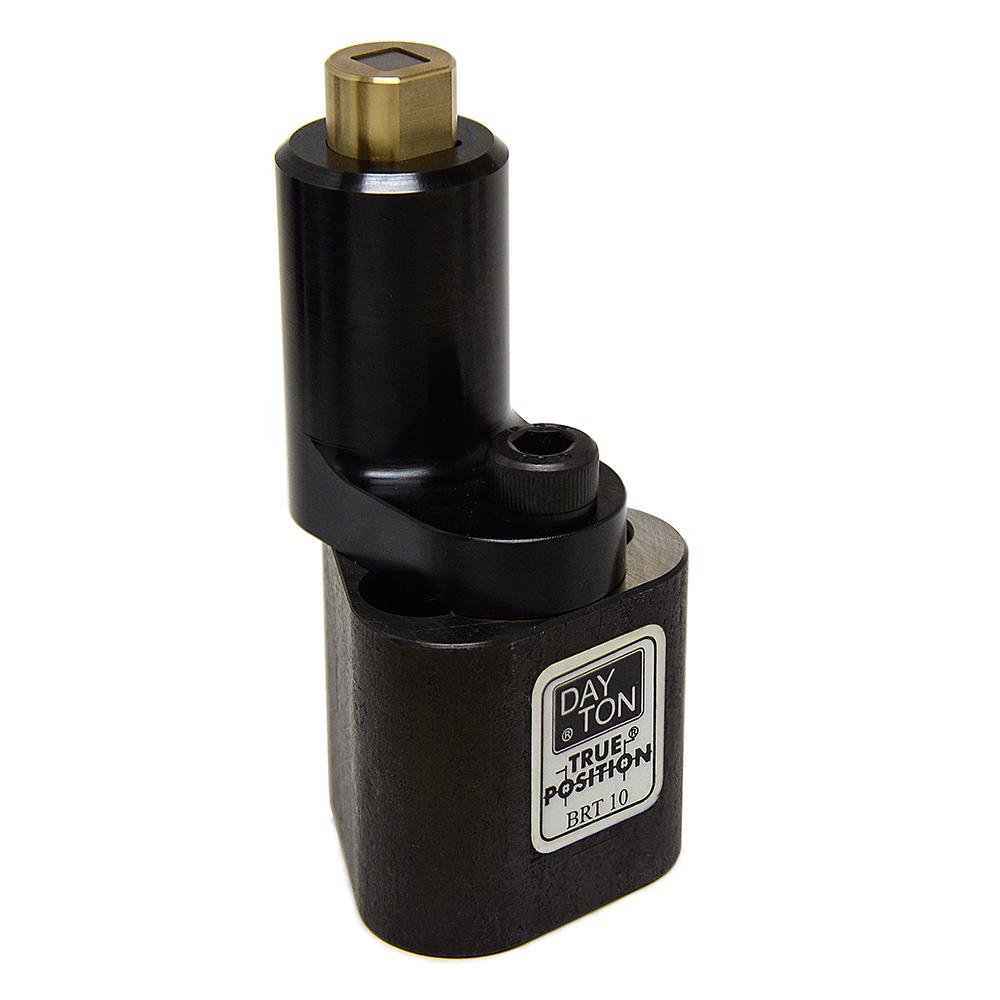
DAYTON Posi-Strip Systems for Ball Lock Punches - Heavy Duty, Regular, Metric
DAYTON Posi-Strip Systems for Ball Lock Punches - Heavy Duty, Regular, Metric provide a structured stripper solution to maintain consistent punch positioning and reliable part ejection across demanding tool cycles. Choose from multiple hole shapes and stripper constructions to match your press and punch geometry.
- Engineered for Heavy Duty ball lock punch assemblies with robust strip support
- Configurable Hole Shape and selectable punch point dimensions for fit accuracy
- Supports multiple stripper constructions (Extra Light to Heavy) for controlled force profiles
- Commonly used in progressive and tool-room applications where repeatable actuation matters
Specifications
1008 configurations available
| Hole Shape | D (Applicable punch dia.) (mm) | Stripper construction | Regular [R] bronze length type & punch length (mm) | 3 mm Longer [L] bronze length type & punch length (mm) | Custom contour [C] bronze length type & punch length (mm) | P - Punch point dimension (mm) | 3mm in Longer [L] bronze length type & punch length (mm) | W - Punch point dimension (mm) | Custom contour [C] bronze length type & punch length | R - Punch point dimension (mm) |
|---|---|---|---|---|---|---|---|---|---|---|
| E | 10 | Heavy (SHD) | - | - | 71 ~ 90 | - | - | - | - | - |
| E | 10 | Heavy (SHD) | - | 71 ~ 90 | - | - | - | - | - | - |
| E | 10 | Heavy (SHD) | 71 ~ 90 | - | - | - | - | - | - | - |
| E | 13 | Heavy (SHD) | - | - | 71 ~ 90 | - | - | - | - | - |
| E | 13 | Heavy (SHD) | - | 71 ~ 90 | - | - | - | - | - | - |
| E | 13 | Heavy (SHD) | 71 ~ 90 | - | - | - | - | - | - | - |
| E | 16 | Heavy (SHD) | - | - | 71 ~ 90 | - | - | - | - | - |
| E | 16 | Heavy (SHD) | - | 71 ~ 90 | - | - | - | - | - | - |
| E | 16 | Heavy (SHD) | 71 ~ 90 | - | - | - | - | - | - | - |
| E | 20 | Heavy (SHD) | - | - | 71 ~ 90 | - | - | - | - | - |
| E | 20 | Heavy (SHD) | - | 71 ~ 90 | - | - | - | - | - | - |
| E | 20 | Heavy (SHD) | 71 ~ 90 | - | - | - | - | - | - | - |
| E | 25 | Heavy (SHD) | - | - | 71 ~ 90 | - | - | - | - | - |
| E | 25 | Heavy (SHD) | - | 71 ~ 90 | - | - | - | - | - | - |
| E | 25 | Heavy (SHD) | 71 ~ 90 | - | - | - | - | - | - | - |
| E | 32 | Heavy (SHD) | - | - | 71 ~ 90 | - | - | - | - | - |
| E | 32 | Heavy (SHD) | - | 71 ~ 90 | - | - | - | - | - | - |
| E | 32 | Heavy (SHD) | 71 ~ 90 | - | - | - | - | - | - | - |
| E | 40 | Heavy (SHD) | - | - | 71 ~ 90 | - | - | - | - | - |
| E | 40 | Heavy (SHD) | - | 71 ~ 90 | - | - | - | - | - | - |
| E | 40 | Heavy (SHD) | 71 ~ 90 | - | - | - | - | - | - | - |
| E | 10 | Light (SLD) | - | - | 71 ~ 90 | - | - | - | - | - |
| E | 10 | Light (SLD) | - | 71 ~ 90 | - | - | - | - | - | - |
| E | 10 | Light (SLD) | 71 ~ 90 | - | - | - | - | - | - | - |
| E | 13 | Light (SLD) | - | - | 71 ~ 90 | - | - | - | - | - |
| E | 13 | Light (SLD) | - | 71 ~ 90 | - | - | - | - | - | - |
| E | 13 | Light (SLD) | 71 ~ 90 | - | - | - | - | - | - | - |
| E | 16 | Light (SLD) | - | - | 71 ~ 90 | - | - | - | - | - |
| E | 16 | Light (SLD) | - | 71 ~ 90 | - | - | - | - | - | - |
| E | 16 | Light (SLD) | 71 ~ 90 | - | - | - | - | - | - | - |
| E | 20 | Light (SLD) | - | - | 71 ~ 90 | - | - | - | - | - |
| E | 20 | Light (SLD) | - | 71 ~ 90 | - | - | - | - | - | - |
| E | 20 | Light (SLD) | 71 ~ 90 | - | - | - | - | - | - | - |
| E | 25 | Light (SLD) | - | - | 71 ~ 90 | - | - | - | - | - |
| E | 25 | Light (SLD) | - | 71 ~ 90 | - | - | - | - | - | - |
| E | 25 | Light (SLD) | 71 ~ 90 | - | - | - | - | - | - | - |
| E | 32 | Light (SLD) | - | - | 71 ~ 90 | - | - | - | - | - |
| E | 32 | Light (SLD) | - | 71 ~ 90 | - | - | - | - | - | - |
| E | 32 | Light (SLD) | 71 ~ 90 | - | - | - | - | - | - | - |
| E | 40 | Light (SLD) | - | - | 71 ~ 90 | - | - | - | - | - |
| E | 40 | Light (SLD) | - | 71 ~ 90 | - | - | - | - | - | - |
| E | 40 | Light (SLD) | 71 ~ 90 | - | - | - | - | - | - | - |
| E | 10 | Medium (SMD) | - | - | 71 ~ 90 | - | - | - | - | - |
| E | 10 | Medium (SMD) | - | 71 ~ 90 | - | - | - | - | - | - |
| E | 10 | Medium (SMD) | 71 ~ 90 | - | - | - | - | - | - | - |
| E | 13 | Medium (SMD) | - | - | 71 ~ 90 | - | - | - | - | - |
| E | 13 | Medium (SMD) | - | 71 ~ 90 | - | - | - | - | - | - |
| E | 13 | Medium (SMD) | 71 ~ 90 | - | - | - | - | - | - | - |
| E | 16 | Medium (SMD) | - | - | 71 ~ 90 | - | - | - | - | - |
| E | 16 | Medium (SMD) | - | 71 ~ 90 | - | - | - | - | - | - |
Product Guide
Application Scenarios+
Posi-Strip ball lock punch builds are used to keep punch position stable and support consistent ejection during repeated forming cycles. This Heavy Duty/Regular, Metric variant is suited for automotive connector and terminal molds, where progressive tooling requires uniform actuation and controlled stripper force to prevent punch wobble and inconsistent strip-out.
It also fits appliance and consumer electronics progressive tools that run high cadence and benefit from a structured stripper solution. By selecting the appropriate hole shape (E, H, J, K, L, N, O, R, V, X, Y, Z) and the punch point dimensions, you can tune engagement to the part geometry for reliable ejection.
For tool-room and pilot production, the regular bronze length types (71–90 mm range) and option to choose Heavy/Light/Medium/Extra Light stripper constructions help match force profiles to material thickness and forming load, supporting stable punch actuation without over-stressing the tool.
Material & Process Details+
The provided data specifies this system as a DAYTON Posi-Strip setup for ball lock punches, with selectable bronze length types and interchangeable stripper constructions. However, no specific steel grade, heat-treatment condition, or measured hardness (HRC) is listed in the supplied parameters.
- Material/heat treatment: Not specified in the provided dataset, so hardness and thermal treatment cannot be stated accurately.
- Manufacturing process: The system is configured by selecting hole shape and punch point dimensions to match the punch/stripper build geometry; bronze length types are offered in a 71–90 mm range, indicating length-specific components for alignment.
- Trade-offs: The dataset distinguishes Heavy (SHD), Medium (SMD), Light (SLD), and Extra Light (SSD) stripper constructions, implying force-profile tuning—heavier constructions generally support higher forming/ejection loads while requiring careful setup to avoid excessive stripper force.
If you share the drawing or corresponding material spec for this series, the steel grade, target HRC, and heat-treatment details can be incorporated precisely.
Sizing & Selection Guide+
Select this Posi-Strip system by matching three geometry groups: applicable punch diameter (D), bronze/punch length type, and punch point dimensions.
- Punch diameter (D): choose a build for the specified 10–40 mm punch diameter range.
- Length selection: for Regular [R], 71–90 mm bronze length type & punch length; for 3 mm Longer [L], the same 71–90 mm range is listed; Custom contour [C] also indicates 71–90 mm.
- Punch point dimensions: select P and W from 1.4–14 mm (variable), and choose R from 0.2–7.01 mm (variable). These dimensions should correspond to the punch point geometry required for stable ball lock engagement and controlled strip-out.
Confirm whether your cavity/core design uses these dimensions as fixed interfaces (geometry matching) or as toleranced fits. If your tooling drawings specify clearances, align your chosen P/W/R to those tolerances to maintain consistent actuation under load.
Frequently Asked Questions
How do I choose the correct hole shape (E, H, J, K, L, N, O, R, V, X, Y, Z) for a ball lock punch tool?+
Use the hole shape that matches your existing ball lock punch and stripper interface geometry. In this series, the hole shape is variable across E, H, J, K, L, N, O, R, V, X, Y, Z, so you should select the shape used in your punch/stripper build drawing to ensure stable actuation.
After selecting the hole shape, verify that the chosen D (10–40 mm) and punch point dimensions (P, W 1.4–14 mm; R 0.2–7.01 mm) align with the contact/interface features in your tool.
What stripper construction should I select (Extra Light SSD, Light SLD, Medium SMD, Heavy SHD) for my part ejection force needs?+
This Posi-Strip system lets you select the stripper construction to tune the force profile: Extra Light (SSD), Light (SLD), Medium (SMD), and Heavy (SHD).
Choose Heavy SHD when the application demands higher strip/eject support, and step down to Medium/Light/Extra Light when you need gentler force to protect part features or reduce tool stress. Your selection should be validated against the load required for your progressive or tool-room operation.
How do I match the punch diameter D to this series (10–40 mm) when designing a stripper/punch build?+
The series lists the applicable punch diameter as D = 10–40 mm (variable). Select the build that corresponds to the punch diameter used in your assembly so the stripper interface supports the correct geometry.
Then confirm punch point dimensions: P and W each range 1.4–14 mm, and R ranges 0.2–7.01 mm, to maintain stable engagement and consistent ejection.
What length options are available (Regular R vs 3 mm Longer L vs Custom contour C) and what range should I design to?+
For this series, the bronze length type and punch length are provided with fixed ranges of 71–90 mm for Regular [R], 3 mm Longer [L], and Custom contour [C].
Use your tool’s required stack height, stripper travel accommodations, and any spacing constraints to select the correct length type, then verify that the selected P/W/R punch point dimensions match the punch geometry.
Are P, W, and R punch point dimensions fixed or configurable in the design process?+
In this series, P and W are variable with ranges 1.4–14 mm, and R is variable with range 0.2–7.01 mm. That means they are configurable to match the punch point geometry required by your part and actuation setup.
Use these dimensions to ensure the interface features provide stable ball lock engagement and controlled stripping force for your selected stripper construction (SSD/SLD/SMD/SHD).
Related Products


Need Custom Specifications?
Our engineering team can help with custom configurations, material selection, and volume pricing.