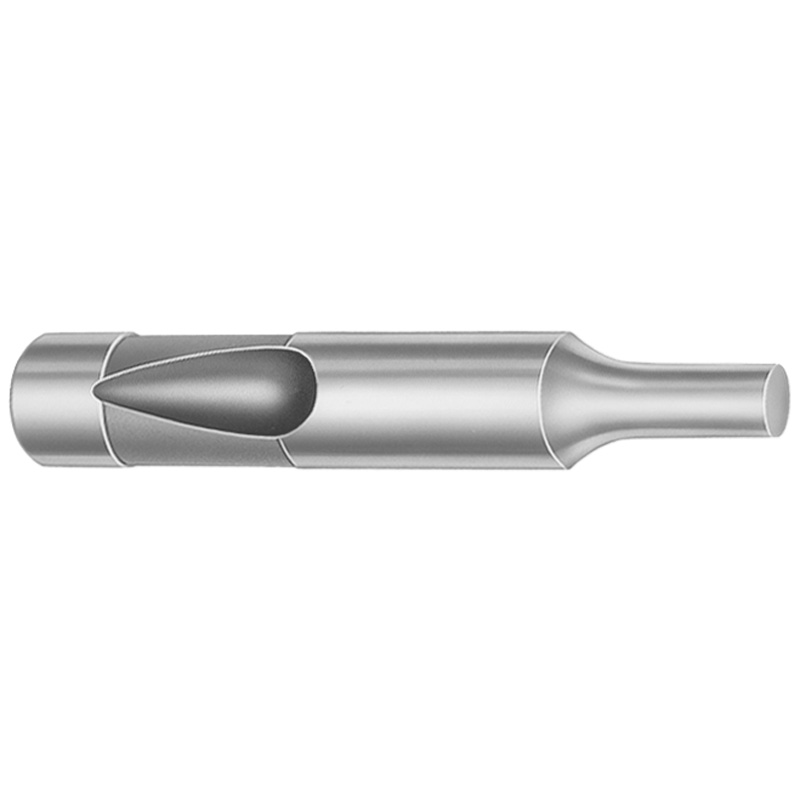
Ball Lock Regular Punches Heavy Duty Inch XVP Coating
Ball lock regular punches (Heavy Duty, Inch) with XVP coating deliver dependable ejection and robust ball-lock retention for durable die tooling. Engineered for repeated press cycles where tooling consistency matters.
- Ball lock design helps maintain punch position during high-usage production
- XVP coating supports improved wear resistance for longer service life
- Optional point tip geometries enable fit to different forming and blanking dies
- Compatible with inch tool layouts for straightforward integration in die builds
Specifications
1950 configurations available
| Tip Shape | Material | D (Shank dia.) (in) | Standard Point Length & L (Length) (coded inch) | [B] Point Length B & L (Length) (coded inch) | [C] Point Length B & L (Length) (coded inch) | [D] Point Length B & L (Length) (coded inch) | P Dimension (in) | W Dimension (in) | R Dimension (in) |
|---|---|---|---|---|---|---|---|---|---|
| H | M2 | 37 (0.3750") | 250 ~ 600 | - | - | - | 0.05 ~ 0.374 | 0.05 ~ 0.124 | - |
| H | M2 | 37 (0.3750") | 250 ~ 600 | - | - | - | 0.05 ~ 0.374 | 0.062 ~ 0.374 | - |
| H | PS4 | 37 (0.3750") | 250 ~ 600 | - | - | - | 0.05 ~ 0.374 | 0.05 ~ 0.124 | - |
| H | PS4 | 37 (0.3750") | 250 ~ 600 | - | - | - | 0.05 ~ 0.374 | 0.062 ~ 0.374 | - |
| H | M2 | 37 (0.3750") | - | 250 ~ 600 | - | - | 0.05 ~ 0.374 | 0.05 ~ 0.124 | - |
| H | M2 | 37 (0.3750") | - | 250 ~ 600 | - | - | 0.05 ~ 0.374 | 0.062 ~ 0.374 | - |
| H | PS4 | 37 (0.3750") | - | 250 ~ 600 | - | - | 0.05 ~ 0.374 | 0.05 ~ 0.124 | - |
| H | PS4 | 37 (0.3750") | - | 250 ~ 600 | - | - | 0.05 ~ 0.374 | 0.062 ~ 0.374 | - |
| H | M2 | 37 (0.3750") | - | - | 250 ~ 600 | - | 0.05 ~ 0.374 | 0.05 ~ 0.124 | - |
| H | M2 | 37 (0.3750") | - | - | 250 ~ 600 | - | 0.05 ~ 0.374 | 0.062 ~ 0.374 | - |
| H | PS4 | 37 (0.3750") | - | - | 250 ~ 600 | - | 0.05 ~ 0.374 | 0.05 ~ 0.124 | - |
| H | PS4 | 37 (0.3750") | - | - | 250 ~ 600 | - | 0.05 ~ 0.374 | 0.062 ~ 0.374 | - |
| H | M2 | 50 (0.5000") | 250 ~ 700 | - | - | - | 0.093 ~ 0.186 | 0.093 ~ 0.186 | - |
| H | M2 | 50 (0.5000") | 250 ~ 700 | - | - | - | 0.093 ~ 0.186 | 0.187 ~ 0.499 | - |
| H | M2 | 50 (0.5000") | 250 ~ 700 | - | - | - | 0.187 ~ 0.499 | 0.093 ~ 0.186 | - |
| H | M2 | 50 (0.5000") | 250 ~ 700 | - | - | - | 0.187 ~ 0.499 | 0.187 ~ 0.499 | - |
| H | PS4 | 50 (0.5000") | 250 ~ 700 | - | - | - | 0.093 ~ 0.186 | 0.093 ~ 0.186 | - |
| H | PS4 | 50 (0.5000") | 250 ~ 700 | - | - | - | 0.093 ~ 0.186 | 0.187 ~ 0.499 | - |
| H | PS4 | 50 (0.5000") | 250 ~ 700 | - | - | - | 0.187 ~ 0.499 | 0.093 ~ 0.186 | - |
| H | PS4 | 50 (0.5000") | 250 ~ 700 | - | - | - | 0.187 ~ 0.499 | 0.187 ~ 0.499 | - |
| H | M2 | 50 (0.5000") | - | 250 ~ 700 | - | - | 0.093 ~ 0.186 | 0.093 ~ 0.186 | - |
| H | M2 | 50 (0.5000") | - | 250 ~ 700 | - | - | 0.093 ~ 0.186 | 0.187 ~ 0.499 | - |
| H | M2 | 50 (0.5000") | - | 250 ~ 700 | - | - | 0.187 ~ 0.499 | 0.093 ~ 0.186 | - |
| H | M2 | 50 (0.5000") | - | 250 ~ 700 | - | - | 0.187 ~ 0.499 | 0.187 ~ 0.499 | - |
| H | PS4 | 50 (0.5000") | - | 250 ~ 700 | - | - | 0.093 ~ 0.186 | 0.093 ~ 0.186 | - |
| H | PS4 | 50 (0.5000") | - | 250 ~ 700 | - | - | 0.093 ~ 0.186 | 0.187 ~ 0.499 | - |
| H | PS4 | 50 (0.5000") | - | 250 ~ 700 | - | - | 0.187 ~ 0.499 | 0.093 ~ 0.186 | - |
| H | PS4 | 50 (0.5000") | - | 250 ~ 700 | - | - | 0.187 ~ 0.499 | 0.187 ~ 0.499 | - |
| H | M2 | 50 (0.5000") | - | - | 250 ~ 700 | - | 0.093 ~ 0.186 | 0.093 ~ 0.186 | - |
| H | M2 | 50 (0.5000") | - | - | 250 ~ 700 | - | 0.093 ~ 0.186 | 0.187 ~ 0.499 | - |
| H | M2 | 50 (0.5000") | - | - | 250 ~ 700 | - | 0.187 ~ 0.499 | 0.093 ~ 0.186 | - |
| H | M2 | 50 (0.5000") | - | - | 250 ~ 700 | - | 0.187 ~ 0.499 | 0.187 ~ 0.499 | - |
| H | PS4 | 50 (0.5000") | - | - | 250 ~ 700 | - | 0.093 ~ 0.186 | 0.093 ~ 0.186 | - |
| H | PS4 | 50 (0.5000") | - | - | 250 ~ 700 | - | 0.093 ~ 0.186 | 0.187 ~ 0.499 | - |
| H | PS4 | 50 (0.5000") | - | - | 250 ~ 700 | - | 0.187 ~ 0.499 | 0.093 ~ 0.186 | - |
| H | PS4 | 50 (0.5000") | - | - | 250 ~ 700 | - | 0.187 ~ 0.499 | 0.187 ~ 0.499 | - |
| H | M2 | 50 (0.5000") | - | - | - | 275 ~ 700 | 0.093 ~ 0.186 | 0.093 ~ 0.186 | - |
| H | M2 | 50 (0.5000") | - | - | - | 275 ~ 700 | 0.093 ~ 0.186 | 0.187 ~ 0.499 | - |
| H | M2 | 50 (0.5000") | - | - | - | 275 ~ 700 | 0.187 ~ 0.499 | 0.093 ~ 0.186 | - |
| H | M2 | 50 (0.5000") | - | - | - | 275 ~ 700 | 0.187 ~ 0.499 | 0.187 ~ 0.499 | - |
| H | PS4 | 50 (0.5000") | - | - | - | 275 ~ 700 | 0.093 ~ 0.186 | 0.093 ~ 0.186 | - |
| H | PS4 | 50 (0.5000") | - | - | - | 275 ~ 700 | 0.093 ~ 0.186 | 0.187 ~ 0.499 | - |
| H | PS4 | 50 (0.5000") | - | - | - | 275 ~ 700 | 0.187 ~ 0.499 | 0.093 ~ 0.186 | - |
| H | PS4 | 50 (0.5000") | - | - | - | 275 ~ 700 | 0.187 ~ 0.499 | 0.187 ~ 0.499 | - |
| H | M2 | 62 (0.6250") | 250 ~ 700 | - | - | - | 0.25 ~ 0.624 | 0.25 ~ 0.624 | - |
| H | M2 | 62 (0.6250") | 250 ~ 700 | - | - | - | 0.25 ~ 0.624 | 0.125 ~ 0.249 | - |
| H | M2 | 62 (0.6250") | 250 ~ 700 | - | - | - | 0.125 ~ 0.249 | 0.25 ~ 0.624 | - |
| H | M2 | 62 (0.6250") | 250 ~ 700 | - | - | - | 0.125 ~ 0.249 | 0.125 ~ 0.249 | - |
| H | PS4 | 62 (0.6250") | 250 ~ 700 | - | - | - | 0.25 ~ 0.624 | 0.25 ~ 0.624 | - |
| H | PS4 | 62 (0.6250") | 250 ~ 700 | - | - | - | 0.25 ~ 0.624 | 0.125 ~ 0.249 | - |
Product Guide
Application Scenarios+
Ball lock punches with heavy-duty, inch-based sizing are used in injection press and die tooling where stable ejection and consistent punch retention are critical. In automotive connector and terminal forming dies, the ball-lock retention helps maintain punch position through repeated cycles, reducing shift-related ejection variation. The XVP coating is suited to such duty because it improves wear resistance at the punch-to-die contact regions.
- High-volume forming/blanking: use the ball-lock feature to support reliable alignment during long runs.
- Medical device housing insert-molding tooling: choose compatible point geometries (H, J, K, L, N, O, R, V, X, Y, Z) to match the cavity/core and part features, supporting clean ejection.
- General tool & die shops: the inch dimensions integrate directly into inch tool layouts, simplifying die builds.
Select the variant with the required shank diameter and coded length range to ensure the punch seats properly and ejects uniformly.
Material & Process Details+
This punch series is offered in M2 and PS4 material options, supporting different balances of wear resistance and toughness for tool & die work. M2 is a high-speed steel commonly selected where higher hot hardness and cutting/impact resistance are beneficial, while PS4 is typically chosen when a different wear/toughness balance is preferred for press applications.
- Hardness & heat treatment: The provided data does not specify HRC or a defined heat-treatment recipe for these variants, so hardness should be confirmed per the selected material/heat lot before critical builds.
- Wear vs. toughness: M2-based builds generally favor wear resistance under demanding cycles; PS4 selections can be used where the shop prefers its toughness/wear behavior for specific forming loads.
- Coating effect: the XVP coating supports improved wear resistance at contact surfaces, extending usable life in abrasive or repetitive ejection environments.
For final design, match the material choice to expected press load, cycle rate, and the die steel compatibility.
Sizing & Selection Guide+
To select the correct ball lock regular punch, start with the shank diameter D and then match the coded length L to the depth requirements of the die. Available shank diameter range is D = 37 ~ 125 in (per provided spec). Next, select the coded length option that fits your tool stack-up: L ranges from 250 ~ 600, 250 ~ 700, 275 ~ 700, or 300 ~ 700 (coded inch), depending on the configuration.
- Tip geometry: choose from H, J, K, L, N, O, R, V, X, Y, Z to align the punch point with your forming/blanking feature.
- Point length checks: the spec provides corresponding point-length codes (B, C, and D) with the same numeric ranges (e.g., 250 ~ 600 / 250 ~ 700 / 275 ~ 700 / 300 ~ 700). Use these to ensure adequate engagement without bottoming.
- Dimension tolerancing: the provided data lists functional variation ranges for P = 0.05 ~ 1, W = 0.05 ~ 0.5, and R = 0.007 ~ 0.007. Use these when validating clearances and contact pressure in the ejector system.
When integrating into the cavity/core design, verify the punch seating length and clearance to the mating die surface for consistent ejection force.
Frequently Asked Questions
Which tip shapes (H/J/K/L/N/O/R/V/X/Y/Z) should I select to match my forming or blanking features?+
This series supports multiple tip geometries: H, J, K, L, N, O, R, V, X, Y, Z. Choose the point profile that matches the mating die contour and required contact area to achieve the intended penetration/blanking line. Verify the point engagement using the available coded point-length ranges (B, C, or D) alongside the overall coded length L.
What shank diameter D and length L ranges are available for heavy-duty inch ball lock punches?+
The shank diameter range is D = 37 ~ 125 (in, as provided). The coded point/overall length L is available in ranges such as 250 ~ 600, 250 ~ 700, 275 ~ 700, and 300 ~ 700 depending on the configuration.
How do I ensure the punch won’t bottom out—how should I use B/C/D point length ranges with L?+
The specification lists coded point length ranges for B, C, and D that correspond to 250 ~ 600, 250 ~ 700, 275 ~ 700, and 300 ~ 700 (or reduced sets, e.g., 275 ~ 700 and 300 ~ 700 for the D-coded option). In die builds, select L to fit the tool stack-up and then confirm the point length code ensures proper engagement without exceeding cavity/core travel.
Is the XVP coating intended for wear reduction at the punch-to-die contact surfaces?+
Yes. The product data indicates XVP coating supports improved wear resistance, which helps maintain performance during repeated press cycles where tooling consistency matters. For load-sensitive designs, confirm that the selected tip geometry and point-length engagement match your die steel and contact conditions.
Between M2 and PS4, how should I choose material for this punch series?+
This series offers M2 and PS4 material options. The provided data does not specify HRC or a particular heat-treatment state, so you should request the exact hardness/heat-treatment documentation for your build. Use M2 where higher wear resistance and performance under demanding cycles are required, and select PS4 where your process target prioritizes its specific toughness/wear behavior.
Related Products


Need Custom Specifications?
Our engineering team can help with custom configurations, material selection, and volume pricing.